

More news on this day
Spring break travelers across the United States are encountering hours long airport security lines, mounting delays and growing uncertainty, as a partial federal government shutdown affecting the Department of Homeland Security stretches into its fourth week with no resolution in sight.
Get the latest news straight to your inbox!
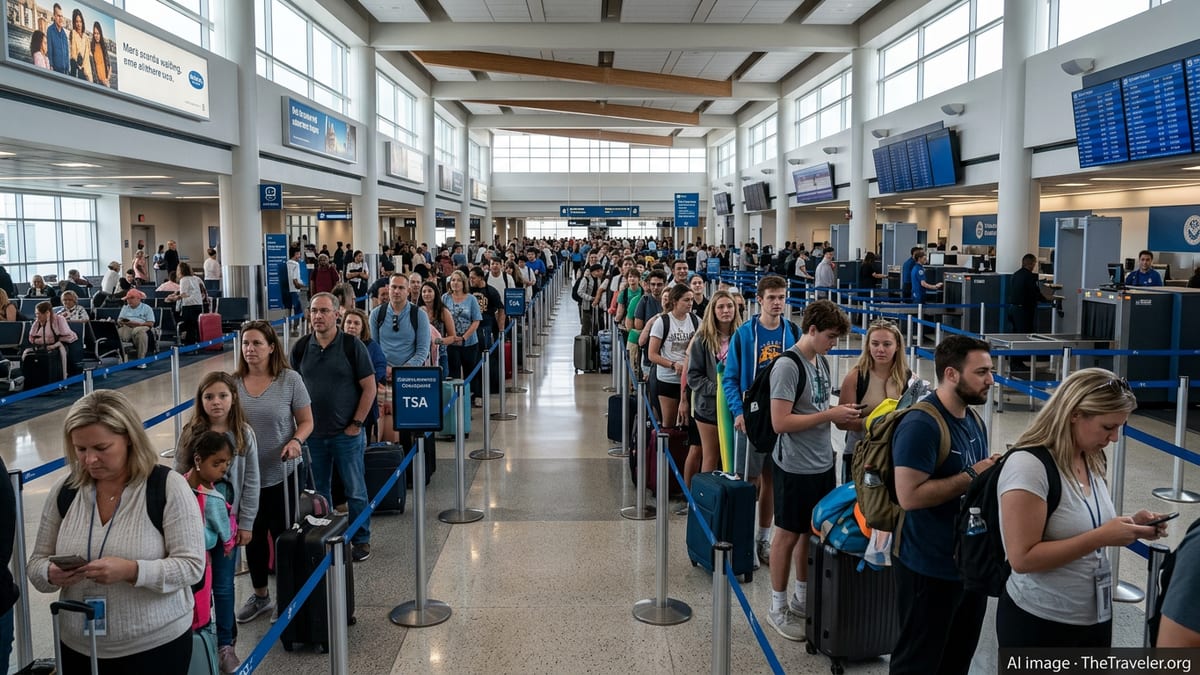
Hours Long Security Lines Snarl Peak Spring Break Traffic
Airports in several major U.S. cities have reported severe security bottlenecks over the past week, coinciding with one of the busiest periods for spring break travel and the continuing funding lapse for the Department of Homeland Security. According to published coverage, security wait times at some checkpoints have stretched beyond three hours, turning routine departures into all day ordeals for families and students headed to vacation destinations.
Reports from Houston indicate that Hobby Airport and George Bush Intercontinental have seen some of the longest lines, with travelers warned to arrive at least three hours before departure after weekend waits topped three and a half hours. Local coverage from New Orleans and Austin describes similar conditions, with social media posts and airport advisories urging passengers to build in substantially more time for check in and screening.
While only a subset of airports are experiencing the most extreme delays, the disruption is rippling through the national system. Longer queues at one hub can push back boarding and departure times, tighten connection windows and strain airline operations, particularly on tightly banked morning and evening schedules that are popular with spring break travelers.
Some smaller and mid sized airports have so far avoided the worst of the gridlock, but local reports caution that conditions can change quickly as staffing levels fluctuate and as different regions hit their own spring break peaks in mid and late March.
TSA Staffing Under Strain as Paychecks Stop
The shutdown, which began on February 14 and has left core Department of Homeland Security agencies without full year funding, is now pushing tens of thousands of Transportation Security Administration employees into their first missed full paycheck of 2026. Publicly available information from labor groups and prior shutdowns suggests that once paychecks stop, absenteeism among security officers tends to rise, as workers seek temporary jobs or struggle to cover basic expenses like fuel, rent and child care.
Because TSA screening officers are categorized as essential employees, they are required to continue reporting to work even as their pay is delayed until Congress and the White House agree on a funding package. Travel industry groups note that this dynamic has created a fragile staffing environment in past shutdowns, with occasional checkpoint closures and sporadic sick outs when financial pressures mount.
Analysts point out that TSA entered this year’s shutdown already carrying the effects of previous funding lapses, including elevated attrition among front line officers after the prolonged 2025 shutdown. That has left some airports more vulnerable to gaps in staffing, particularly during spikes like early March when college students travel, followed by staggered K-12 spring breaks later in the month.
Union representatives and aviation stakeholders have repeatedly warned that the current impasse is eroding morale among security officers, and have renewed calls for legislation that would allow essential aviation security and air traffic personnel to be paid during future funding gaps, even if broader negotiations remain unresolved.
Programs Suspended and Trusted Traveler Perks Reduced
Beyond checkpoint staffing, the Department of Homeland Security shutdown is also affecting a range of travel facilitation programs. Public guidance from the department indicates that new enrollments and some renewals for programs such as TSA PreCheck and Global Entry have been temporarily suspended or scaled back, adding to the friction for frequent international and domestic travelers.
Recent reports indicate that Global Entry operations, which had been halted earlier in the shutdown, have started to resume in limited form as DHS attempts to manage backlogs and public frustration. However, processing times remain uncertain, and many travelers who relied on expedited lanes are now funneled into regular queues at peak times, further burdening standard checkpoints.
Airport specific tools are also under pressure. In Richmond, for example, local coverage notes that the airport’s TSA wait time tracker has been offline due to equipment issues, leaving passengers without real time digital guidance as they try to gauge when to arrive. Similar outages or data gaps at other facilities make it harder for travelers to adapt in real time, even when they are closely watching conditions.
Travel advisors and industry organizations are urging clients to assume that expedited options may not function as usual and to plan their itineraries around the slowest possible scenario, particularly when connecting between domestic and international flights where security rescreening is required.
Travel Industry Pressures Lawmakers as Economic Costs Mount
Airlines, airports and travel associations are increasingly vocal about what they describe as mounting economic damage from the prolonged shutdown. According to recent coverage, travel industry representatives have highlighted the risk of lost tourism revenue, diminished traveler confidence and the potential for longer term staffing challenges if federal security positions are seen as unstable or politically vulnerable.
Industry groups point to past shutdowns in which air traffic controller and TSA staffing shortages contributed to delays and cancellations, arguing that similar patterns are beginning to emerge again this spring. They have pressed Congress to approve full year funding for the Department of Homeland Security and to consider structural changes that would insulate key aviation safety and security functions from future political standoffs.
Some policy analysts have proposed automatic continuing appropriations or targeted protections for transportation security and air traffic control, noting that even short disruptions can create backlogs in hiring, training and certification that outlast the shutdown itself. For airports already juggling construction projects, airspace constraints and rising passenger volumes, the added variable of a funding impasse complicates long term planning.
For now, airports and airlines are leaning heavily on contingency measures such as shifting staff within terminals, reconfiguring queue layouts and adjusting flight schedules at the margins. However, these steps offer only limited relief if the underlying staffing and funding uncertainties persist into the heart of the spring and early summer travel seasons.
What Travelers Can Expect in the Coming Weeks
With no clear end date for the shutdown, aviation analysts expect a bumpy stretch for U.S. air travel through at least late March. The impact is unlikely to be uniform: some airports may return to more typical wait times between surges, while others, particularly major hubs and popular leisure gateways, could continue to see intermittent multi hour lines at morning and weekend peaks.
Public guidance from travel associations and consumer advocates consistently emphasizes extra time and flexibility. Passengers are being encouraged to arrive earlier than usual, to monitor airport and airline advisories closely on the day of travel, and to build in wider buffers for connections, especially when traveling with children or large groups. Some experts suggest considering the first flights of the day, which may be less affected by rolling delays from earlier disruptions.
Travelers are also being reminded to check the status of any trusted traveler benefits on their reservations, to verify that known traveler numbers are correctly attached to itineraries, and to be prepared for the possibility that expedited lanes may open or close with little notice depending on staffing. While experiences vary widely by airport, the overall message emerging from recent travel coverage is that spring break 2026 will test the resilience and patience of U.S. air travelers as the federal funding stalemate continues.