

More news on this day
Families headed for long-awaited spring break vacations in the United States are running into hours-long security lines, cascading flight delays and last-minute cancellations, as a nationwide shortage of Transportation Security Administration officers and air traffic personnel collides with a partial government shutdown and early March storms.
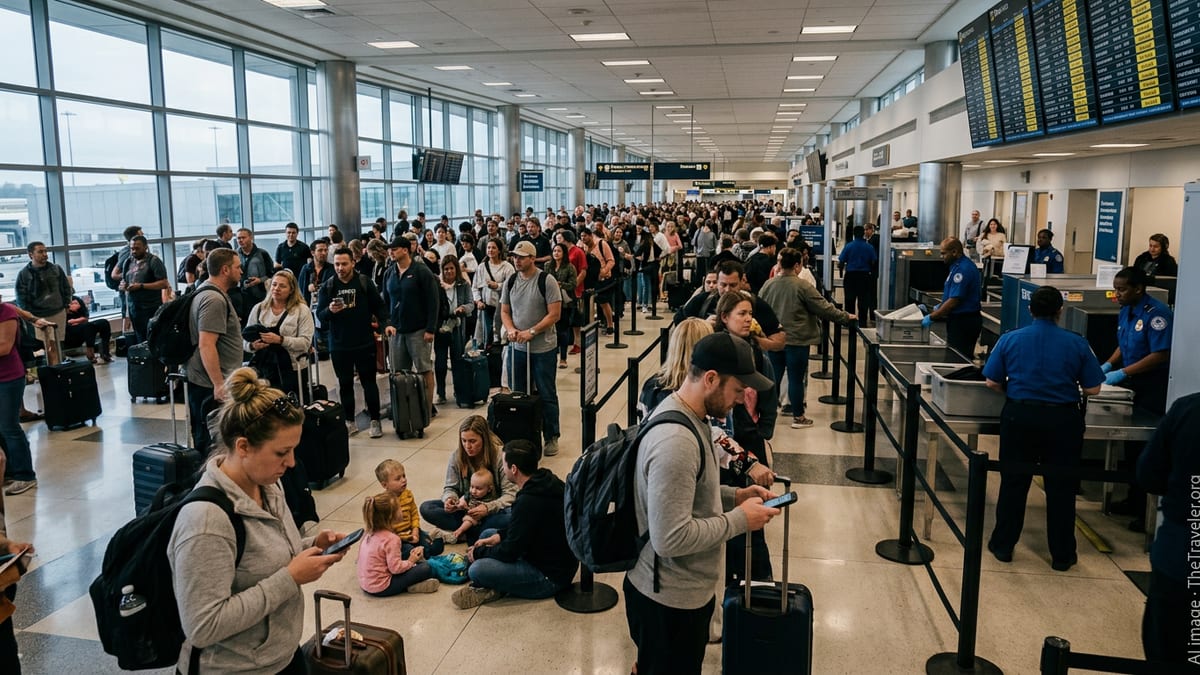
Hours-Long TSA Lines as Shutdown Hits Peak Travel
Airports across the United States reported some of their longest security queues in years over the weekend, with travelers at Houston’s Hobby Airport and New Orleans’ Louis Armstrong International describing waits of up to three hours just to clear screening. Local officials and federal unions blame an acute staffing crunch at the Transportation Security Administration, where thousands of officers are now working without pay because of the ongoing partial government shutdown.
The Department of Homeland Security has already warned that TSA employees will begin missing full paychecks in mid-March, raising the risk that more officers will call in sick or seek temporary work elsewhere as spring break crowds swell. On Sunday alone, nearly 2.8 million passengers passed through TSA checkpoints nationwide, one of the busiest days of 2026 so far and a sharp test of a system running on reduced manpower.
In Houston, airport managers urged passengers to arrive at least three hours before departure after rainy weather and thinly staffed checkpoints produced snaking lines that stretched through the terminal. Similar scenes played out in New Orleans and Atlanta, where local authorities cited a combination of shutdown-related staffing shortages and a spike in leisure travel as colleges and school districts begin their spring recesses.
While not every airport has been hit equally, the patchwork of long waits is generating confusion for travelers who may breeze through security in one city only to face gridlock at a connecting hub. Social media posts show families camped on terminal floors, surrounded by luggage, after missing flights they say they arrived early to catch.
Airline Operations Strain Under Delays and Cancellations
The TSA crunch is unfolding just as airlines contend with severe operational stress from back-to-back storm systems that swept across major hubs at the end of last week. On March 7, thunderstorms in the Midwest and Southeast, coupled with late-season snow and ice in northern states, triggered hundreds of cancellations and more than 5,000 delays, according to airline and airport tallies.
Airports such as Chicago O’Hare and Atlanta Hartsfield-Jackson, two of the country’s busiest connecting points, were forced into repeated federal ground stops and ground delay programs that sharply reduced the number of flights allowed to depart or arrive each hour. Those constraints left planes and crews out of position across the network, feeding into extended tarmac waits, rolling delays and overnight cancellations that spilled into the workweek.
In Atlanta, airport officials said residual backlogs from Friday’s weather disruptions, combined with “current TSA staffing constraints,” were driving continued cancellations and late departures as of Sunday evening. Airlines issued blanket travel waivers for parts of the Midwest and Southeast, allowing passengers to change itineraries without penalties but offering little relief to those already stranded in crowded concourses.
The result for many spring break travelers has been a double hit: first waiting in sluggish security lines, then learning at the gate that their flight has been delayed for hours or scrapped altogether. Some domestic carriers have admitted they are juggling crew availability carefully after storm-related schedule chaos pushed pilots and flight attendants up against federal duty-time limits.
Deepening Federal Staffing Gaps Behind the Chaos
Experts say the current turbulence is not simply a blip caused by bad weather and a single shutdown, but rather the latest flare-up in a long-developing staffing crisis across the federal aviation workforce. Government watchdog reports over the past year have highlighted persistent shortages at the Federal Aviation Administration’s air traffic control facilities, where the total controller workforce has shrunk compared with a decade ago even as flight volumes recovered to pre-pandemic levels.
A recent Government Accountability Office review found that many key control centers remain below the FAA’s own staffing targets, forcing remaining controllers to work frequent overtime and extra days to keep traffic flowing. Controllers’ unions and members of Congress have warned that the system is running with too little margin for error, a concern underscored by high-profile safety incidents and midair collisions that later cited understaffed control positions and fatigue as contributing factors.
The 2026 shutdown has added fresh strain by freezing hiring pipelines, pausing nonessential training and pushing essential workers at both TSA and FAA to stay on the job without pay. Letters from lawmakers to transportation officials in February urged the administration to establish clearer staffing goals and reduce reliance on overtime, warning that extended shutdown conditions could increase the likelihood of delays and operational disruptions as employees burn out.
At the same time, a separate audit of FAA oversight of major airlines has flagged shortages among safety inspectors and maintenance monitors, raising questions about the agency’s capacity to respond quickly if prolonged disruption leads to more equipment failures or operational incidents as carriers stretch aging fleets to meet surging demand.
What Incoming Travelers to the US Should Expect
For international visitors heading to the United States for spring break, the swirl of staffing shortages, shutdown politics and weather disruptions means building extra time and flexibility into their itineraries. Industry analysts say U.S. carriers expect roughly 171 million passengers to fly over the broader spring break period that runs through April, with a significant share coming from overseas markets bound for Florida, California, the Southwest and major city breaks.
Arriving passengers should be prepared for longer-than-normal waits not only at TSA checkpoints for connecting flights but also at immigration and customs lines that may be affected by the same federal budget pressures. Travel advisers are urging visitors to schedule longer layovers at congested hubs, avoid the last flight of the day when possible and monitor airline apps closely for last-minute gate changes or rebookings.
Some tour operators report that clients are already rearranging itineraries to avoid historically delay-prone airports during peak weekends, choosing secondary gateways in the same region or shifting arrival days to midweek in hopes of dodging the worst of the crowds. Others are advising travelers to pack medications, a change of clothes and essential items in carry-on bags, anticipating that checked luggage may be separated from passengers during irregular operations.
Despite the turmoil, aviation officials stress that the system remains fundamentally safe, and note that many flights continue to operate on time each day. But they concede that as long as staffing levels lag behind demand and political fights in Washington stall long-term funding, passengers should brace for a choppy season in the skies before any lasting relief arrives.
Airports and Airlines Race to Contain the Damage
Faced with rising public anger and images of terminal gridlock circulating widely, airport authorities and airlines are scrambling to show they are taking action. Some airports have reallocated administrative staff to help manage queues, set up temporary stanchions and signage to direct passengers more efficiently, and expanded real-time wait time displays throughout terminals so travelers can choose the least crowded checkpoints.
Carriers, for their part, are adjusting schedules to trim less profitable flights and build greater buffers between departures, particularly in regions most affected by weather and air traffic constraints. Several airlines have added larger aircraft on busy leisure routes to consolidate passengers from multiple disrupted flights, while warning that tight aircraft availability limits how fast they can respond when storms or shutdown-driven slowdowns hit.
Industry lobby groups are using the crisis to renew calls for predictable, multi-year funding for both TSA and FAA, arguing that short-term budget deals and recurring shutdown threats directly translate into missed vacations and economic losses in the tourism sector. Destinations that depend heavily on spring break business, from Gulf Coast beach towns to mountain resorts, are watching closely as cancellations mount, worried that frustrated visitors may look abroad for more reliable options in future seasons.
For now, travel experts say the best defense for would-be vacationers is information: checking in early, arriving at airports well ahead of departure, and having backup plans in case a long-awaited getaway runs headlong into a security bottleneck or a grounded plane.