

More news on this day
A powerful winter storm sweeping across large parts of the United States has collided with peak spring break travel, with more than 2,000 flights canceled and thousands more delayed as airlines and airports struggle with heavy snow, high winds, and dangerous ice.
Get the latest news straight to your inbox!
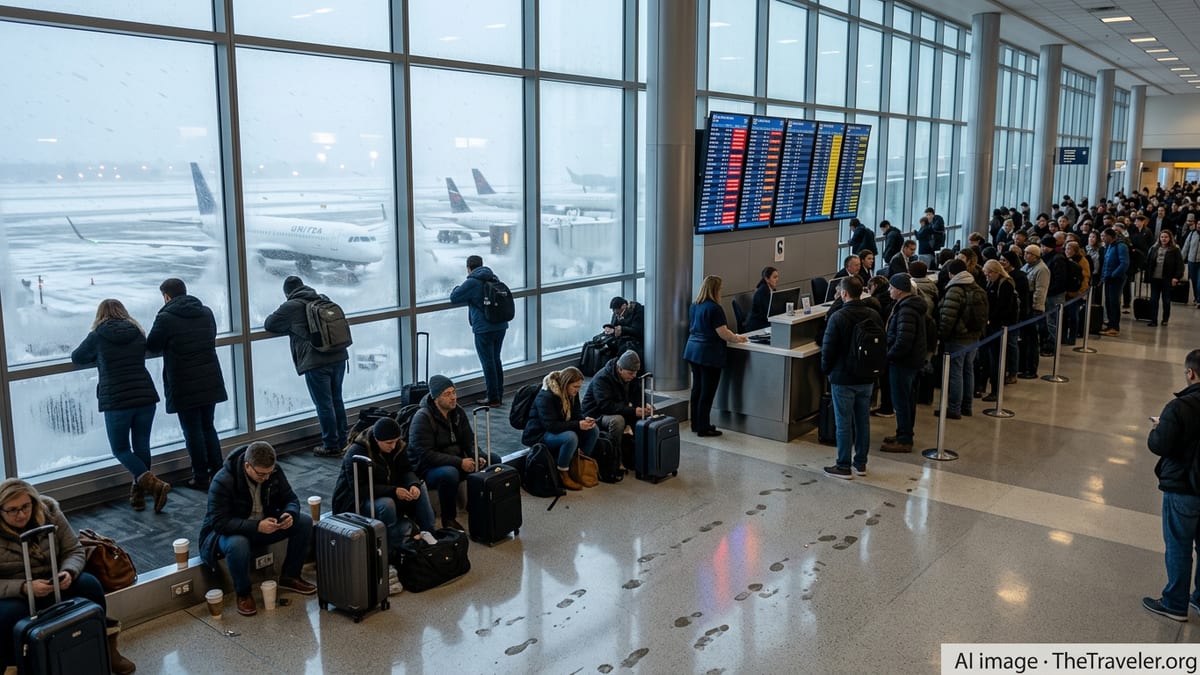
Storm Slams Major Hubs at the Height of Spring Break
The latest winter system has arrived at one of the worst possible times for travelers, hitting just as colleges and schools release students for spring break and families head for warmer destinations. Publicly available aviation data shows that more than 2,000 flights into, out of, and within the United States have been canceled over a roughly 24-hour period, with cancellations heavily concentrated at major Midwest and East Coast hubs.
Reports indicate that airports in Chicago, Minneapolis, Detroit, Denver, and several New York City area facilities have experienced waves of cancellations as visibility drops, crosswinds increase, and snow removal operations fall behind. In many cases, airlines have proactively scrubbed flights to avoid aircraft and crew becoming stranded, compounding the number of grounded departures.
The timing has amplified the impact. Many of the affected flights are feeding popular spring break gateways such as Florida, the Caribbean, Mexico, and desert destinations in the American Southwest, leaving planes and crews out of position for onward routes. That has turned what would normally be a regional weather event into a national disruption.
Flight-tracking services show surging delays even on flights that do operate, as carriers juggle revised schedules, reposition aircraft, and wait for runway and taxiway clearing. Passengers on some routes are facing rolling delays of several hours followed by last-minute cancellations when conditions fail to improve quickly enough.
Snow, Wind, and Ice Create Hazardous Conditions
The storm system driving the disruption is a sprawling late-winter setup that has generated heavy snow bands across the Upper Midwest and interior Northeast, along with pockets of sleet and freezing rain further south and east. Meteorological analyses describe a strong temperature contrast and deep low pressure, ingredients that can rapidly intensify storms and create hazardous travel conditions on the ground and in the air.
High winds have been a key factor at several airports, with gusts strong enough to reduce the number of active runways, limit takeoff and landing directions, and require greater spacing between aircraft. These constraints sharply reduce capacity, forcing air traffic managers to hold or divert flights and airlines to pare back schedules.
On the airfield, snow and ice accumulation on runways, taxiways, and gate areas has slowed operations further. Ground crews must cycle aircraft through deicing pads, plows move continuously to keep surfaces usable, and equipment breakdowns or shortages of deicing fluid can quickly create bottlenecks. In some locations, operations have been temporarily suspended during the most intense periods of snowfall or icing.
Forecasters expect the storm’s impacts to shift eastward over time, with inland hubs gradually improving as New England and portions of eastern Canada experience the brunt of the weather. Even as skies clear in some regions, lingering cold temperatures and slick surfaces can continue to constrain airport capacity into the following day.
Spring Break Travelers Face Long Lines and Limited Options
The collision of a major winter storm with peak leisure demand has produced crowded terminals, long customer service lines, and limited rebooking options across much of the country. With many flights fully booked for days in advance due to spring break, displaced travelers are finding that alternative itineraries often involve multi-stop routings, overnight connections, or departures several days later than planned.
Publicly available coverage from airline and airport advisories highlights the scale of the disruption, with carriers extending travel waivers that allow passengers to change dates or routes without typical fees. Even so, seat availability has become a major constraint. Some travelers are turning to secondary airports, lengthy road trips, or long-distance bus and rail services in an effort to salvage vacation plans.
At affected hubs, images and reports show lines stretching through concourses as passengers seek assistance at service desks or wait to speak with agents at the gate. Self-service tools and airline apps are handling much of the rebooking load, but system slowdowns and sudden inventory changes can make the process unpredictable.
For students and families on tight schedules, the timing can be particularly painful. Missed hotel check-ins, prebooked tours, and cruise departures are among the knock-on effects, with some travelers forced to shorten or abandon trips entirely when suitable flights are not available within their break window.
Airlines Adjust Networks and Warn of Ongoing Disruptions
According to published airline statements and operational updates, carriers have been trimming schedules, consolidating lightly booked flights, and prioritizing key trunk routes between hubs to restore network stability. Preemptive cancellations have become a common strategy in recent years, aimed at reducing day-of-travel chaos and giving customers more advance notice when severe weather threatens.
In this latest storm, airline network operations centers have focused on keeping critical aircraft and crew rotations intact, even if that means canceling entire waves of regional flights. Smaller spoke airports, particularly in snowbelt regions, have borne a disproportionate share of cancellations as carriers concentrate their limited resources on high-demand corridors.
Travel industry analysts note that while this approach can shorten recovery times once weather improves, it also increases the likelihood that certain communities will see few or no departures on the worst days. For travelers, that can translate into longer waits for the next available seat and greater dependence on ground transportation to reach alternative airports.
Airlines are also cautioning that disruptions may linger even after the storm exits. Residual crew misalignments, aircraft requiring additional maintenance after operating in severe conditions, and continued weather challenges at downstream destinations can all cause cancellations and delays to ripple through the system for several days.
What Travelers Can Expect in the Coming Days
As the system moves east and gradually weakens, aviation forecasts suggest a slow but uneven improvement in flight operations. Some hubs are likely to rebound quickly once runways are clear and winds subside, while others may deal with snow removal and refreezing issues into the next day or longer. Travelers with flexible plans may find better luck rebooking for midweek departures, when demand typically dips slightly versus peak weekend periods.
Publicly available guidance from aviation and consumer agencies consistently emphasizes preparation and flexibility during major weather events. That includes monitoring flight status frequently, allowing extra time to reach the airport, and having contingency plans if a connection is missed or a flight is canceled. Those who have not yet begun their trips are often encouraged to consider voluntary changes when severe systems are forecast along their route.
For many spring break travelers, the episode is a vivid reminder that winter does not abide by the calendar. Even as temperatures climb in popular beach destinations, the air routes that connect them to the rest of the country still wind through regions vulnerable to snow, ice, and powerful late-season storms.
With several weeks of the spring break period still ahead, travel industry observers are watching closely to see whether additional weather systems emerge. Any new storm overlapping with already strained schedules could compound disruption, while a quieter pattern would give airlines and airports a chance to reset operations and move thousands of stranded travelers to their long-awaited vacations.