

More news on this day
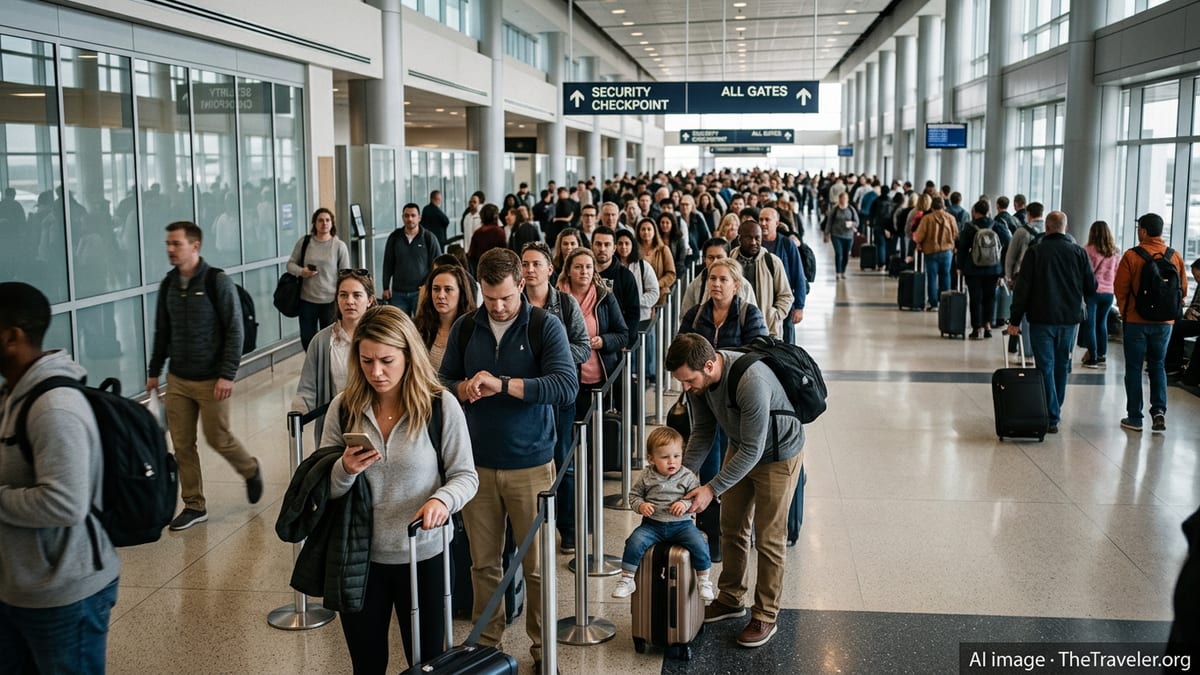
Spring break flyers across the United States are running into hours long security lines as a partial federal government shutdown squeezes Transportation Security Administration staffing just as peak travel ramps up.
Shutdown Collides With Peak Spring Break Rush
Security lines at several major U.S. airports stretched for hours over the weekend, with officials in Houston and New Orleans warning travelers to prepare for unusually long waits at checkpoints as the spring break rush collides with a partial shutdown of the Department of Homeland Security.
At Houston’s William P. Hobby Airport, the airport’s own wait-time estimates showed standard security lines reaching about three hours on Sunday evening. Airport officials used social media updates to ratchet up their guidance from a routine “arrive early” message to urging passengers to arrive four to five hours before departure to clear security in time for their flights, citing the shutdown’s impact on staffing.
Louis Armstrong New Orleans International Airport reported similar scenes, with Transportation Security Administration lines at times spilling toward the parking area and waits stretching to two hours. The airport urged passengers to arrive at least three hours before departure and cautioned that the disruption could continue into the coming week as staffing remains tight.
The partial shutdown, which has left Homeland Security without full funding since mid February, requires most TSA officers to report to work without pay. Rising sick calls and attrition are now colliding with one of the busiest leisure travel periods of the year, when daily passenger volumes routinely approach or exceed pre-pandemic records.
Where Travelers Are Seeing the Longest Delays
While not every airport is experiencing extreme backups, the worst delays so far have clustered at busy spring break gateways in the South and Sun Belt. In Houston, Hobby has borne the brunt thanks to dense schedules of domestic leisure flights, even as wait times at the larger George Bush Intercontinental have swung from mere minutes to extended queues from one shift to the next.
New Orleans, a popular launching point for Gulf Coast and Caribbean vacations, has warned that its security lines could remain volatile in the coming days. Local officials there have pointed to a tightened TSA roster and the inability to surge additional screeners quickly while paychecks are on hold.
Phoenix Sky Harbor International Airport, another traditional spring break hub for travelers bound for Arizona’s resorts and ballparks, has also reported longer-than-normal waits, with airport officials pointing to the combination of shutdown-related staffing constraints and March’s already heavy traffic. Airlines and airport authorities in other cities are closely monitoring checkpoint times and advising customers to build in extra time even where lines have not yet hit the three-hour mark.
Industry groups say the situation remains uneven nationwide, with some large hubs still processing passengers relatively smoothly during off-peak periods. But they warn that the system is fragile: when more passengers converge on fewer open security lanes at the same time, even a modest staffing shortfall can quickly cascade into hour-long backups and missed flights.
Why the Government Shutdown Hits TSA So Hard
TSA officers are considered essential federal employees, which means they must keep working even when Congress and the White House fail to agree on funding. During a shutdown, those screeners are required to report for duty but do not receive full paychecks until after funding is restored, a dynamic that has historically driven higher-than-normal absenteeism and departures.
Senior Homeland Security officials have already warned lawmakers that the current shutdown is exacerbating ongoing staffing challenges at TSA, which has struggled to retain officers amid tight labor markets and competition from private-sector employers. In testimony earlier this year, agency leaders highlighted a spike in officers leaving the workforce following the previous protracted shutdown, underscoring how funding lapses can leave long-lasting scars on airport operations.
Unlike air traffic controllers, who are protected by separate funding mechanisms in some scenarios, TSA’s front-line checkpoint workforce is directly exposed to appropriations battles. As the current shutdown drags on, unions representing screeners have renewed calls for legislation that would guarantee continued pay for aviation safety and security staff during funding lapses, arguing that the current model puts both workers and travelers at risk.
Travel and tourism associations are also amplifying warnings. In a recent joint campaign, industry groups urged policymakers to shield aviation workers from the financial turmoil of shutdowns, citing billions of dollars in economic losses tied to previous episodes of prolonged funding gaps.
How to Reduce Your Risk of Missing a Flight
With conditions changing day by day and even hour by hour, travel advisors say the single most effective step passengers can take right now is to add significant extra buffer time at the airport. For spring break departures over the next week, many experts recommend arriving at least three hours before domestic flights and four hours before international flights, especially at large or heavily affected airports.
Passengers should check both their airline’s app and their departure airport’s official channels on the morning of travel for updated guidance on wait times and checkpoint openings. Some airports publish near real-time security wait estimates, which can help travelers decide which terminal entrance or checkpoint to use and whether to move quickly to the gate area after check-in.
Those enrolled in expedited screening programs such as TSA PreCheck may still face longer queues than usual, particularly where special lanes have been consolidated to manage limited staffing. But in many airports, these lines remain shorter than standard screening. Travelers with access to airline or credit card lounges might consider using them only after clearing security rather than before, to avoid being caught behind an unexpected surge of passengers.
Families traveling with children and large groups should factor in extra time for checking bags, navigating crowded terminals and resolving any last-minute booking issues. Airlines are reminding customers that they will not generally hold flights for individuals stuck at security, even when delays are tied to government staffing issues.
Planning Ahead for the Remainder of Spring Break Season
With no immediate resolution to the shutdown in sight, aviation analysts expect rolling disruptions to persist through at least the heart of spring break travel. That means travelers with trips scheduled later in March should start planning now for a more unpredictable airport experience, even if their local airport has not yet seen severe backups.
Experts advise booking flights earlier in the day, when operations are often more stable and there is more time to be rebooked if a connection is missed. Nonstop flights, where available, can also reduce the number of choke points a traveler has to navigate. For those still shopping for tickets, choosing airports that provide clear, frequently updated security wait information can offer a small but meaningful advantage in managing the journey.
Travel insurance policies that include trip delay coverage may help offset costs like meals and overnight lodging if a missed connection leads to an extended layover. However, travelers should read the fine print carefully; some policies may treat government shutdowns differently from weather-related disruptions.
Ultimately, passenger behavior can help ease some pressure on the system. Arriving early, packing light, having documents ready and following TSA guidance at the checkpoint all contribute to keeping lines moving. As spring break unfolds against the backdrop of another Washington funding standoff, those small steps may make the difference between a stressful scramble and a relatively smooth start to a long-awaited vacation.