

More news on this day
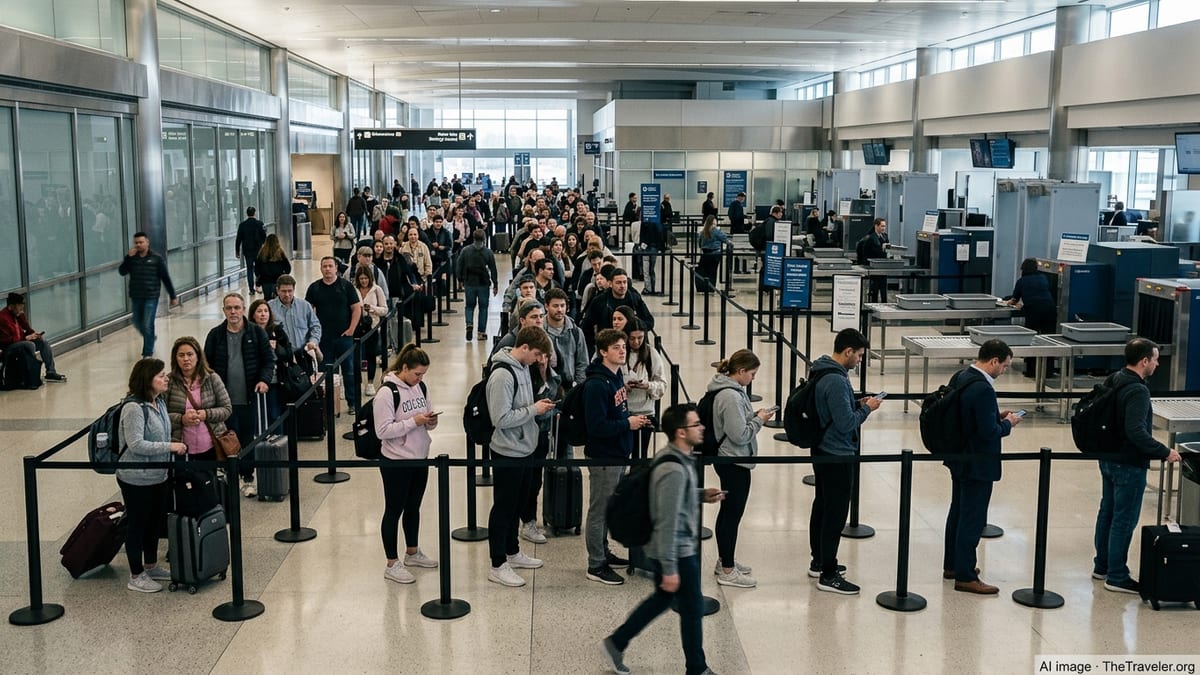
Spring break crowds and a grinding Department of Homeland Security shutdown are converging into a perfect storm at New York’s three major airports, with reports of security staffing shortages, marathon lines, and cascading flight disruptions at John F. Kennedy International, Newark Liberty, and LaGuardia just as one of the busiest travel periods of the year gets underway.
Get the latest news straight to your inbox!
Shutdown Deepens Just as Peak Travel Arrives
The current partial shutdown of the Department of Homeland Security, triggered by a lapse in funding in mid February 2026, is entering its second month with no resolution in sight. Transportation Security Administration personnel at airports nationwide are classified as essential and are therefore required to keep working, but they have now gone weeks without full pay. Publicly available information indicates that hundreds of screeners have already resigned since the impasse began, while many others are calling out, seeking temporary work elsewhere, or juggling second jobs to stay afloat.
This erosion in staffing is colliding directly with a sharp spring break surge. Airline and airport data show passenger volumes through late March trending at or above 2019 levels, driven by school holidays and pent up demand for leisure travel. At large hubs such as JFK, Newark, and LaGuardia, the result is a fragile system in which relatively small shortfalls in security staffing can quickly translate into hours long waits at checkpoints and missed flights down the line.
Recent media coverage describes national TSA callout rates around or above 10 percent on multiple days, far higher than typical levels. At the same time, union representatives and advocacy groups report that many front line officers are struggling with rent, food, and transportation costs, noting that this is the third shutdown in less than a year to hit the same workforce. That combination of financial stress and high traffic volumes is leaving the New York region particularly exposed.
JFK: Long Lines, Reassigned Staff, and Strained International Hubs
At John F. Kennedy International Airport, the region’s largest gateway and a key hub for international traffic, the shutdown is exacerbating pre existing capacity constraints. Federal analyses of New York airspace operations have long flagged the afternoon and evening hours at JFK as especially delay prone because of dense transatlantic schedules and limited runway flexibility. With TSA staffing stretched thin, reports indicate that checkpoint throughput has become more volatile, especially during late day departure peaks.
Airline facing updates and traveler accounts describe security lines in some JFK terminals stretching well beyond typical queuing areas during recent weekends, with waits occasionally exceeding 90 minutes at peak. To keep all lanes open, managers have been shifting officers between terminals and redeploying personnel from lower demand periods, a practice that can temporarily stabilize operations but leaves the system more vulnerable to sudden surges or irregular operations such as weather disruptions.
International travelers are facing additional friction as trusted traveler programs remain partially constrained by the funding lapse. While core screening is continuing, publicly available information shows that enrollment and some customer service functions for programs such as Global Entry have been curtailed, lengthening processing timelines and limiting relief for heavy transatlantic and long haul flows through JFK’s busiest terminals.
Newark: Layered Disruption From Security, Airspace, and Rail
Newark Liberty International Airport has emerged as a particular pressure point in the New York system. Even before the shutdown, federal and industry reports identified Newark as one of the most delay prone major airports in the country, reflecting its congested airspace, dense schedule of banked operations, and ongoing construction. The current funding lapse is amplifying those vulnerabilities on multiple fronts.
Security screening at Newark has seen some of the most visible impacts. In recent weeks, published coverage and traveler reports have noted periods when dedicated expedited screening lanes operated on reduced hours or closed early in the evening, forcing all passengers through standard lines. With TSA officers working unpaid and attrition rising, callouts at key checkpoints have translated directly into narrower lane availability and queue buildups, particularly in Terminals A and C during morning and late afternoon peaks.
The pressure is not limited to checkpoints. Construction related restrictions on Newark’s AirTrain service on weekdays, introduced earlier this year to support replacement work, are intersecting with the shutdown to complicate airport access. During daytime maintenance windows, shuttle buses are handling a larger share of passenger movements between terminals, parking, and rail connections. When security lines back up at the same time, travelers arriving from regional rail or park and ride facilities are encountering congestion both outside and inside the terminals, heightening the risk of missed departures.
Airlines serving Newark have begun trimming some frequencies and upgauging aircraft on remaining routes as a way to carry roughly the same number of passengers with fewer flights through constrained time windows. According to industry statements, this is intended to help cope with both existing air traffic management waivers in the New York area and the added uncertainty from staff shortages linked to the DHS shutdown.
LaGuardia: Short Haul Chaos and Crowded Checkpoints
LaGuardia, rebuilt in recent years but still operating within tight runway and airspace limits, has quickly become a barometer of shutdown stress. The airport’s schedule is dominated by short haul domestic flights that are particularly sensitive to ground delays, since a relatively minor disruption can erase much of the time spent in the air. As spring break demand lifts load factors on these routes, even modest slowdowns at security are enough to force rolling gate holds and knock on delays across the Northeast network.
Travelers passing through LaGuardia over the last week have described lines creeping into terminal circulation areas during morning business peaks and afternoon holiday waves. Social media posts show impromptu stanchions and overflow queues, while anecdotal accounts mention passengers warned to arrive three hours early for domestic flights, well beyond traditional guidance for LGA. Airport level advisories have generally urged travelers to build in extra time and monitor carrier apps closely for gate and departure changes.
Operational data cited in federal planning documents indicate that LaGuardia’s most delay prone hours align closely with TSA’s current periods of greatest staffing stress: early mornings, midday banks, and late day departures. With fewer officers available and some working overtime without pay, scheduling the right number of screeners for each bank has become increasingly difficult. That balancing act often leaves certain checkpoints overloaded, even when adjacent lanes appear underused, feeding a perception among travelers that the airport is lurching from one bottleneck to another.
Traveler Strategies and Uncertain Timeline
For passengers trying to navigate JFK, Newark, and LaGuardia in the coming days, the practical implications are stark. Airlines and airport operators are advising travelers through public channels to allow significantly more time than usual for check in and security, particularly during early morning and evening peaks. Many carriers have issued flexible rebooking policies around the busiest spring break weekends, allowing some passengers to shift travel to off peak days or flights with smaller projected crowds.
Experienced travelers are adjusting strategies in response to the evolving disruption. Reports suggest a growing number of New York area passengers are opting for the earliest departures of the day, when security lines may be shorter and the downstream impact of national delays has not yet peaked. Others are routing through alternative airports within driving distance, trading longer ground segments for what they hope will be more predictable screening and departure conditions.
What remains most uncertain is duration. Publicly available reporting from Washington indicates that negotiations over DHS funding remain stalled, with competing proposals on border, immigration, and security policy still far apart. Aviation stakeholders, from airline executives to airport directors and worker unions, are pressing for a resolution, warning that each additional week of unpaid work accelerates staff departures and deepens the challenge of rebuilding a stable security workforce even after funding is restored.
For now, the New York region illustrates how a targeted shutdown at a single federal department can reverberate far beyond Washington. As spring break traffic continues to build, travelers heading through JFK, Newark, and LaGuardia face an airport experience defined less by weather or technology than by an impasse over paychecks, leaving one of the world’s busiest air travel markets struggling to keep people moving.