

More news on this day
Spring break flights into and across the United States are colliding with a perfect storm of Transportation Security Administration staffing shortages, a federal government shutdown and volatile early spring weather, leaving many travelers facing hours-long security lines, cascading flight disruptions and mounting uncertainty about their long-awaited vacations.
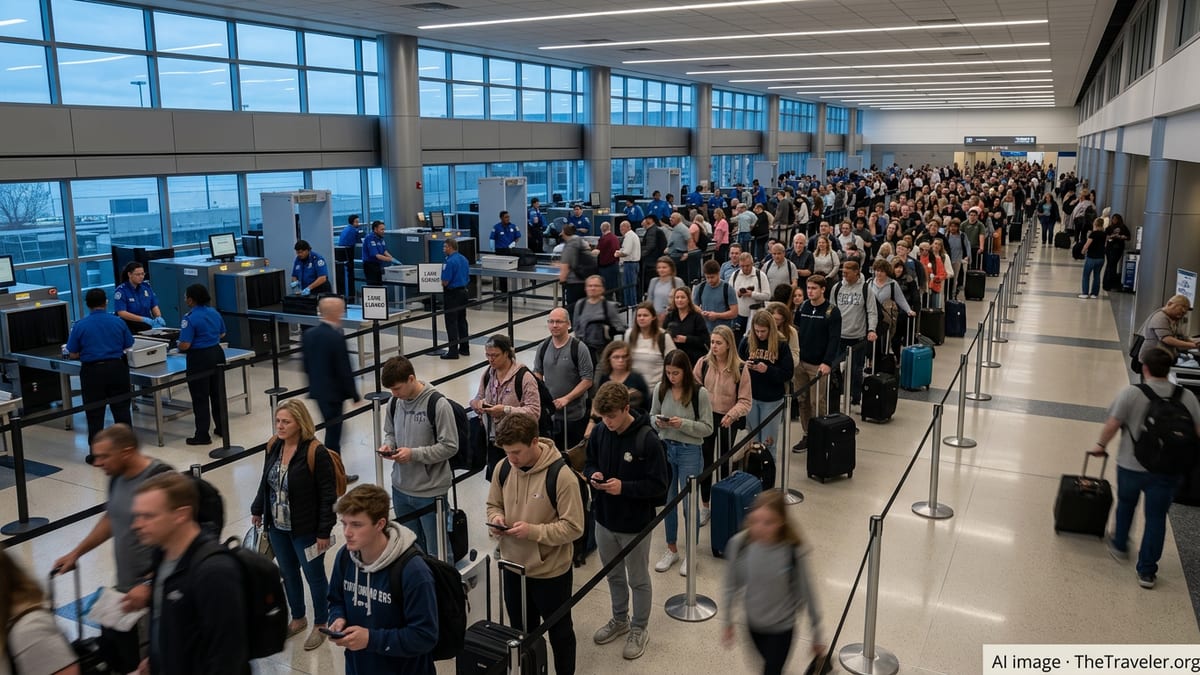
TSA Staffing Gaps Turn Security Checkpoints into Chokepoints
Across multiple U.S. airports, security checkpoints have emerged as the most visible pressure point as spring break traffic surges. Transportation Security Administration officers, classified as essential workers, are required to report to duty despite the ongoing partial government shutdown, but many are now working without full pay. Aviation officials say that financial strain is driving higher-than-normal absences, leaving some checkpoints short staffed just as passenger volumes spike.
In Houston, passengers at William P. Hobby Airport have reported standing in security lines that stretched for three hours or more over the weekend and into Monday, with airport officials at one point urging travelers on social media to arrive four to five hours before departure. Similar scenes have played out at Louis Armstrong New Orleans International Airport and at several other busy gateways where fewer open lanes have created long backlogs through standard screening.
Nationally, TSA screening volumes climbed to nearly 2.8 million passengers on Sunday, one of the busiest days since early January, as school and university holidays converged with pent-up leisure demand. Travel broadcasters and local outlets report that in some airports, early-morning departures are bearing the brunt of the problems as overnight staffing gaps collide with a rush of first-wave flights.
While not every major airport is experiencing severe delays, the uneven distribution of staff and the day-to-day nature of callouts mean conditions can change quickly. Some smaller and mid-sized airports, including Palm Springs International, say they are still moving travelers through security in a matter of minutes, underscoring a patchwork experience that makes planning more difficult for spring break visitors.
Government Shutdown Deepens Airport Strain
The staffing crunch is closely tied to the continuing partial shutdown of the U.S. Department of Homeland Security, which oversees TSA. With agency funding stalled in Washington, most TSA officers remain on the job but without normal pay, even as they are asked to work overtime and cover vacant shifts. Union representatives warn that missed paychecks expected later this month could further increase unscheduled absences, intensifying wait times just as spring break peaks.
Airports from Houston to New Orleans have cited the shutdown explicitly in public statements explaining why they are asking passengers to arrive hours earlier than usual. Local officials say they are redeploying administrative staff and volunteers to help manage lines and communicate with travelers, but they stress that only the federal government can resolve the underlying staffing and overtime issues at checkpoints.
The shutdown is also rippling into trusted traveler programs. Homeland Security has already paused enrollment and renewal for TSA PreCheck and Global Entry, and travelers report that some dedicated lanes are closed or operating with reduced capacity in certain terminals. That is pushing even frequent flyers back into standard lines, compounding congestion at already stressed security points.
Policy analysts note that the aviation system can technically continue to function through a shutdown, but the margin for error narrows considerably. When heightened passenger demand, unpaid essential workers and unpredictable weather all converge, the result is the kind of fragile environment on display at multiple U.S. airports this week.
Weather Turbulence and Airline Schedules Add to the Chaos
Severe weather is amplifying the staffing problems and stretching airline operations. A series of storm systems sweeping across the central United States in early March has triggered Federal Aviation Administration ground delays and intermittent ground stops at key hubs, including Chicago O’Hare and Atlanta. Over the weekend, tracking services recorded hundreds of cancellations and several thousand delays nationwide as thunderstorms, low clouds and lingering winter conditions snarled flight banks.
The timing could hardly be worse for airlines trying to handle heavy spring break traffic. Carriers have attempted to maintain full schedules, but they are now juggling late-arriving aircraft, displaced crews and tight connection banks at hubs such as Dallas, Houston and Orlando. Industry data shows that, even when cancellations remain relatively contained, rolling delays can quickly erode connection times and leave travelers stranded far from their intended beach or theme park destinations.
Recent winter storms, including a February blizzard that disrupted thousands of flights across the Northeast, have already left airlines scrambling to reset their networks ahead of the holiday period. Aviation analysts say that many carriers are still operating with limited slack in fleets and staffing, so when weather and air traffic restrictions collide with record leisure demand, widespread knock-on disruptions are almost inevitable.
For international visitors arriving in the United States for spring break, these compounding factors mean that the final legs of their journey are particularly vulnerable. Even travelers on long-haul flights that depart on time from Europe or Latin America are encountering ground holds, diversions or missed domestic connections as they funnel into stressed U.S. hubs.
Spring Break Travelers Face Tough Choices and Longer Lead Times
For millions of holidaymakers, the immediate impact of this spring break turbulence is being measured in hours of lost vacation time and higher stress at the start of their trips. Families and student groups have described arriving at airports before dawn only to find serpentine security lines snaking through parking garages or terminal corridors, with some missing flights despite arriving more than two hours early.
Airport authorities and travel experts are urging passengers to treat official guidance on early arrival as a minimum rather than an aspirational target, especially at large hubs and airports already reporting three-hour lines. Many are recommending that travelers flying from affected airports plan to reach the terminal at least three to four hours before departure for domestic flights, and five hours or more for international journeys, at least for the duration of the shutdown.
Within terminals, airlines are trying to absorb the disruption by waiving some change fees, opening overflow customer service desks and encouraging the use of apps for rebooking. Even so, scenes of long queues at ticket counters and gate podiums have become common, particularly when multiple delayed flights arrive at once and trigger missed connections. For visitors on tight itineraries or short getaways, the tradeoff between salvaging part of a vacation and abandoning the trip entirely is becoming painfully real.
Travel advisors say that, until federal funding for Homeland Security is restored and spring storm patterns ease, the U.S. aviation network is likely to remain fragile. That means spring break visitors headed to American beach towns, ski resorts or theme parks should build extra flexibility into their plans, pack more patience than usual and prepare for the possibility that the most challenging part of their vacation may be simply getting through the airport.