

More news on this day
Spring break crowds and ongoing federal funding turmoil are combining to push Transportation Security Administration wait times higher at Denver International Airport this week, creating fresh uncertainty for the millions of travelers who rely on the busy Rocky Mountain hub.
Get the latest news straight to your inbox!
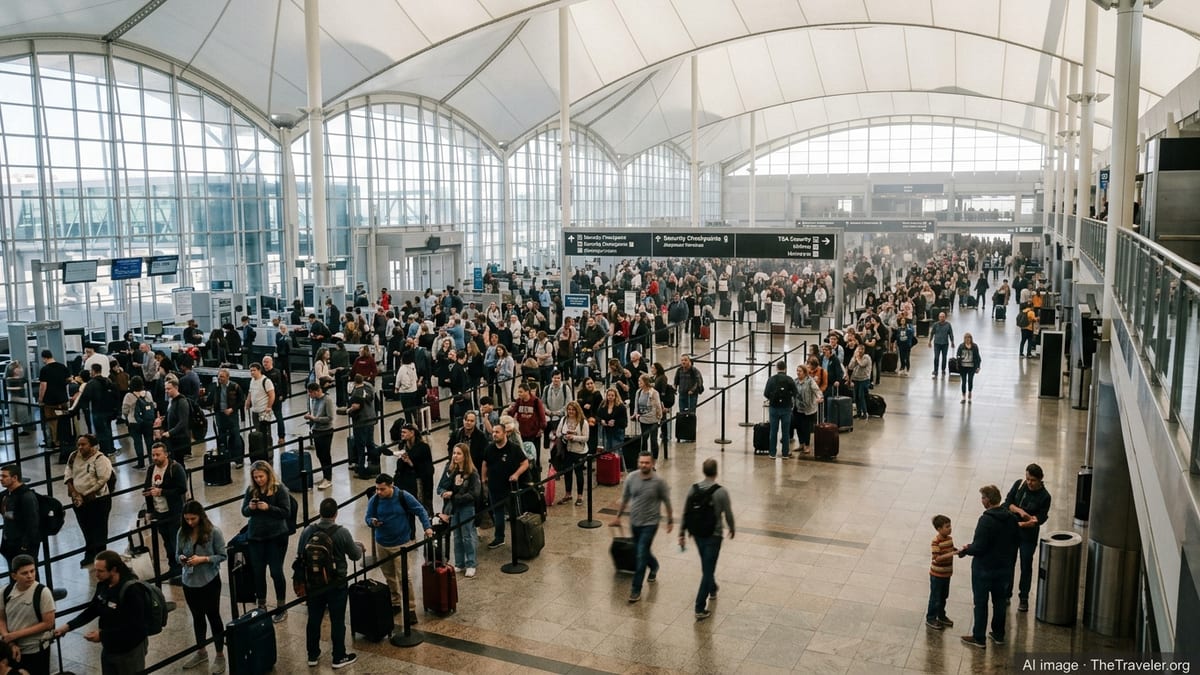
Spring Break Rush Meets National TSA Strain
Denver International Airport, one of the nation’s busiest connecting hubs, is entering one of its heaviest travel stretches of the year just as security staffing remains under pressure nationwide. Published coverage of the partial federal government shutdown that began on February 14 indicates that unpaid TSA officers have been calling out sick in larger numbers, contributing to uneven checkpoint performance at major airports during March spring break travel.
Nationally, reports describe airport security lines stretching well past an hour at several large hubs in recent days, with travelers in some cities advised to arrive up to three hours before departure. At the same time, other airports are seeing more typical waits, creating a patchwork of conditions that can be difficult for passengers with connections through Denver to anticipate.
For Denver, the timing is especially challenging. March is traditionally one of the airport’s busiest months as skiers, college students, and families converge on Colorado and warm-weather destinations. This year’s influx is colliding with a stressed security workforce and a recent local power disruption, amplifying the risk of missed flights for those who cut arrival times too close.
Publicly available industry statements from airlines and travel associations in recent weeks have also warned that sustained funding uncertainty for aviation security can translate directly into longer screening lines, reduced throughput at checkpoints, and more last-minute schedule disruptions across the network.
Recent Wait Times at DIA: From Manageable to Lengthy
Travelers passing through Denver International Airport over the past week have reported a mix of experiences, ranging from relatively smooth early morning transits to significantly longer lines at peak periods. Social media posts and traveler forums describe regular security lanes backing up toward the terminal interior at busy times, with wait estimates topping 30 minutes before sunrise on some spring break Saturdays.
In crowdsourced reports from March 14 through March 19, many travelers described standard TSA waits of roughly 30 to 40 minutes during the early morning bank of departures, with some commenters noting that lines appeared visually daunting even when they moved faster than expected. Others recounted clearing PreCheck in as little as 10 to 20 minutes during the same window, highlighting the divergence between expedited and general screening flows.
On March 18, a power outage at Denver International added an additional layer of disruption, briefly complicating the picture for passengers who had already cleared security but were unable to reach their gates or board flights on time. Airlines responded with travel waivers for affected customers, and anecdotal accounts indicate that while security itself remained functional, the combined effect of crowds, outage-related delays, and staffing stress heightened anxiety for outbound travelers.
Despite these pressures, several recent first-hand accounts continue to praise checkpoint staff at Denver for keeping lines moving and communicating clearly with passengers. However, the same accounts often emphasize that current conditions no longer reliably support last-minute arrivals, especially for those checking bags or traveling with families during the spring break rush.
What the Latest Travel Alert Means for Passengers
The emerging travel alert for Denver International Airport is less about a single catastrophic breakdown and more about a sustained shift in risk for the remainder of March. With passenger volumes elevated and TSA resources stretched, security wait times that were once comfortably under 20 minutes at many hours of the day are now more likely to edge above 30 minutes, and at times longer, in standard lanes.
For the millions of passengers who use Denver as a connecting hub, this change means tighter margins when inbound flights arrive late or when schedules allow only short layovers between flights. Published airline advisories this week, combined with national news coverage of TSA staffing challenges, suggest that carriers are bracing for higher levels of misconnects and rebookings as spring break peaks.
Locally, travel commentary in Colorado outlets has contrasted Denver’s congestion with the relatively light waits at smaller regional airports such as Colorado Springs, where travelers report clearing security in under 10 minutes in many cases. That comparison has fueled renewed interest in alternative airports for Front Range residents, even when itineraries ultimately still route through Denver for onward connections.
For Denver-bound leisure travelers, the alert essentially redefines what counts as a safe arrival window. The long-standing rule of thumb of arriving two hours early for domestic flights is increasingly being treated as a minimum during spring break, particularly for morning departures, while some travel advisors now recommend adding at least 30 extra minutes for those without PreCheck or CLEAR.
Tools and Tactics to Navigate Longer Lines
As lines grow, publicly available guidance from national outlets and local travel experts emphasizes planning and real-time monitoring over guesswork. Many U.S. airports, including Denver, provide online or app-based estimates of current security wait times, and national coverage in recent days has highlighted these tools as essential for navigating the spring break crunch while TSA officers continue to work without pay.
For standard screening, Denver offers a free appointment-based lane that allows passengers to reserve a time window for entering security. Recent traveler accounts indicate that these reservations can significantly reduce uncertainty for those departing during peak periods, although availability may tighten as more people become aware of the option.
Programs such as TSA PreCheck remain one of the most effective ways to shorten security waits, even when checkpoints are under pressure. Reports from Denver this week suggest that PreCheck travelers are often clearing screening in about half the time of standard lanes during busy hours, though those waits can still stretch beyond the single-digit minutes that many frequent flyers were accustomed to in previous years.
Travel commentary also stresses common-sense tactics: checking in online before arrival, consolidating carry-ons to reduce secondary bag screening, and using airline apps to monitor gate changes or delays while in line. With weather systems still sweeping across large parts of the country and the federal funding situation unresolved, these small steps can collectively make the difference between a stressful sprint and a more predictable airport experience.
Outlook for the Remainder of March Travel
Looking ahead to the final weeks of March 2026, publicly available traffic projections and airline booking patterns point to continued heavy volumes at Denver International Airport. College spring breaks, family vacations, ski season departures, and fans traveling to March basketball tournaments are all converging on a network that is already stretched by staffing and weather-related challenges.
Industry statements from travel and airline trade groups in February warned that without a more stable funding framework, TSA staffing would remain vulnerable to future disruptions, especially around peak travel holidays and major leisure periods such as spring break. The current situation at Denver offers a real-time example of how those risks translate into longer lines and greater variability in the passenger experience.
For now, the key message for travelers is caution rather than panic. Many recent accounts show passengers still reaching their gates with time to spare when they build in extra buffer and use the available tools. The latest alert for Denver International serves as a reminder that what once felt like generous lead time may no longer suffice when millions of travelers are on the move at once.
With no immediate end in sight to either spring break crowds or the broader TSA funding standoff, security wait times at Denver are likely to remain elevated and unpredictable in the near term. For anyone flying through the airport in the coming days, the safest strategy is to assume longer lines, arrive earlier than usual, and treat updated airport guidance as a key part of pre-trip planning.