

More news on this day
Passengers across the United States faced another difficult travel day as 66 flights were canceled and 294 delayed at key airports including Boston Logan, Chicago Midway, Philadelphia, Nashville, Reagan National, Hartsfield-Jackson Atlanta and San Francisco International, according to aggregated flight-tracking data and published aviation coverage.
Get the latest news straight to your inbox!
Disruptions Concentrated at Seven Busy Hubs
Publicly available flight-status dashboards show that the latest wave of irregular operations was highly concentrated at seven airports that play an outsized role in the U.S. network: Boston Logan International, Chicago Midway, Philadelphia International, Nashville International, Ronald Reagan Washington National, Hartsfield-Jackson Atlanta International and San Francisco International. The combined total of 66 cancellations and 294 delays at these facilities translated into thousands of disrupted journeys across the country.
These airports are not only busy origin and destination points, they are also critical connectors. Delays and cancellations at Boston and San Francisco ripple into transcontinental and transpacific routes, while disruptions at Atlanta, Midway and Reagan National often spill into regional operations across the Southeast and Mid-Atlantic. Even a relatively modest number of canceled flights can quickly balloon into a much larger pool of missed connections, last-minute rebookings and overnight stays when the disruptions hit multiple hubs at once.
Reports from aviation-focused outlets indicate that the affected flights included a mix of mainline and regional services, with some carriers trimming departures early in the day as conditions deteriorated. Once cancellations begin to stack up, aircraft and crew rotations can fall out of sequence, making it harder for airlines to restore normal schedules before the end of the operating day.
Weather, Congestion and Tight Schedules Feed the Chaos
Published coverage links the disruption to a familiar mix of triggers: unsettled spring weather patterns, congested airspace and tightly timed airline schedules that leave limited room for recovery when problems arise. When storms, low visibility or shifting wind patterns intersect with peak travel periods, arrival and departure rates often have to be reduced, particularly at complex fields such as San Francisco and Atlanta.
Analyses from government and industry sources have repeatedly highlighted these seven airports as among the most delay-prone in the country, reflecting their heavy traffic volumes and geographic roles. Boston, San Francisco and Atlanta, for example, handle large numbers of long-haul flights that depend on precise timing to connect with shorter onward sectors. Reagan National, with its slot controls and airspace constraints near the U.S. capital, has long been sensitive to even minor operational hiccups.
When early departures are held or canceled, the knock-on effects can be significant. Aircraft scheduled for multiple legs over the course of the day may be out of position for subsequent flights, while crews can reach duty-time limits before operating all of their planned segments. These compounding factors help explain why a disruption that begins at a handful of airports can quickly register across the national flight map.
Passengers Confront Long Lines and Limited Options
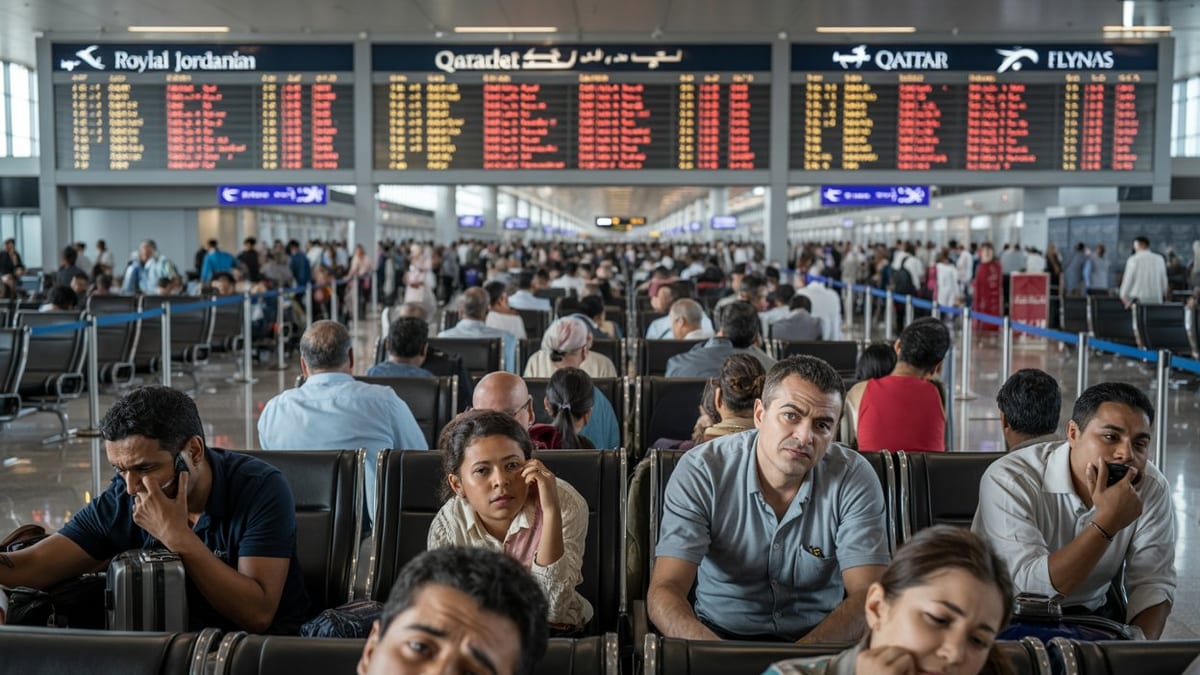
For travelers on the ground, the numbers translated into crowded terminals, lengthy customer-service queues and, in some cases, overnight stays in airport areas or nearby hotels. Photos and firsthand accounts shared in news reports and on social platforms showed departure boards dotted with red and yellow status updates across the affected airports, as travelers sought alternative routings or waited out extended delays.
Because many of the canceled flights were part of complex multi-leg itineraries, some passengers reportedly found that same-day rebooking options were limited or already sold out. Others faced long hold times with airline call centers as carrier apps and websites strained under surging demand from travelers trying to adjust plans simultaneously.
Consumer travel guidance published in recent months has encouraged passengers facing widespread disruption to act quickly when cancellations appear, to explore reroutes through less congested hubs and to consider alternative airports or ground transport where feasible. However, when multiple major hubs are affected at once, even proactive steps may not be enough to secure a convenient same-day alternative.
What the Disruption Reveals About U.S. Air Travel Resilience
Aviation analysts note that while the tally of 66 cancellations and 294 delays is modest compared with some of the most severe recent disruptions, it still highlights how finely balanced the U.S. air travel system remains. With aircraft operating near capacity and airlines continuing to manage staffing carefully, there is limited slack to absorb sudden weather or operational shocks without noticeable consequences for passengers.
Data from transportation researchers and congressional reports has shown that airports such as Atlanta, Boston, Chicago Midway, Reagan National and San Francisco already carry a significant share of national delay minutes in a typical year. The latest episode reinforces the pattern that when conditions deteriorate at several of these locations simultaneously, the broader network can quickly become strained.
The disruption also underscores ongoing debates about infrastructure, air traffic control modernization and scheduling practices. Proposals range from further investment in runway and taxiway improvements to rethinking peak-period scheduling and strengthening contingency planning for airlines and airports. For travelers, the practical takeaway remains largely the same: monitor flights closely, build extra time into connections and understand carrier policies on refunds, vouchers and accommodations when plans are upended.
Travelers Head Into Spring Peak With Cautious Expectations
The latest cancellations and delays arrive just as airlines prepare for a busy spring and summer travel season, when leisure demand typically surges and routes to coastal cities and tourist destinations fill up. Travel industry forecasts suggest that domestic volumes will remain robust, even as travelers grow more accustomed to factoring disruption risks into their planning.
Recent incidents at Boston, Midway, Philadelphia, Nashville, Reagan National, Atlanta and San Francisco are likely to reinforce that cautious mindset. Many travelers now routinely build buffers into itineraries, such as avoiding tight connections, opting for earlier departures in case rebooking is required and purchasing travel insurance products that offer at least some protection against severe delays and cancellations.
While airlines continue to emphasize operational investments and schedule adjustments designed to improve reliability, the latest round of disruption shows that even incremental weather changes or capacity constraints can still strand passengers when they intersect with the busiest nodes in the national network. For now, the figures coming out of these seven airports serve as another reminder that flexibility, preparation and up-to-date information remain essential tools for navigating U.S. air travel.