

More news on this day
As Japan moves into spring 2026, Toyama Prefecture is emerging as a compelling alternative to the country’s busiest cherry blossom hotspots, combining dramatic alpine snow walls, quiet temple districts and flower-lined rivers into a compact region increasingly featured on seasonal travel itineraries.
Get the latest news straight to your inbox!
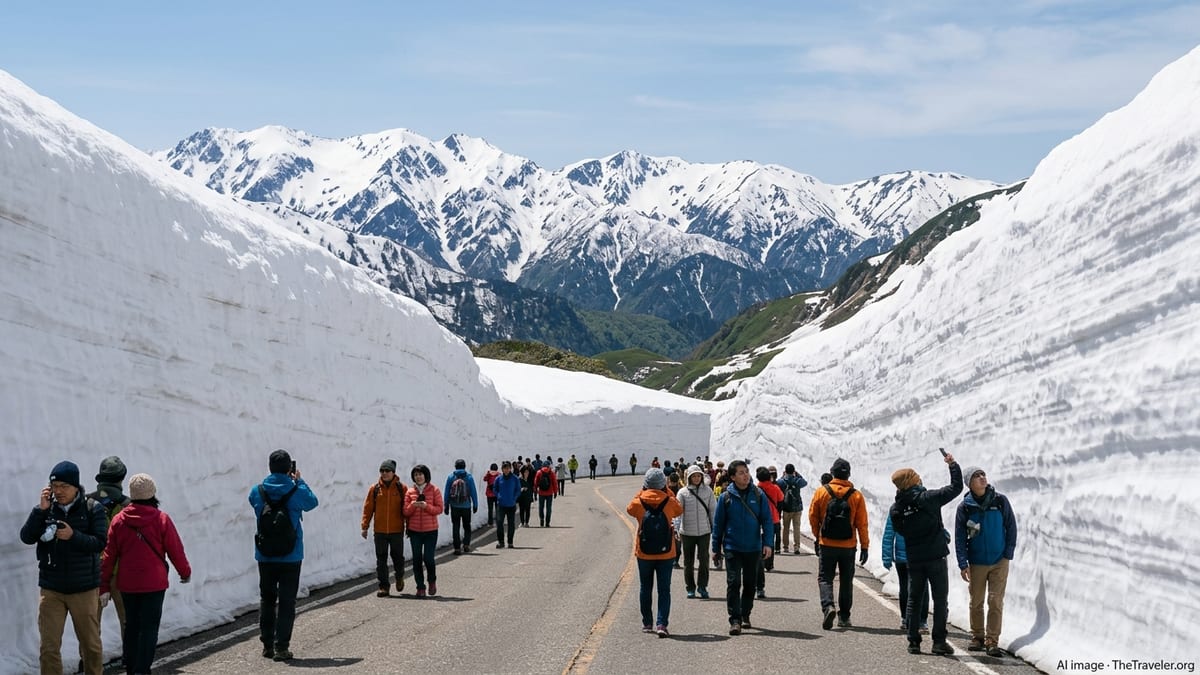
Tateyama’s Towering Snow Walls Draw Spring Crowds
The hallmark of Toyama’s spring travel season is the reopening of the Tateyama Kurobe Alpine Route, a high-altitude corridor linking Toyama and Nagano that typically resumes full operations in mid-April. Public information from operators and tourism bodies indicates that the snow corridor near Murodo, often called “Snow Otani,” remains one of the most anticipated sights, with walls of compacted snow historically reaching heights of over 10 meters in recent years.
Recent travel guides for 2026 note that the snow walls are usually at their most impressive from route opening through late May, before warmer temperatures begin to soften and lower the banks. Visitors traverse the corridor on foot along a designated section near Murodo Terminal, where cleared asphalt is flanked by towering white walls carved by extensive snow removal work that begins in February each year.
Transport across the route combines cable cars, highland buses, a tunnel trolleybus and a ropeway, making the journey part of the attraction. Travel advisories emphasize the importance of early starts during peak periods such as Golden Week, when demand for the snow wall walk is particularly strong and boarding times can lengthen.
For international visitors planning multi-region itineraries, Toyama is increasingly positioned as a spring extension to Tokyo or Kanazawa stays. Shinkansen access from the capital to Toyama Station, followed by local rail and bus connections to Tateyama, has made day or overnight snow wall excursions more feasible than in the past.
Temples, Rivers and Cherry Blossoms in Toyama City
Beyond the alpine route, Toyama City’s riverside parks and historic districts are shaping the prefecture’s broader spring appeal. The cherry trees along the Matsukawa River, ranked among Japan’s notable blossom-viewing spots, typically bloom from early to mid-April according to recent seasonal forecasts, creating tunnels of pale pink above sightseeing boats and riverside walkways.
Local tourism materials describe evening illuminations during the peak blossom period, when soft lighting reflects off the river surface and highlights both petals and the silhouettes of nearby bridges. The setting offers a quieter alternative to more crowded metropolitan hanami locations, while still providing services such as short river cruises, temporary food stalls and nearby accommodation.
Within walking distance, traditional temple districts and smaller neighborhood shrines provide contrasting atmospheres to the alpine spectacle. Wooden halls, stone lanterns and gravel courtyards framed by lingering snow on distant peaks reinforce Toyama’s image as a place where mountain and city landscapes meet visibly in spring.
Travel planners are increasingly promoting combined itineraries that link a day on the alpine route with a night along the Matsukawa, allowing visitors to see late snow and peak blossoms within the same short stay, subject to annual weather patterns and blooming variations.
Gokayama’s Historic Villages Offer Slower Travel
To the south of Toyama City, the Gokayama area in Nanto is drawing spring visitors who are seeking traditional architecture and rural scenery. The region’s gassho-zukuri farmhouses, recognized on the UNESCO World Heritage List alongside neighboring Shirakawa-go, are known for their steep thatched roofs designed to withstand heavy winter snow.
Recent destination guides describe Gokayama as a quieter counterpart to more heavily visited World Heritage villages elsewhere, noting that its compact settlements such as Ainokura and Suganuma retain a lived-in atmosphere with resident communities, small museums and family-run inns. In spring, melting snow reveals terraced fields and hillside forests just as fresh greenery emerges.
Access information published for 2026 highlights bus links from Shin-Takaoka Station, served by the Hokuriku Shinkansen, into the valleys that cradle the villages. This has encouraged more visitors to pair a high-altitude snow wall experience with an overnight stay in Gokayama, spreading tourism beyond the alpine corridor itself.
Local cultural programs, including folk music performances and hands-on craft experiences, are promoted more frequently during the milder months, when road conditions improve and daylight hours lengthen. Travel writers note that the contrast between the lingering snow in shaded mountain folds and the thawing village landscapes is particularly marked in late April and early May.
Flower-Filled Fields and Coastal Views Across Toyama
Spring in Toyama extends beyond mountains and heritage sites to a series of floral and coastal landscapes that are gaining prominence in travel coverage. Tonami City’s large-scale tulip displays, centered on the Tonami Tulip Fair held from late April into early May, are publicized as one of Japan’s largest tulip events, featuring extensive beds arranged in patterns that change annually.
Elsewhere in the prefecture, seasonal promotions spotlight the so-called “spring quartet” landscapes, where cherry blossoms, tulips, rapeseed flowers and snow-topped peaks appear together when blooming times coincide. Asahi Town, in eastern Toyama, has received attention for riverside vistas that combine flower fields with views of the distant Tateyama mountain range, especially on clear days.
Along Toyama Bay, cycling and coastal walking routes are being framed as shoulder-season options when temperatures are mild and visibility is often sharp. Government-backed cycling initiatives highlight Toyama’s bay-hugging routes, which offer long views of the Northern Japan Alps rising abruptly beyond the water, a panorama that is particularly striking when snow still covers the upper slopes.
These scenic elements support a broader narrative of Toyama as a multi-faceted spring destination, where visitors can move in a single day from flower parks and fishing ports at sea level to snow corridors above 2,400 meters, provided they plan around operating periods and local transport timetables.
Planning a Spring 2026 Journey Through Toyama
Publicly available information for 2026 indicates that the core spring season in Toyama typically runs from early April, when cherry blossoms begin to open at lower elevations, through late May, when the alpine snow walls are still present but gradually shrinking. Travel advisories consistently recommend checking the latest forecasts for blossom timing and snow wall conditions, which can shift with yearly weather patterns.
Rail access via the Hokuriku Shinkansen from Tokyo and Kanazawa underpins most itineraries, with local private railways and buses carrying visitors onward to Tateyama, Gokayama and coastal towns. Advance ticketing systems for the Tateyama Kurobe Alpine Route, along with crowding during national holidays, are recurring themes in recent travel reports, suggesting that early reservations and weekday visits can significantly improve the experience.
Tourism materials also underline the need for appropriate clothing and footwear, particularly for the alpine sections where temperatures can remain near or below freezing even after cherry blossoms have finished in Toyama City. Sunlight reflecting from snow surfaces and sudden changes in weather at altitude are common considerations for day-trippers unused to mountain conditions.
With new articles and official campaigns positioning Toyama as a place to “see snow and sakura in the same trip,” interest in the region’s spring travel offerings appears set to expand. For visitors willing to balance train schedules, weather variability and altitude shifts, Toyama’s snow walls, traditional temples and scenic riversides offer a distinctive way to unpack a Japanese spring away from the country’s most crowded urban viewing spots.