

More news on this day
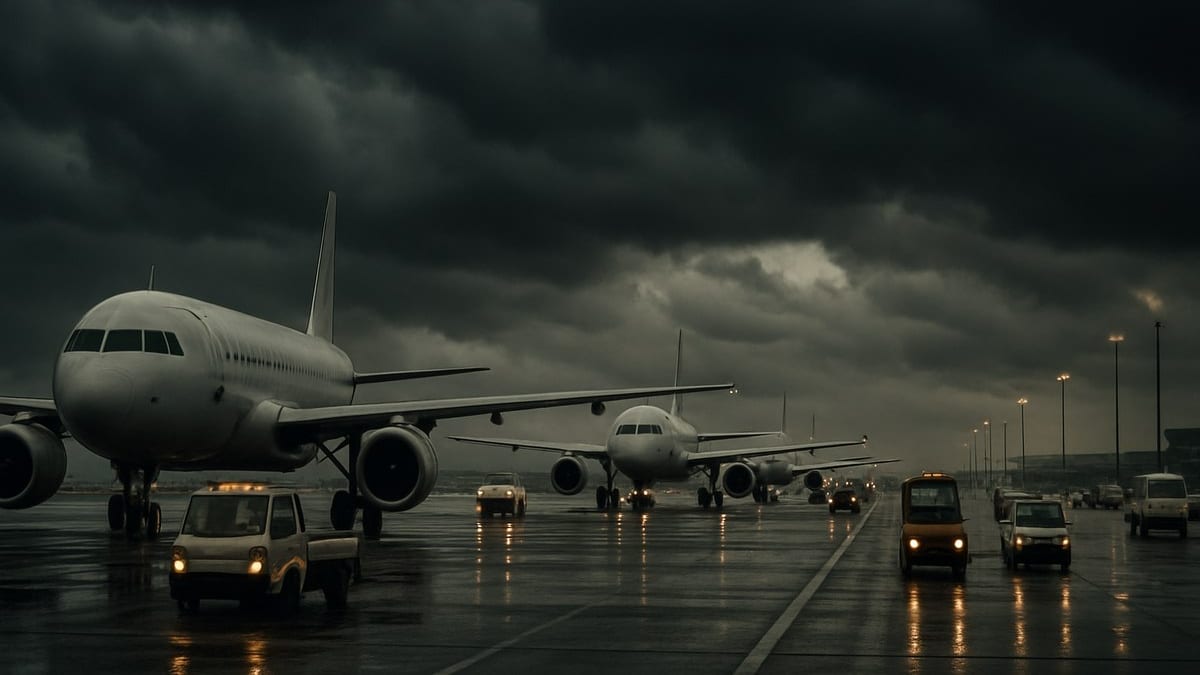
Spring storm systems sweeping across the United States are causing widespread flight disruptions at major hub airports this week, with thousands of delays and hundreds of cancellations rippling through the nation’s air travel network.
Get the latest news straight to your inbox!
Storm Systems Collide With Peak Spring Travel
Weather patterns typical of early spring, including severe thunderstorms, high winds and lingering winter conditions, are colliding with elevated holiday and leisure demand to strain U.S. aviation operations. Flight-tracking data and published coverage for the period from early April through April 8 indicate repeated rounds of storms over the Midwest, South and Northeast, forcing airlines and air traffic managers to slow or halt traffic into key hubs.
Reports from Easter weekend into this week point to more than 15,000 delays and several thousand cancellations nationwide over just a few days, with storm cells repeatedly targeting busy corridors around Atlanta, Chicago, New York and Florida. The combination of convective weather and high winds has reduced airport arrival and departure capacity, triggering Federal Aviation Administration traffic-management initiatives that hold aircraft on the ground or meter arrivals into already congested airspace.
These latest disruptions follow a turbulent late winter, when large storm systems in February and March already cut capacity and left airlines repositioning aircraft. The result heading into April is a fragile network where each new wave of storms produces outsized knock-on effects for travelers.
Major Hubs Bear the Brunt of Cancellations
Recent disruptions have concentrated around the country’s largest hub airports, where any slowdown quickly cascades across airline networks. On April 7, industry tallies show more than 4,300 delays and over 200 cancellations across the United States, with significant congestion at Atlanta, Chicago O’Hare, Orlando, New York area airports, Los Angeles, Houston and Boston.
Hartsfield-Jackson Atlanta International Airport has repeatedly appeared among the most affected hubs, with separate reporting noting more than 360 disrupted flights there on April 5 alone as storms moved through the Southeast. Chicago O’Hare has also been heavily exposed, with thunderstorms and strong winds triggering both local delays and arrival restrictions that reverberate through connections to the East and West Coasts.
In the Northeast, the three major New York area airports and Newark Liberty International Airport remain weather sensitive and tightly interconnected. On April 8, publicly available data shows Newark recording more than 100 delays and several cancellations, affecting a slate of domestic and international services and reinforcing the region’s role as a chokepoint when storms sweep through.
Florida hubs, including Miami and Orlando, have additionally seen a mix of local thunderstorms and spillover delays from storms elsewhere. Recent figures show Miami alone logging close to 200 delays in a single day as operators work through a mixture of arriving and departing disruptions tied to weather and wider network pressure.
Airlines Struggle to Stabilize Operations
The country’s largest carriers are working through volatile operating conditions as they balance safety-driven weather decisions with efforts to keep schedules moving. A stormy start to April has produced particularly acute challenges for several network airlines.
On April 3, one major carrier recorded more than 800 delays and dozens of cancellations across its U.S. network as weather, traffic-management measures and knock-on crew and aircraft issues intersected at hubs such as Denver, Houston, Chicago and Newark. Low-cost and ultra-low-cost carriers have also been hit hard; reporting shows one budget airline logging more than 200 significant delays and close to 20 cancellations the same day, with Denver, New York and Chicago again among the most affected airports.
Carrier-level data from April 7 points to broad-based stress. Delta, Southwest, United, American, Spirit, Alaska and Frontier all reported elevated disruption, with some airlines counting hundreds of delayed flights in a single day. While many of these delays were relatively short, the sheer volume has overwhelmed gate and crew availability at peak times, leading to rolling knock-on issues throughout the afternoon and evening banks of flights.
To manage the continuing storms, several airlines have introduced temporary travel waivers for key hubs such as Chicago, Houston and major East Coast cities in recent days. Publicly available notices encourage customers whose plans are flexible to move trips away from the worst-affected travel dates, a strategy that can reduce the number of travelers stranded when storms intensify.
Regional Ripple Effects Reach Secondary Airports
While attention often centers on the biggest hubs, secondary and regional airports are also experiencing significant disruption as spring storms shuffle aircraft and crews. On April 8, for example, Nashville recorded dozens of delays and a smaller number of cancellations on routes to Atlanta, New York, Dallas and other cities, illustrating how problems at large hubs quickly propagate through mid-size markets.
Similar ripple effects have been visible at airports such as Fort Lauderdale, Austin and Anchorage, where departure and arrival banks depend on on-time operations at larger connecting hubs. When storms shut down or slow traffic at those focal points, aircraft may arrive hours late or not at all, leaving passengers in smaller markets with limited same-day alternatives.
Cross-border routes have not been immune. Recent Canadian air traffic data points to hundreds of delays and dozens of cancellations at Toronto, Calgary and Montreal linked to storms over U.S. airspace and temporary closures or capacity reductions at American hubs. Those restrictions have stranded aircraft at Canadian gates and forced airlines to trim schedules on both sides of the border.
This pattern underscores how modern airline networks function as an interconnected system. A convective line over one metropolitan area can, within hours, disrupt flights scattered across the continent as aircraft and crews fail to arrive where they are scheduled to be.
What Travelers Can Expect in the Days Ahead
Forecasts indicate that unsettled spring weather is likely to persist across parts of the Midwest, South and East Coast in the coming days, suggesting that flight operations may remain vulnerable to further bouts of disruption. Even when storms move through quickly, residual effects often linger as airlines reposition aircraft, reassign crews and work through backlogs of stranded passengers.
Publicly available guidance from airlines and consumer advocates emphasizes that weather-related disruptions typically limit passengers’ rights to monetary compensation, but travelers are often entitled to assistance such as rebooking, meal vouchers or hotel accommodations in specific circumstances. The exact support varies by carrier and by whether a delay is considered within the airline’s control.
For now, travelers passing through major hubs such as Atlanta, Chicago, New York, Miami, Houston, Denver and Los Angeles are being urged by industry advisories to build in extra time, monitor flight status closely and be prepared for schedule changes on short notice. With spring storm season only just underway, the latest week of disruption may prove to be an early indication of a bumpy travel period ahead for U.S. air passengers.