

More news on this day
As spring 2026 reaches its peak, domestic tourism in the United Arab Emirates is converging on Dubai Miracle Garden, where millions of blooms, seasonal ticket promotions, and family-focused programming are turning the open-air attraction into one of the country’s most in-demand cultural and floral experiences for local residents.
Get the latest news straight to your inbox!
Spring 2026: A High Season for Domestic Travel in the UAE
Publicly available tourism data for Dubai in early 2026 indicates that the emirate is entering another record-setting year, with strong demand from both international and domestic travelers. Against this backdrop, Dubai Miracle Garden, in Dubailand’s Al Barsha South 3 district, has become a focal point for UAE families, residents, and regional visitors seeking cooler evening temperatures, outdoor leisure, and photo-friendly settings during the spring months.
Spring is traditionally one of the busiest windows for the garden, which is designed as a seasonal attraction operating during the cooler half of the year. Travel guides and local coverage describe March and April as a sweet spot, when temperatures remain relatively mild but floral installations are fully mature, creating dense carpets of color and elaborate structures that are difficult to replicate later in the hot season.
Domestic travelers are using the period around school holidays and Ramadan to schedule short breaks within the UAE, combining stays in Dubai with day trips to suburban attractions such as Dubai Miracle Garden and its neighbor, Dubai Butterfly Garden. Industry commentary notes that residents are increasingly combining multiple attractions in a single day to keep costs predictable while maximizing time outdoors.
Dubai Miracle Garden’s Seasonal Operations and Visitor Timings
Dubai Miracle Garden works on a seasonal calendar, reopening each autumn and typically operating into late spring, with the current 14th season running through the cooler months of 2025 and into 2026. Visitor guides for the 2025 to 2026 season report daily opening hours from mid-morning to late evening, with weekday closing typically around 10 or 11 p.m. and slightly extended hours on weekends.
Travel advisories consistently recommend that domestic visitors avoid the most intense midday heat. For residents planning a spring visit, early morning and late afternoon to early evening are highlighted as the most comfortable times, with softer light for photography and cooler air for walking the extensive pathways. Many local commentators point to the hour before sunset as particularly popular among residents capturing panoramic shots of the floral arches and sculptures.
Reports also underline that the garden’s season can be affected by weather and operational decisions, so travelers are advised to verify same-day operating details through official channels or major local news outlets before setting out, particularly during sandstorms, heavy rain, or unseasonal heat. Despite these considerations, recent coverage suggests that unplanned closures remain relatively uncommon.
Ticket Prices, Resident Discounts, and Free-Entry Promotions
Ticket policies for Dubai Miracle Garden have been evolving this season, with a particular focus on UAE residents. Guides for the 2025 to 2026 season describe standard adult entry at around 100 dirhams for general admission, with discounted pricing near 70 to 75 dirhams for residents who show a valid Emirates ID at the onsite ticket counter. Children, seniors, and people of determination benefit from lower or waived fees, according to multiple visitor guides and local news reports.
Khaleej-based media coverage in late 2025 highlighted a notable resident-focused initiative: a 30 percent discount on entry tickets for UAE residents, as well as reduced prices for children holding Emirates IDs and complimentary entry on birthdays for those presenting an ID. While individual promotions have specific validity periods, the pattern shows an ongoing attempt to make the park more accessible for local families and repeat visitors.
In March 2026, social media posts and deal aggregators circulated widely shared notices about a limited-time promotion granting free entry to Dubai Miracle Garden for UAE residents up to March 31. While details such as crowd levels and exact eligibility criteria vary by account, these promotions have contributed to a visible spike in domestic footfall during the latter half of the spring season as residents seek to take advantage of the offer before the garden’s seasonal closure.
Consumer advocates note that headline offers can attract large crowds, particularly on weekends and public holidays, which may reduce the sense of tranquility inside the garden. For residents seeking quieter conditions, paid visits outside peak days or after the end of major promotions are being positioned as an alternative that still offers the full floral experience with shorter queues.
Floral Installations, Cultural Themes, and Family Experiences
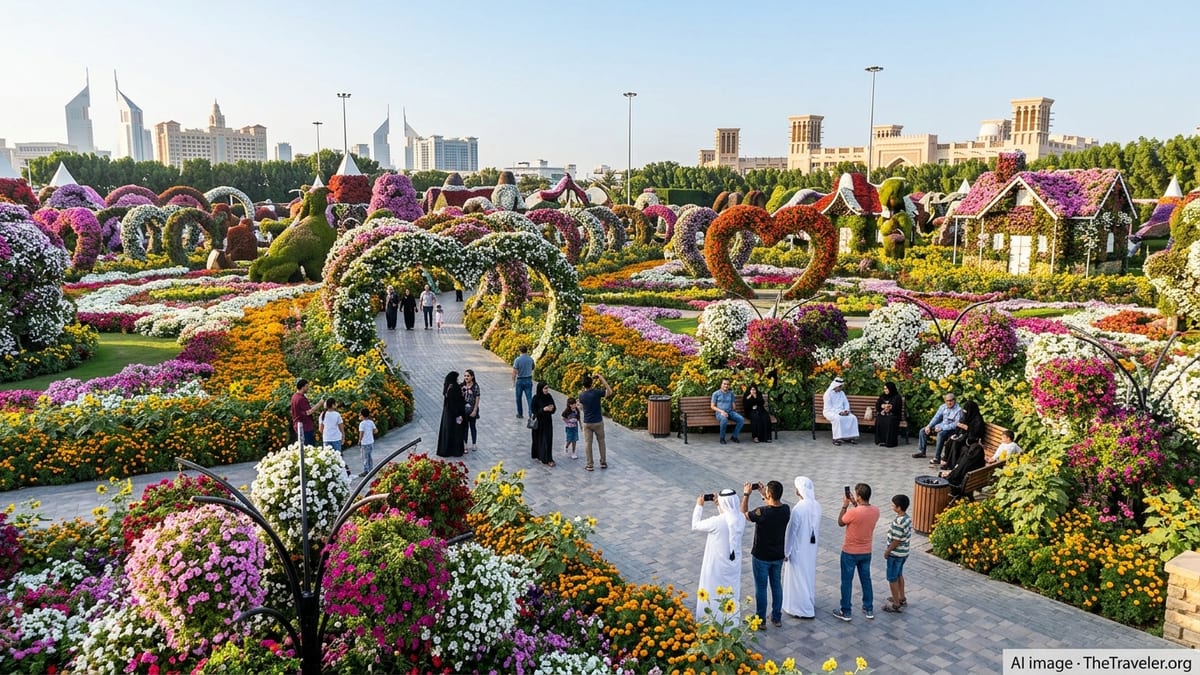
Dubai Miracle Garden markets itself as the world’s largest natural flower garden, with recent seasons showcasing more than 150 million blooms arranged in elaborate sculptures, archways, and themed zones. According to travel features and lifestyle coverage, the 14th season has built on previous years with refreshed installations inspired by aviation, fantasy architecture, and regional heritage motifs.
Many of the designs incorporate familiar local and international symbols, from oversized floral replicas of aircraft fuselages to village-style houses and cartoon characters covered in petunias and marigolds. For domestic travelers, these displays blend global pop culture with regional identity, turning the garden into a visual narrative of Dubai’s position as both a hub city and a family destination.
Beyond the visuals, the garden has become a social space for residents. Public information highlights on-site food kiosks, shaded seating areas, and live entertainment on selected days, especially during busy weekends and holidays. Families often pair a stroll through the flower paths with a visit to the adjacent Dubai Butterfly Garden, which offers air-conditioned domes and educational exhibits on regional and tropical species.
Accessibility features, including paved walkways, ramps, and wheelchair-friendly viewing points, are widely referenced in destination guides. These elements have helped position Dubai Miracle Garden as a cross-generational attraction, drawing residents from different emirates for day trips and weekend excursions.
Planning Tips for UAE Residents and Domestic Travelers
For UAE residents planning a spring visit in 2026, timing and documentation are central. Travel platforms and local blogs stress the importance of carrying an Emirates ID to access resident discounts or any free-entry promotions tied to proof of residency. Arriving earlier in the day, especially on weekends, helps with securing parking and reducing wait times at the gate during busy promotions.
Spring crowds mean that public transport is increasingly used by domestic travelers. Guides highlight the connection via Dubai Metro to stations serving the Dubailand area, followed by a short bus or taxi ride to the garden’s entrance. Single-journey integrated tickets combining metro and bus segments keep transport costs relatively low, making it a budget-friendly outing for families.
Packing strategies recommended by local travel writers include lightweight clothing with layers for cooler evenings, hats and sunscreen for daytime visits, and comfortable footwear suitable for walking on paved but extensive paths. Bringing refillable water bottles and planning breaks at shaded cafés around the garden can also make the experience more manageable for children and older visitors.
As the 2025 to 2026 season moves toward its conclusion, Dubai Miracle Garden remains a headline attraction within the UAE’s broader spring tourism picture. For domestic travelers, the combination of floral spectacle, seasonal promotions, and family-oriented amenities is turning a simple day outdoors into one of the most distinctive cultural experiences of the current tourism peak.