

More news on this day
Strong spring and early summer travel demand is bolstering revenue expectations for U.S. airlines, even as a sharp rise in jet fuel prices threatens to squeeze margins and push ticket prices higher.
Get the latest news straight to your inbox!
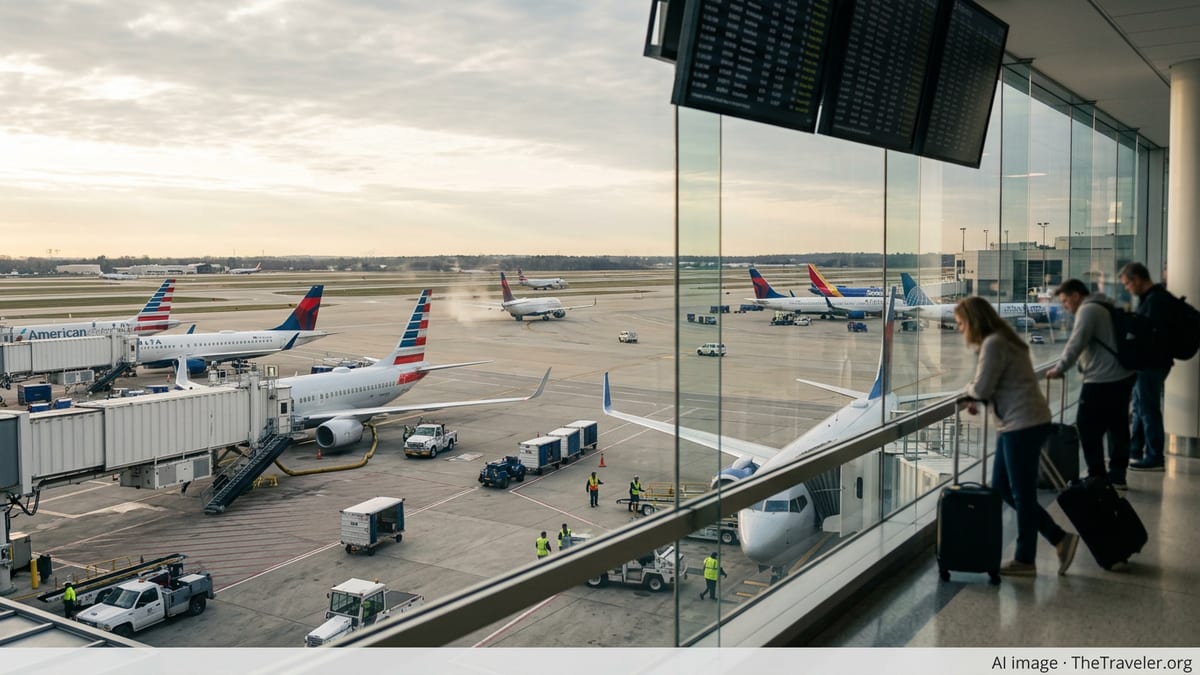
Robust Spring Demand Supports Revenue Growth
Publicly available booking and capacity data indicate that U.S. carriers are heading into the 2026 spring travel period with solid demand across both domestic and international networks. Major network airlines have been adding flights into popular leisure markets, particularly around school breaks and the Easter holiday, and many are reporting fuller planes and higher advance bookings compared with a year earlier.
Analyst commentary compiled in recent earnings coverage shows that network carriers have been leaning on strong leisure and visiting-friends-and-relatives traffic to support revenue, while also seeing improving trends in higher-yielding premium cabins. Industry forecasts released over the past year point to continued expansion in available seat miles through 2025 and into 2026, particularly on long-haul international routes where demand has remained resilient.
At the hub level, airlines are positioning for a busy spring by restoring or exceeding pre-pandemic schedules. For example, American Airlines has outlined record spring break operations at Chicago O’Hare, with hundreds of daily departures and expanded service to sun and beach destinations in Florida and the U.S. South. Similar patterns are evident at other major hubs, where carriers are increasing capacity to high-demand leisure destinations in response to strong forward bookings.
Financial disclosures for 2025 from large U.S. carriers such as Delta Air Lines and United Airlines showed solid year-on-year revenue gains in early quarters, driven in part by healthy spring and early summer traffic. While many airlines are still managing higher labor and operating costs, revenue per available seat mile has generally held up, reflecting the industry’s ability to match supply with demand and to maintain pricing power on popular routes.
Jet Fuel Prices Surge Amid Geopolitical Tensions
The positive demand story is unfolding against a more volatile backdrop for fuel. In early March 2026, industry and business media began highlighting a rapid increase in jet fuel prices tied to conflict in the Middle East and disruptions to global oil supplies. Reports indicate that attacks on commercial shipping and pressure on exports from key producers in the Gulf region are constraining supply and pushing up refined product prices, including aviation fuel.
Recent coverage in outlets such as the Associated Press and Forbes notes that jet fuel accounts for roughly one quarter to nearly one third of airline operating expenses, making it one of the largest and most sensitive cost items for carriers. When fuel prices spike, airlines have limited ability to hedge away the impact in the short term, especially if the price increase is steep and sustained. According to a Reuters-based analysis cited in recent commentary, the four largest U.S. airlines could collectively face several billion dollars in additional fuel costs this year if prices remain around current elevated levels.
Industry trade group projections published over the past year had assumed more moderate fuel scenarios, with expectations of relatively stable or slightly lower average jet fuel prices in 2025 compared with 2024. The sudden shift brought about by geopolitical tensions introduces new uncertainty to those forecasts. Airlines that had benefited from a period of easing fuel costs in late 2024 and early 2025 now face the prospect of renewed margin pressure just as they enter one of the most lucrative travel seasons of the year.
The timing of the fuel spike is particularly important. Spring and early summer are traditionally strong periods for U.S. airlines, and most carriers have already set schedules and sold a portion of their seats before the full impact of higher fuel prices is reflected in fares. As a result, the near-term squeeze is likely to be most acute on tickets that were priced months ago, while airlines move quickly to adjust future fares and capacity.
Fares Poised to Climb as Costs Filter Through
Travelers planning spring and early summer trips are likely to feel the effects of higher fuel costs through rising airfares. Public remarks from airline executives reported in early March indicate that fare increases could begin to appear relatively quickly as carriers seek to offset more expensive fuel. Analysts quoted in recent coverage suggest that long-haul international routes, which consume more fuel per trip, may see some of the steepest increases.
Travel-industry reporting in March 2026 describes a trend of escalating prices on key transatlantic and transpacific routes, as well as on high-demand domestic city pairs around school breaks and popular vacation periods. Some industry observers are warning that if jet fuel prices remain elevated into the peak summer season, airlines could introduce double-digit percentage fare increases on select routes, particularly where demand is strongest and competition is limited.
For now, strong underlying demand is giving airlines confidence that higher prices will be at least partially absorbed by travelers. The combination of pent-up leisure travel, steady corporate demand recovery and limited capacity growth in some markets has kept load factors high. However, consumer sensitivity to price changes is an open question, especially for families planning discretionary trips around spring break or early summer holidays.
Pricing dynamics may differ between domestic and international markets and between full-service and low-cost carriers. Budget airlines that compete primarily on price could face more pressure to limit fare increases or to introduce additional fees rather than headline price hikes. By contrast, large network carriers with established loyalty programs and premium offerings may be better positioned to pass on a higher share of fuel costs, especially in business and premium leisure segments.
How Airlines Are Managing the Profit Squeeze
U.S. airlines are reaching for a familiar toolkit to navigate the widening gap between revenue and fuel costs. Public filings and earnings presentations show carriers emphasizing disciplined capacity management, continued cost controls and selective network adjustments. With demand strong on many routes, airlines have flexibility to fine-tune schedules, focusing on higher-yielding markets and trimming frequencies where performance lags.
Fleet strategy is another key lever. Over the past several years, major U.S. airlines have accelerated the retirement of older, less efficient aircraft in favor of newer models with better fuel burn characteristics. Sustainability reports and investor materials from carriers such as American, Delta and United highlight ongoing investments in next-generation narrowbody and widebody jets that can reduce fuel consumption per seat. These aircraft are now playing a larger role in spring and summer schedules, helping to partially offset higher fuel prices.
Some airlines also make use of fuel hedging programs and operational efficiencies, such as optimized flight planning and single-engine taxiing, to mitigate cost volatility. While these measures cannot fully protect against a sustained price surge, they can soften the impact and buy time for fare adjustments to catch up. Industry initiatives tied to air traffic modernization and more efficient routing, supported by government agencies, continue to promise incremental fuel savings over the medium term.
Despite these efforts, analysts caution that rising fuel costs will likely compress profit margins if price increases outpace travelers’ willingness to pay. That could weigh on airline earnings later in 2026, particularly if the geopolitical situation remains unsettled and oil markets stay tight. For now, though, strong spring bookings are providing an important revenue cushion just as the cost side of the ledger becomes more challenging.
What Spring Travelers Should Watch
For travelers planning domestic or international trips this spring, the current environment means that timing and flexibility matter more than ever. Recent pricing snapshots shared by consumer travel outlets and online forums suggest that fares on many routes have already moved higher compared with the same period last year, especially for departures in late March and April that coincide with school holidays.
Booking earlier is one of the few reliable ways to avoid the steepest increases, particularly on popular beach, theme park and European routes that tend to fill quickly. Travelers who can shift departure days away from peak weekends or consider secondary airports may also find better deals, as airlines often vary pricing by day of week and market competitiveness. In addition, monitoring fare trends through airline and online travel agency tools can help identify when carriers adjust prices in response to fuel and demand conditions.
Travelers should also be prepared for more dynamic pricing as airlines respond in real time to both demand and fuel movements. If jet fuel prices were to stabilize or retreat later in the year, fare pressure could ease somewhat, especially in more competitive domestic markets. Conversely, a further escalation in fuel or new disruptions could prompt additional increases, particularly on long-haul routes where fuel is a larger share of total operating cost.
For now, the key takeaway for U.S. travelers is that a strong appetite for spring and early summer flying is colliding with a renewed spike in fuel costs. That combination is supporting airline revenue growth but is also likely to keep upward pressure on ticket prices in the months ahead.