

More news on this day
Rapid long haul capacity growth by Singapore Airlines and Cathay Pacific is converging with a rebound in Asian outbound travel, helping to propel a fresh wave of tourism demand and hotel bookings in France, Spain and the United States in early 2026.
Get the latest news straight to your inbox!
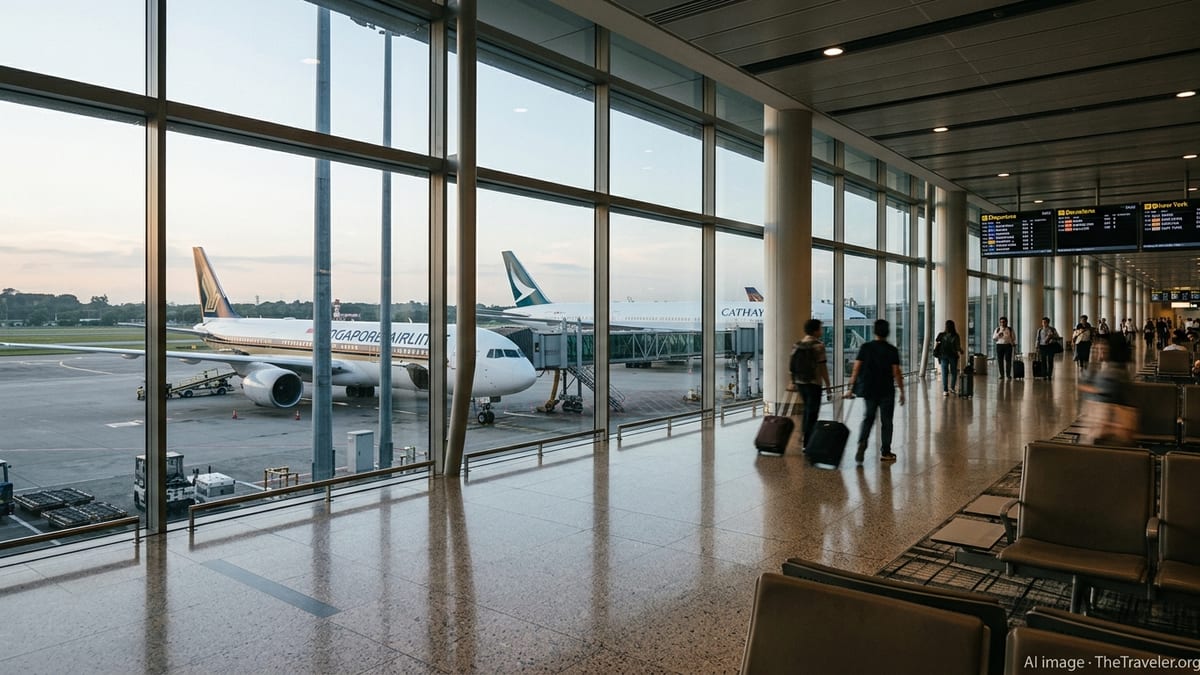
Asia Pacific Capacity Builds a New Long Haul Bridge
Publicly available schedules and airline updates show that Singapore Airlines and Cathay Pacific have accelerated the rebuilding of their long haul networks into Europe and North America ahead of the 2026 peak season. Both carriers have restored a wide portfolio of European and US gateways, using new-generation widebody aircraft and dense connecting banks over their hubs to funnel growing demand from Southeast Asia, India and Australasia into transcontinental routes.
Singapore Airlines’ latest business update outlines additional capacity on select European routes during the first half of 2026, including more frequencies to Frankfurt and Barcelona, as well as extra services to North America via its Singapore hub. The carrier is positioning these flights to connect seamlessly with regional services across Asia Pacific, allowing travellers from secondary cities to reach major Western tourism markets with one-stop itineraries.
Cathay Pacific, for its part, has announced its return to several pre-pandemic European destinations and the addition of new points in both Europe and the United States. Recent network plans highlight Rome, Brussels and Munich in Europe and Dallas in North America among the routes being rebuilt or inaugurated, expanding the airline’s footprint to more than a dozen cities across the two regions. This renewed breadth gives European and US destinations direct access to high-spending visitors from Hong Kong, mainland China and the broader Asia Pacific region.
Industry analysts note that the combined effect of these schedules is a significant restoration of long haul capacity between Asia and the West at a time when global tourism flows are already surpassing pre-pandemic levels. As airlines rebuild networks, hotel and resort operators in key destinations tend to see an amplified response in bookings, particularly in urban gateways and coastal leisure regions served by non-stop or one-stop itineraries.
France and Spain Ride the Wave of Asian Demand
France and Spain entered 2026 as two of the strongest performing tourism markets in Europe, with both countries registering record or near-record international arrivals in 2025. Tourism data and recent research indicate that Spain welcomed close to 97 million international visitors last year, while France retained its position as the world’s most visited destination with around 100 million arrivals. Analysts expect further growth this year, supported in part by the accelerating recovery of Asian source markets.
Reports from European tourism bodies highlight a particular rebound in visitors from Asia to Western Europe, following the phased relaxation of travel restrictions and increasing air connectivity. France has seen renewed momentum from Asian travellers, including from Southeast Asia and greater China, while Spain is actively targeting new long haul markets to diversify beyond its traditional base of British, French and German holidaymakers. The expansion of services by Singapore Airlines to Barcelona and of Cathay Pacific to additional European capitals is viewed as a powerful enabler of this strategy.
Hotel performance figures from major Spanish and French cities show strong occupancy and rising average daily rates across much of 2025, trends that appear to be continuing into early 2026. Urban destinations such as Paris, Barcelona and Madrid are reporting high demand from long haul visitors combining city stays with regional excursions to wine regions, coastal resorts and cultural landmarks. This pattern aligns with the profile of travellers connecting from Asia via Singapore and Hong Kong, who often book longer, higher-value itineraries covering multiple European stops.
Industry commentary suggests that this demand is already translating into tighter availability for the 2026 spring and summer seasons, especially in boutique and luxury segments. Hotels in central Paris and Barcelona are reporting elevated forward bookings from international wholesalers and online agencies that specialize in Asian markets, indicating that the air capacity being added by Singapore Airlines and Cathay Pacific is quickly being absorbed.
United States Hotels See Rising Interest from Asia
In the United States, inbound travel has been on a multi-year recovery trajectory, and publicly available government and industry estimates show that international arrivals in 2024 remained below 2019 levels but continued to improve. Forecasts from US tourism organizations point to further gains in 2026 as air connectivity from Asia strengthens, even though some markets experienced a temporary slowdown late last year.
Against this backdrop, Cathay Pacific’s renewed focus on North American destinations, including established gateways and new points such as Dallas, is adding capacity into major US tourism and business hubs. Singapore Airlines, which already serves several US cities directly and through fifth-freedom operations, has been progressively restoring frequencies and deploying fuel-efficient long haul aircraft that make ultra-long-haul services more commercially viable.
Hotel groups with strong footprints in US gateway cities such as San Francisco, Los Angeles, New York and Dallas report robust interest from Asian tour operators and dynamic packaging platforms that combine air and hotel in one purchase. Market research on the travel agencies sector shows that flight-hotel packaging has grown substantially in recent years, making it easier for long haul visitors to book complex itineraries covering multiple US destinations.
Destination analysts note that while intra-American travel remains the largest driver of US hotel demand, incremental long haul growth can have an outsized impact on occupancy and room rates in key urban markets. As additional capacity from Singapore Airlines and Cathay Pacific comes online through 2026, US gateway hotels, convention properties and upscale resorts are positioning themselves to capture more Asian guests through tailored marketing, language support and culinary offerings.
Hotels and Resorts Report Tightening Inventory for 2026
Across France, Spain and the United States, hotel and resort operators are entering 2026 with solid forward-booking pipelines. Sector analyses from banks, consultancies and industry associations emphasize that European tourism GDP has normalised to high levels after the post-pandemic surge, while southern destinations such as Spain continue to post gains in both arrivals and spending. In France, recent tourism overviews point to sustained demand in major cities and key leisure regions despite economic uncertainties.
On-the-ground hospitality reports indicate that the combination of strong intra-European and North American demand with revived long haul flows from Asia is pushing occupancy close to capacity during peak travel periods. In Spain’s coastal resorts and the Balearic and Canary Islands, hoteliers are preparing for another packed summer season, with many properties already seeing significant blocks of inventory allotted to international operators targeting Asian clients. Similar trends are visible in French Riviera destinations and in alpine resorts that cater to high-spending long haul visitors.
In the United States, resort destinations in Florida, California and Hawaii, as well as national park gateways in the West, are seeing early booking strength for 2026 holidays. Market observers link part of this trend to increased marketing in Asia and to the return of group and incentive travel, which often relies on reliable long haul air links such as those provided through Singapore and Hong Kong hubs.
Analysts caution that while capacity additions from airlines like Singapore Airlines and Cathay Pacific are substantial, they intersect with broader structural trends such as the growth of the global middle class, the rise of digital booking platforms and the shift toward experiential travel. These forces collectively underpin what many describe as an unprecedented bookings surge for hotels and resorts in leading Western destinations, rather than a short-lived spike driven by a single carrier or route.
Outlook: Strategic Routes Reshape Global Tourism Flows
Looking ahead through the rest of 2026, tourism forecasts for Europe point to continued growth in international arrivals, supported by resilient demand from North America and accelerating recovery from Asia Pacific. France and Spain are expected to remain at the forefront of this trend, benefiting from their extensive air connectivity, mature hospitality sectors and strong global brands as cultural and leisure destinations.
For the United States, the expansion of Asia-to-US capacity by full-service carriers such as Singapore Airlines and Cathay Pacific aligns with long term projections that foresee a steady rise in visitors from Asia, even if year-to-year growth remains uneven. As connectivity improves and visa and processing systems adapt, observers anticipate that more Asian travellers will opt for multi-stop itineraries that combine US city breaks, national parks and resort stays.
Hotel and resort operators in all three markets are responding by increasing investment in refurbishment, sustainability initiatives and service enhancements aimed at long haul guests. Many are also deepening partnerships with airlines, tour operators and online travel agencies that focus on Asia Pacific, recognizing that hubs like Singapore and Hong Kong have become critical gateways for redistributing global tourism flows.
While external risks remain, from economic headwinds to geopolitical tensions, the alignment of airline strategy and destination appeal appears set to keep France, Spain and the United States firmly on the radar of Asia’s outbound travellers. The intensified presence of Singapore Airlines and Cathay Pacific on routes to these markets is emerging as a key factor shaping where and how international visitors spend their travel budgets in 2026.