

More news on this day
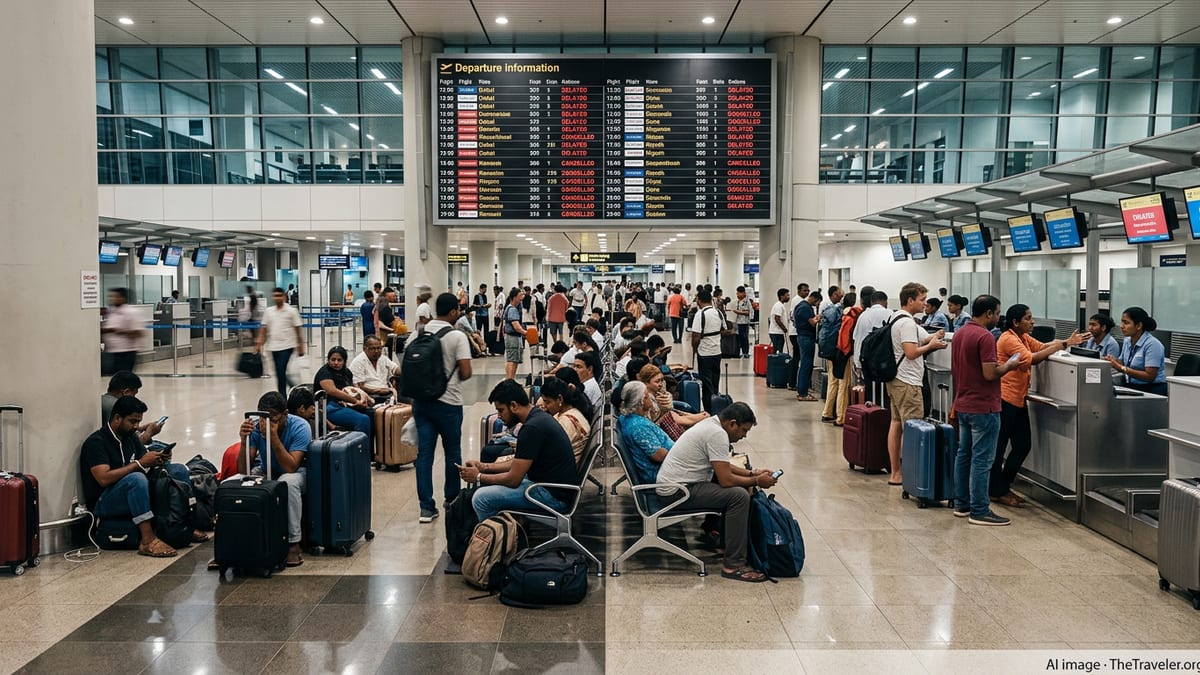
Hundreds of passengers were stranded at Sri Lanka’s Bandaranaike International Airport on Saturday as at least 30 flights were delayed and 28 cancelled, after widening airspace closures linked to the Iran war rippled across key hubs in Dubai, Doha, Riyadh and other Gulf cities.
Crisis at Colombo’s Main Gateway
The disruption hit Bandaranaike International Airport outside Colombo early on March 7, with departure boards suddenly filling with red "delayed" and "cancelled" notices on services operated by SriLankan Airlines, Emirates, Qatar Airways, FlyDubai and several other Gulf carriers. Many of the affected flights were bound for or arriving from Dubai, Doha, Riyadh, Dammam and Kuwait, crucial links for Sri Lankan migrant workers, tourists and business travelers.
Airport officials said the cascade of cancellations followed overnight changes to flight permissions and routings as parts of Middle Eastern airspace remained closed or heavily restricted. Although some Gulf airports have begun operating limited evacuation and transit services, regular commercial schedules remain deeply disrupted, leaving trunk routes between Colombo and the Gulf among the worst affected.
Passengers who had arrived at the airport hours before departure found themselves with little information beyond terse announcements that their flights would not operate. Long queues formed at airline ticket desks and transfer counters as travelers tried to secure scarce seats on the few outbound services still scheduled.
Many of those stranded had already faced days of uncertainty as regional tensions escalated and airlines adjusted timetables. For some, Saturday’s cancellations marked a second or third failed attempt to leave the country, turning holiday trips and work rotations into open-ended ordeals.
Middle East Airspace Closures Ripple Outward
The turmoil in Colombo is the latest visible impact of a broader aviation crisis triggered by the conflict involving Iran, the United States and Israel, which erupted into open hostilities on February 28. In response to missile and drone attacks, authorities across the Gulf imposed sweeping airspace closures or severe restrictions, halting normal operations at major hubs including Dubai International Airport, Doha’s Hamad International Airport and airports in Saudi Arabia and Kuwait.
Those hubs serve as essential waypoints for traffic between Europe, Africa and Asia, including Sri Lanka. When airspace over parts of the Gulf effectively shut, airlines were forced to cancel, reroute or significantly lengthen flights to avoid combat zones. Capacity on the remaining safe corridors quickly filled, leaving carriers struggling to accommodate passengers already en route or holding tickets for the coming days.
SriLankan Airlines, the country’s flag carrier, had already announced the cancellation of multiple flights to and from Dubai, Doha, Dammam, Riyadh and Kuwait earlier in the week, citing continued Middle East airspace closures. Gulf-based airlines in turn have been operating only limited services, prioritizing repatriation and essential travel while warning of last-minute changes as the situation evolves.
Industry analysts say the scale of the disruption rivals the early months of the COVID-19 pandemic for South Asian travelers reliant on Gulf connections. With no clear timeline for a full reopening of Middle Eastern skies, airports like Colombo are bearing the brunt of a crisis that originates thousands of kilometers away.
Passengers Face Uncertainty, Mounting Costs
Inside Bandaranaike’s departure hall on Saturday, families camped on the floor beside stacked suitcases, charging phones from crowded power outlets and refreshing airline apps in the hope of new updates. Many complained that they learned of cancellations only on arrival at the airport, despite having provided contact details at the time of booking.
Travelers bound for job placements in the Gulf described a growing sense of panic as visa validity periods tick down while outbound flights disappear. Some reported that employers were pressuring them to arrive on time despite the closures, leaving workers caught between contractual obligations and a fast-changing security situation beyond their control.
Tourists heading home via Gulf hubs also faced mounting costs. With hotel rooms near the airport quickly filling up, several passengers said they were unsure whether airlines would cover accommodation, meals or ground transport while they waited for rebooked flights. Others worried about overstaying visas or running out of travel insurance coverage as their stays in Sri Lanka stretched beyond original plans.
Local travel agents, fielding constant calls from anxious clients, said they were struggling to obtain clear guidance from carriers that are themselves reacting in real time to shifting airspace restrictions. Many agencies have advised customers not to travel to the airport without firm confirmation that their specific flight is operating, even if the airline’s broader route network appears to be resuming in stages.
Airlines Juggle Limited Capacity and Complex Reroutes
Airlines serving Sri Lanka are now attempting to balance safety, limited capacity and intense passenger demand. SriLankan Airlines has focused on consolidating traffic onto a reduced number of flights where viable rerouting around closed airspace is possible, while warning that further cancellations may be unavoidable if regional conditions deteriorate.
Gulf carriers such as Emirates, Qatar Airways and FlyDubai are meanwhile operating a patchwork of services as individual states adjust airspace rules. Some flights into Dubai and Doha are being slotted into narrow operating windows or rerouted along longer southern or northern tracks, significantly extending flight times and complicating onward connections for passengers originating in Colombo.
With aircraft and crews stranded at various points in the global network, carriers are also mounting special repatriation-style flights when security assessments allow. However, these services typically sell out quickly and are not always visible through normal booking channels, leaving many travelers reliant on call centers or airport ticket counters that are under heavy strain.
Aviation experts note that any further escalation in the regional conflict could trigger fresh waves of cancellations, particularly if additional airports suffer damage or if more countries tighten overflight restrictions. Conversely, a sustained de-escalation could allow for gradual restoration of regular schedules, though airlines are expected to remain cautious about returning to pre-crisis frequencies.
Advice for Travelers Heading to or from Sri Lanka
With conditions changing by the hour, aviation and consumer authorities in Sri Lanka and abroad are urging travelers to monitor their bookings closely and avoid unnecessary trips to the airport. Passengers scheduled to fly to or through Middle Eastern hubs in the coming days are being advised to check directly with their airline through official apps, call centers or verified social media channels before setting out.
Travelers holding tickets on cancelled flights are generally being offered free rebooking to later dates or refunds, though exact policies vary by airline and ticket type. Given the limited number of available seats on remaining services, many carriers are prioritizing passengers whose original flights were cancelled after the conflict began, potentially leaving those with future departures in limbo until operations stabilize.
For Sri Lankans traveling for work, officials recommend contacting employers and overseas recruitment agencies as early as possible to document delays and seek extensions to reporting dates or visa validity. Tourists are being encouraged to work with hotels and tour operators on flexible arrangements in case their stay must be extended due to aviation disruptions.
As the situation across the Middle East continues to develop, Bandaranaike International Airport is likely to remain a barometer of the wider crisis. For the hundreds of passengers now stuck in its terminals, the hope is that the next update on the departure board will finally bring a confirmed flight out, rather than another line of red text announcing that their plans are on hold yet again.