

More news on this day
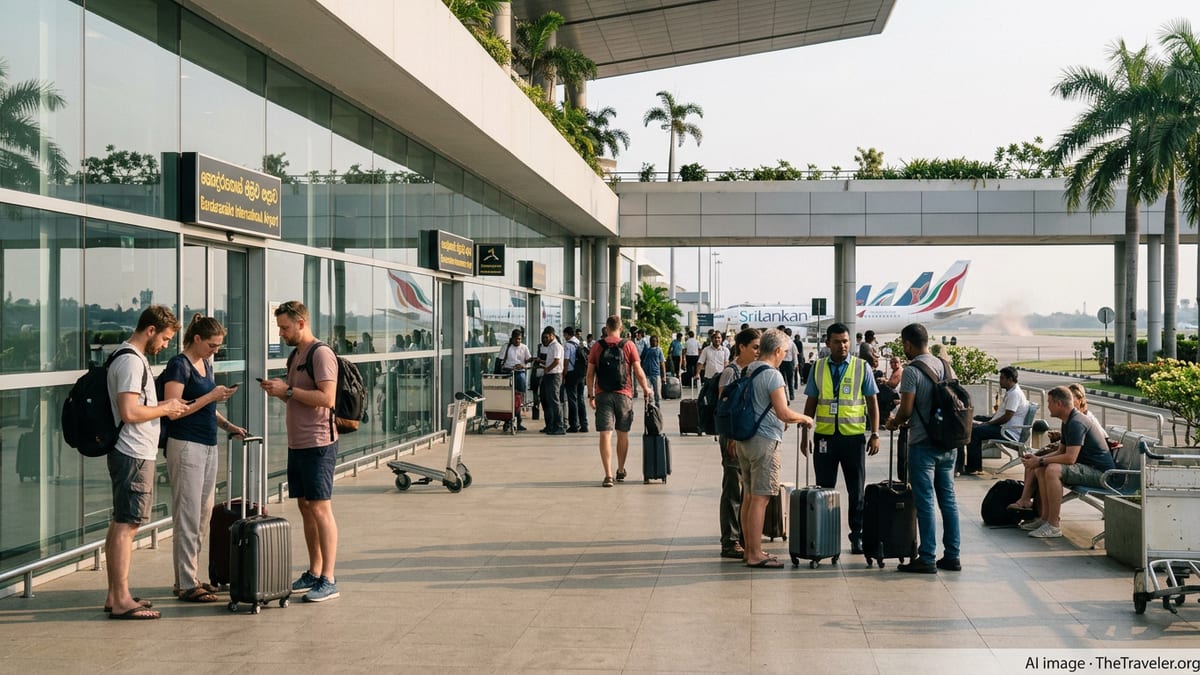
Sri Lanka has moved to cushion the impact of sweeping airspace closures across the Middle East by granting free 14-day visa extensions and expanding emergency assistance to thousands of foreign tourists now stranded in the country.
Free 14-Day Visa Extensions for Stranded Visitors
The Sri Lankan government has approved a complimentary 14-day extension of stay for all tourists currently in the country whose travel plans have been upended by the fast-moving crisis in the Middle East. The measure, confirmed by officials from the Sri Lanka Tourism Development Authority and the Department of Immigration and Emigration, is intended to ensure that visitors do not fall into overstay violations while they attempt to rebook flights.
Authorities said the extension applies across the board to tourists of all nationalities already in Sri Lanka, with particular concern for travellers who were due to transit through major Gulf hubs such as Dubai, Doha and Abu Dhabi, where commercial services remain severely disrupted. The government has indicated that the policy may be reviewed and adjusted if airspace closures and cancellations continue.
Immigration officials have been instructed to process the 14-day relief without charging additional visa fees. The extension takes effect from the date an existing visa expires, allowing visitors to remain in the country legally while they explore alternative routes home or await the resumption of normal flights.
Tourists are being urged to keep copies of their original travel itineraries and new bookings on hand when contacting immigration offices, in order to speed up processing and help officials prioritize those facing imminent visa expiry.
Emergency Hotlines and Airport Support Ramped Up
Alongside the visa relief, Sri Lanka has activated an expanded emergency support framework aimed at both outbound and inbound travellers. The Sri Lanka Tourism Development Authority has put its 1912 tourism emergency hotline on 24-hour footing, operating through the Tourist Information Centre at Bandaranaike International Airport near Colombo.
Passengers seeking information on flight operations and facilities at the airport are being directed to a dedicated aviation hotline, while those booked on the national carrier can access separate lines for rebooking and status updates. Officials said these services are receiving a surge in calls from tourists who were scheduled to connect via Middle Eastern hubs to Europe, Asia and beyond.
At the airport itself, tourism and aviation staff have been asked to prioritize assistance to stranded visitors, including guidance on rebooking options, accommodation referrals and information on revised departure procedures. Authorities stressed that while the island remains calm and fully open to tourism, the aim is to prevent inbound travellers from becoming unintentionally stranded due to fast-changing airline schedules.
A data collection mechanism has also been set up through registered travel agents and tour operators to identify visitors with departures scheduled in the coming days. This allows officials to track where support is most urgently needed and to coordinate with airlines on available seats out of Colombo.
Coordinated Response to a Widening Regional Travel Shock
The moves come as Sri Lanka joins governments across Asia and Europe in responding to an unprecedented shock to global aviation triggered by the escalating conflict involving Iran, Israel and the United States. Multiple Middle Eastern states have closed or restricted their airspace, forcing the cancellation or diversion of thousands of flights and leaving hundreds of thousands of passengers stranded across the region and beyond.
In Sri Lanka, officials say more than two hundred flights linked to Middle Eastern routes have already been cancelled in recent days, affecting both arrivals and departures. The country is heavily reliant on connections through Gulf hubs for long-haul traffic, meaning disruption there has an immediate knock-on effect on tourists entering and leaving the island.
The Presidential Secretariat has convened high-level meetings with senior tourism, aviation and immigration authorities, as well as representatives of hotels and inbound tour operators, to manage the fallout. Discussions have focused on maintaining Sri Lanka’s image as a safe, welcoming destination while ensuring that visitors do not face unexpected penalties or hardship as a result of regional events beyond their control.
Government spokespeople have emphasized that Sri Lanka itself is not directly affected by the military confrontation but is exposed through its diaspora, trade ties and reliance on Middle Eastern transit points. Officials say they are closely monitoring the broader security picture while prioritizing practical steps to keep tourists informed and mobile.
Hotels, Tour Operators and Tourism Police Mobilized
Tourism authorities have issued formal advisories to hotels, guesthouses, tour operators and licensed guides, directing them to extend flexible support to guests whose trips have been disrupted. Accommodation providers have been encouraged to offer late check-outs, discounted additional nights and help with rescheduling internal transfers and excursions.
Inbound tour operators have been asked to work closely with airlines and local transport providers to realign itineraries with new or rerouted flights. Industry representatives who attended the recent presidential briefing said the sector was committed to absorbing the short-term strain in order to preserve visitor confidence in Sri Lanka as a resilient and guest-focused destination.
The Tourism Police, who maintain a visible presence in key resort areas and heritage sites, have also been drawn into the response. Officers are being instructed to pay particular attention to tourists who may be travelling on revised schedules, ensuring that any late-night transfers or last-minute airport runs are conducted safely and with minimal stress for visitors.
Officials noted that the current measures build on structures already in place following previous global shocks to travel, including the pandemic era, and reflect lessons learned about the need for rapid, coordinated action across government and the private sector.
Looking Ahead as Flights Reroute and Crisis Evolves
While many Gulf routes remain suspended, Sri Lankan aviation authorities report that some long-haul services to Europe and other regions are beginning to operate via alternative corridors that skirt closed Middle Eastern airspace. These longer routes come with higher operating costs and certain cargo limitations, but are seen as an important step in reconnecting stranded passengers with their home countries.
Officials caution that flight schedules are likely to remain volatile in the short term, with further cancellations and last-minute timing changes possible as the situation in the Middle East evolves. Travellers are advised to remain in close contact with their airlines or travel agents and to allow additional time when heading to the airport for departing flights.
The government has signalled that the free 14-day visa extensions and associated emergency measures will stay in force as long as significant disruption to regional air travel persists. Further extensions or additional relief steps have not been ruled out if the crisis continues or widens.
For now, Sri Lanka’s message to stranded visitors is that they can remain in the country legally, safely and with structured support while they wait for a viable route home. Tourism officials say they hope that clear communication and flexible policies will ensure that, despite the circumstances, travellers leave the island with their confidence in Sri Lanka’s hospitality intact.