

More news on this day
Sri Lanka’s Mattala Rajapaksa International Airport, long branded one of the world’s emptiest airports, is emerging in regional discussions as a potential backup hub for Gulf carriers such as Emirates and Qatar Airways as tensions and airspace disruptions ripple across the Middle East.
Get the latest news straight to your inbox!
A Little-Used Airport Back in the Spotlight
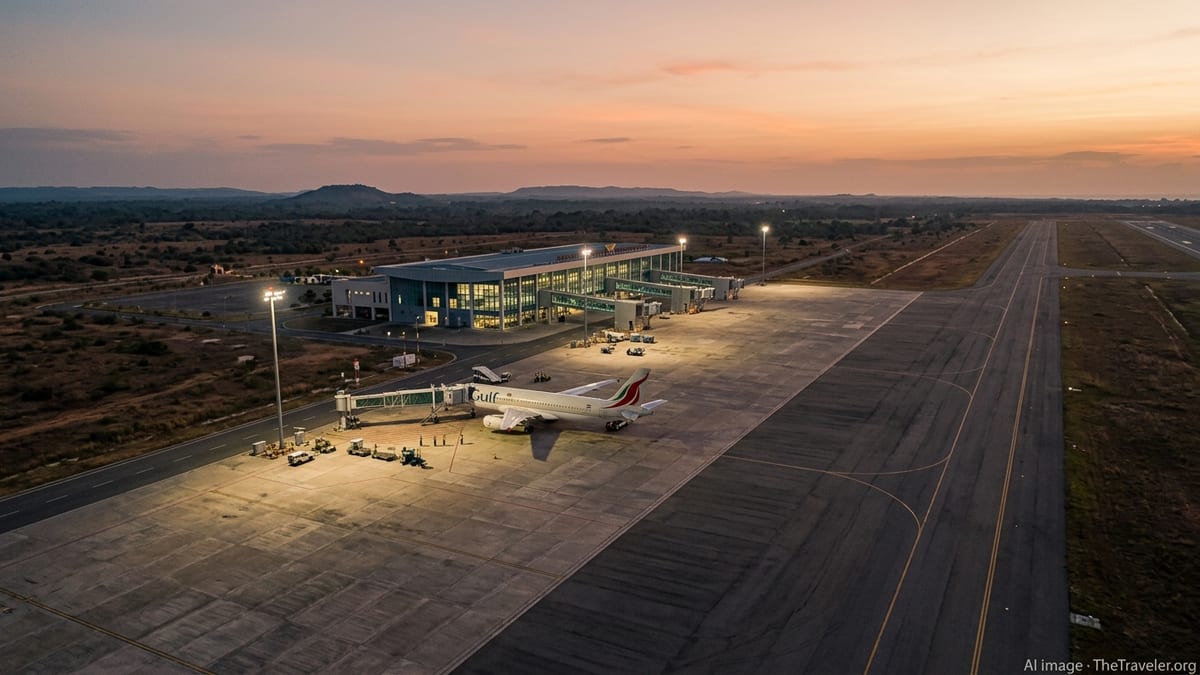
Mattala Rajapaksa International Airport, located in Sri Lanka’s southern Hambantota district, opened in 2013 with ambitions of becoming a secondary international gateway for the island. Built with significant external financing and designed to handle widebody jets, the airport struggled to attract sustained commercial traffic and became widely cited in international coverage as an example of an underused mega-project.
Published information on current operations shows that only a small number of scheduled passenger flights and occasional charter and cargo services use Mattala today. Most long haul and regional traffic to Sri Lanka continues to funnel through Bandaranaike International Airport near Colombo, which remains the country’s primary international hub.
Despite its quiet schedule, Mattala’s long runway, modern terminal and relatively uncongested airspace have kept it technically capable of handling large aircraft. During the Covid 19 pandemic, reports indicated that the facility was used for cargo operations and occasional diversions, highlighting its role as a standby asset within Sri Lanka’s aviation network.
Middle East Disruptions Reshape Route Planning
Recent disruptions across parts of Middle Eastern airspace have again pushed airlines and aviation authorities to review contingency routings and emergency infrastructure. Publicly available travel advisories and media coverage point to temporary closures and restrictions that have affected flights operating through key Gulf hubs, including Dubai and Doha, and forced some carriers to reroute or consolidate services.
For carriers such as Emirates and Qatar Airways, which depend heavily on their home hubs for global connectivity, any sustained disruption can have cascading effects on schedules, fleet deployment and crew rotations. Airline planners typically maintain a shortlist of secondary airports that can accommodate widebody jets, support technical stops and provide limited passenger handling in the event primary hubs or air corridors become constrained.
In this context, Sri Lankan aviation planners have begun more actively positioning Mattala as a potential alternative node in the wider regional network. Local reporting in early March 2026 described internal emergency planning that considered how Sri Lanka’s airports, including Mattala, could support airlines affected by an extended crisis in Gulf airspace.
Positioning Mattala as a Technical and Diversion Hub
Industry observers note that Mattala’s greatest near term value for major Gulf carriers is likely as a technical stop or diversion point rather than a full scale connecting hub. The airport’s long runway and relatively low traffic profile make it suitable for fuel stops, crew changes, or temporary holding of aircraft when traditional routings through the Gulf become inefficient or unavailable.
Operationally, using Mattala in this way could allow widebody aircraft to bypass congested or restricted zones while still remaining within manageable flight times between Asia, Africa and Europe. Sri Lanka’s location south of the main Gulf airspace corridors provides a degree of geographic flexibility for east west traffic seeking alternative paths around sensitive regions.
Publicly accessible planning documents and commentary from aviation analysts suggest that Sri Lanka has been working to ensure that Mattala meets international safety and security standards, including navigational aids and ground handling capabilities appropriate for large aircraft. Any expanded role would still require detailed bilateral coordination with airlines and regulators, particularly concerning crew facilities, fuel supply and passenger transit arrangements.
Opportunities and Constraints for Sri Lanka
For Sri Lanka, the renewed attention on Mattala presents both an economic opportunity and a policy challenge. Additional technical or diversion traffic from carriers such as Emirates and Qatar Airways could bring incremental revenue from landing fees, fuel sales and ground services, while also strengthening the country’s profile as a reliable aviation partner in times of regional stress.
However, analysts caution that transforming Mattala into a meaningful backup hub would require sustained investment in infrastructure and services beyond its current scale. This includes enhancing apron capacity, expanding maintenance support and ensuring that immigration, customs and security processes can handle surges in transit passengers without long delays.
There are also questions about balancing Mattala’s potential role with the continued dominance of Bandaranaike International Airport. Previous policy debates in Sri Lanka have highlighted concerns that splitting limited traffic between multiple airports could strain national carrier resources and complicate efforts to restore financial stability in the wider aviation sector.
What Travelers Should Expect in the Near Term
For most passengers booked on Emirates, Qatar Airways and other Gulf carriers, travel patterns are unlikely to change dramatically in the immediate future. Schedules published so far indicate that airlines are prioritizing restoration of core routes through their home hubs as airspace conditions permit, while keeping contingency options such as diversions and technical stops in reserve.
Travelers transiting Sri Lanka may nevertheless notice Mattala referenced more frequently in advisory materials or contingency plans, particularly for flights linking South Asia with Europe, Africa or Australia. In a scenario where Middle Eastern disruptions intensify or persist, the airport could see a short term uptick in widebody movements even if it remains largely invisible to the leisure market.
For now, Mattala’s emerging role underscores how quickly global route networks can pivot around underused infrastructure when key hubs are challenged. While the airport is unlikely to replace Dubai or Doha as a primary connecting point, its potential use as a backup hub for Emirates, Qatar Airways and other carriers highlights Sri Lanka’s strategic location on the edge of the Indian Ocean and the continuing search for resilience in international air travel.