

More news on this day
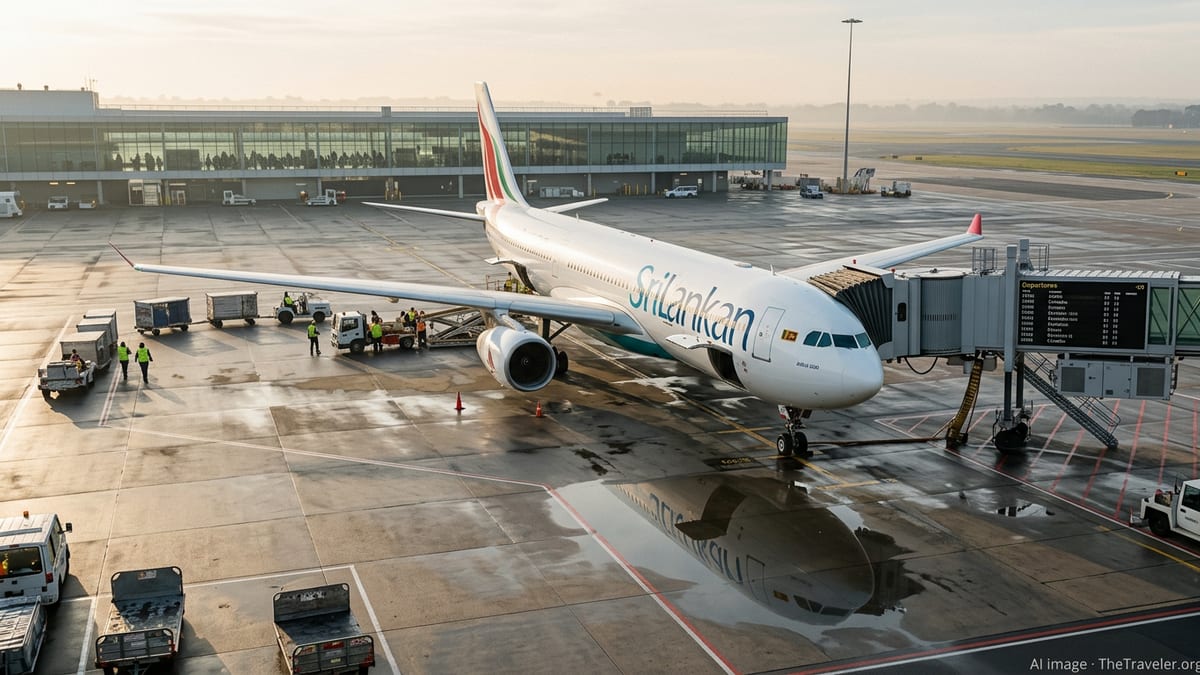
SriLankan Airlines is set to expand its presence in the Australia market, with publicly available information showing the carrier will increase Colombo–Melbourne services from seven to ten weekly flights starting 2 August 2026, a move expected to support growing leisure traffic, strengthen diaspora ties and provide additional capacity for business travel between the two countries.
Get the latest news straight to your inbox!
More Capacity on a Key Sri Lanka–Australia Corridor
According to recent aviation schedule filings and industry reports, SriLankan Airlines plans to introduce three additional weekly flights on the busy Colombo–Melbourne route, taking its total frequency to ten services per week from early August 2026. The carrier already operates daily nonstop services between Bandaranaike International Airport near Colombo and Melbourne Tullamarine, where it is currently the sole nonstop operator on the route.
Data from route analysts indicates the Colombo–Melbourne link has grown steadily since its launch in 2017, supported by strong demand from the Sri Lankan and wider South Asian diaspora in Victoria, as well as connecting traffic from India and the Maldives. The new flights from August 2026 will represent the latest in a series of incremental increases in capacity as the airline rebuilds and repositions its long haul network.
Industry coverage notes that the additional services will be scheduled to complement the existing daily operation, offering a mix of morning and evening departures designed to improve connectivity via Colombo to onward destinations in South Asia, the Middle East and Europe. This pattern is expected to be particularly attractive for passengers using Sri Lanka as a one-stop hub between Australia and cities such as Mumbai, Chennai, London and Frankfurt.
Boost for Tourism and Diaspora Travel
The planned frequency increase comes as Sri Lanka targets sustained growth in visitor arrivals following a notable recovery in 2024 and 2025. Tourism market analysis highlights Australia as one of Sri Lanka’s fastest-growing long haul source markets, driven by pent-up demand after the pandemic and a renewed interest in beach, culture and wellness travel on the island.
Reports from Sri Lankan tourism and aviation observers indicate that direct and one-stop air links from Australia have played a central role in this rebound, with SriLankan’s services to Melbourne and Sydney providing reliable access for both holidaymakers and members of the large Sri Lankan-origin community. The extra three weekly flights to Melbourne are expected to create more choice around peak travel periods such as school holidays, the southern winter and year-end festivals.
The airline has previously highlighted the importance of visiting friends and relatives traffic on its Australia routes, noting that many passengers travel onward beyond Colombo to regional centres in Sri Lanka. Additional capacity to Melbourne is therefore seen as a way to ease pressure on high-demand periods and provide more flexibility for travellers planning trips home around work and study commitments in Australia.
Strengthening Business and Trade Connectivity
Beyond leisure travel, the enhanced schedule is expected to support growing commercial ties between Sri Lanka and Australia. Economic and trade commentary points to increased interest in Sri Lanka as a services and manufacturing hub, with sectors such as information technology, education, agriculture and apparel drawing attention from Australian investors and partners.
More frequent flights between Colombo and Melbourne will reduce scheduling constraints for business travellers, particularly those undertaking short trips that rely on convenient connections. Aviation analysts also note that additional frequencies typically improve reliability and resilience for corporate travel programmes, making it easier to rebook passengers in the event of disruptions.
Air cargo is another area likely to benefit. Extra belly-hold capacity on the route can support exports of high-value and time-sensitive goods such as seafood, fresh produce, apparel samples and express consignments. Logistics specialists have previously identified Sri Lanka’s geographic position in the Indian Ocean as advantageous for time-critical movements between Australia, South Asia and parts of Europe.
Competitive Positioning in a Crowded Australia Market
The move to ten weekly flights to Melbourne comes as competition intensifies for traffic between Australia and the broader South Asian region. A number of global carriers, particularly from the Middle East and Southeast Asia, have been expanding capacity to Australian gateways and marketing one-stop connections to Colombo and Indian cities, creating a crowded marketplace for both price-sensitive and premium travellers.
Industry analysis suggests that SriLankan Airlines has sought to differentiate its Australia offering by leveraging Colombo as a compact and relatively efficient hub. Reports on fare trends show the carrier often prices competitively against large network airlines on itineraries linking Australia with Sri Lanka, India and the Maldives, appealing to travellers who are willing to accept slightly longer journey times in exchange for cost savings.
By adding more frequencies on its flagship Australian route, SriLankan is expected to improve connection times across its network and make itineraries more attractive, particularly for travellers originating in secondary Indian cities who are connecting via Colombo to Melbourne. Observers say that increased schedule choice can also help the airline secure and retain partnerships and interline agreements that feed additional passengers onto its Australia services.
Part of a Wider Network and Fleet Strategy
The decision to lift Colombo–Melbourne flights to ten weekly aligns with SriLankan Airlines’ broader strategy to rebuild and optimise its long haul operations following the disruptions of the past several years. The carrier’s most recent annual reporting outlines plans to focus on routes where it has a proven track record and strong demand fundamentals, with Australia repeatedly cited as a key growth market.
Industry documents and public statements indicate that fleet planning has been a central consideration in enabling the Melbourne increase, with SriLankan working to secure additional widebody aircraft capacity through leases and careful deployment across its European, Middle Eastern and Asia-Pacific routes. The move to add more flights to Australia suggests the airline sees sustained demand and yield prospects on the corridor.
Aviation commentators note that the August 2026 timetable change may also be a precursor to further adjustments in SriLankan’s Australian footprint over the medium term, potentially including higher frequencies or upgauging on Sydney services if market conditions allow. For now, the ten weekly flights to Melbourne underline the carrier’s commitment to the route and signal confidence in the long-term potential of travel between Sri Lanka and Australia.