

More news on this day
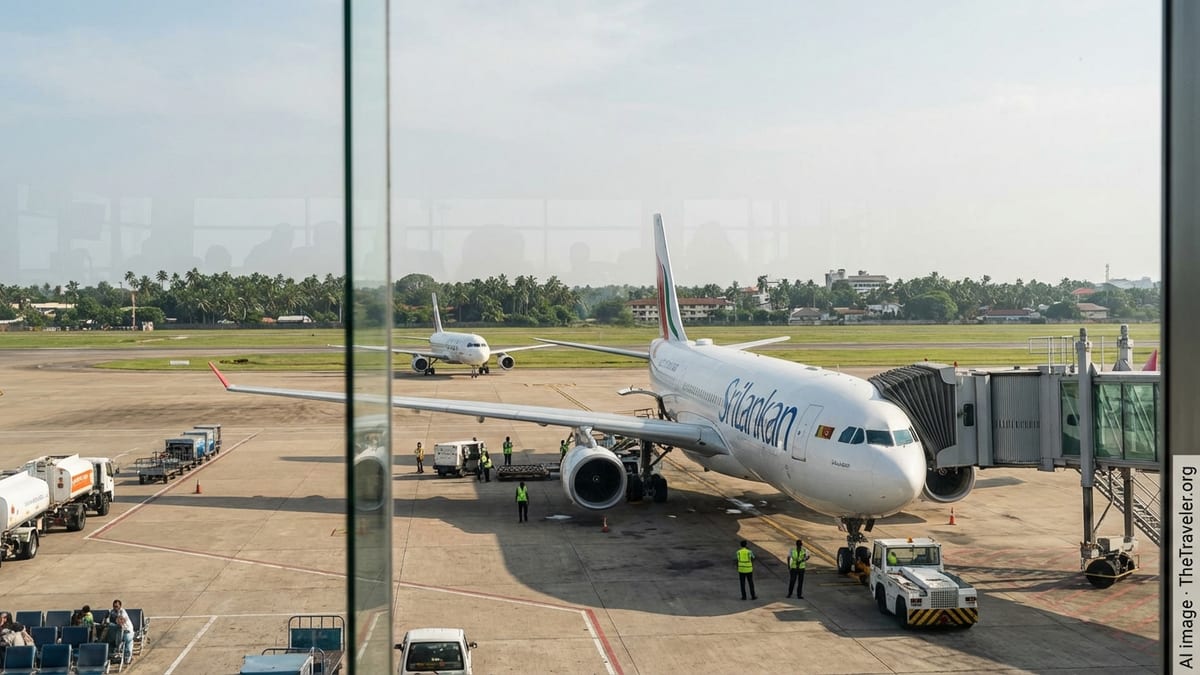
Holidaymakers eyeing Sri Lanka this year are being warned to brace for fuller flights, reduced route options and potential schedule changes as SriLankan Airlines battles what officials describe as an unprecedented aircraft shortage, colliding with a global supply crunch for new and leased jets.
A National Carrier Caught in a Global Capacity Squeeze
On 20 February 2026, Sri Lanka’s deputy minister of ports and civil aviation acknowledged publicly that SriLankan Airlines needs at least seven additional aircraft just to stabilise its current network and pursue planned new routes. Yet, he conceded, securing even a single additional jet on dry lease has become “challenging” amid a worldwide shortage of available aircraft.
The problem is not unique to Sri Lanka. The International Air Transport Association has warned that aircraft availability is now one of the biggest constraints on airline growth globally, with thousands of deliveries delayed and a record order backlog stretching well into the next decade. For a relatively small flag carrier with a fragile balance sheet, that industry-wide squeeze is felt more acutely.
For travellers, this means the airline that still carries a large share of visitors into Sri Lanka is running close to the limits of its capacity at precisely the moment tourism demand is recovering strongly. With fewer spare aircraft in the system, there is less room to absorb technical issues, weather disruptions or operational bottlenecks without knock-on effects to the schedule.
Tourism authorities have set ambitious targets for visitor arrivals and revenue by the end of the decade, and SriLankan Airlines is central to those plans. But the gap between the capacity the airline says it needs and the jets it can actually secure is now shaping what your journey to Sri Lanka could look like in the months and years ahead.
How SriLankan’s Fleet Ended Up So Stretched
SriLankan Airlines went into the pandemic with 27 aircraft. Today it operates 23, all from Airbus, split between narrow body A320 and A321 jets and wide body A330s used on longer-haul flights. Several aircraft were retired or returned during the crisis years, and the carrier has struggled to rebuild capacity at the pace of demand.
A series of setbacks has deepened the crunch. Engine reliability issues on some of its Airbus A320neo-family aircraft led to prolonged groundings, denying the airline both revenue and much-needed seats at a time when demand was returning. Earlier political decisions left some aircraft sitting idle without engines, with the state paying to keep them on lease while they generated no income.
When the post-pandemic travel rebound arrived, SriLankan had fewer active aircraft than before, higher maintenance bills and limited financial room to manoeuvre. Attempts since 2024 to lease additional wide body A330s have been hampered by slow procurement processes, shifting government policy and intense competition from better-capitalised airlines seeking the same scarce jets.
Management has announced a five-year plan to roughly double capacity and expand the fleet toward 50 aircraft, with new wide bodies and long-delayed A350s on the horizon. But that aspirational trajectory contrasts with the near-term reality: fleets worldwide are ageing in place and every available airframe is in demand, leaving SriLankan struggling to close the gap between strategy and day-to-day operations.
What This Means for Seat Availability and Fares
The most immediate impact of the aircraft shortage for tourists is on simple seat availability. With fewer planes than it would like and some aircraft spending longer in maintenance, SriLankan has been forced at times to cap capacity, even when demand on key routes has been robust.
Industry data for the airline’s latest financial year show that available seat kilometres, a standard measure of capacity, actually shrank even as visitor arrivals to Sri Lanka increased. Passenger numbers fell modestly, not because interest in the destination waned, but because the airline did not have enough aircraft operating consistently to meet potential demand.
In practical terms, that squeeze can translate into fuller cabins weeks or months ahead of departure, particularly in peak European winter and during regional holiday periods around India and the Middle East. When most seats on a route are selling steadily and there is little scope to add extra frequencies or larger aircraft, basic airline economics suggest higher average fares.
Travellers booking Colombo or beyond on SriLankan may therefore find fewer of the rock-bottom promotional deals that characterised the immediate post-pandemic period. Instead, fares are likely to be more closely aligned to strong underlying demand, especially on trunk routes from London, key Indian cities, the Gulf and Southeast Asia, where SriLankan is often the only or primary non-stop option.
Network Gaps, Consolidated Routes and Longer Journeys
A constrained fleet does not just affect how many seats are available; it also shapes where an airline flies. SriLankan has spoken openly about wanting to restore or launch services to destinations such as Beijing, additional Australian gateways and parts of Africa. These routes are seen as strategically important for feeding tourists into Sri Lanka. For now, many remain plans on paper.
When an airline lacks enough aircraft, it typically prioritises its most consistently profitable and strategically vital routes. For SriLankan, that has meant focusing on core markets in South Asia, the Middle East and a handful of long-haul destinations in Europe and East Asia. Marginal or seasonal cities are more vulnerable to cuts, downgauging or intermittent suspensions.
For travellers, the result can be fewer non-stop options and more reliance on connections, either via Colombo on different carriers or through third-country hubs such as Doha, Dubai, Abu Dhabi or Singapore. A journey that once involved a single SriLankan Airlines flight may now require a codeshare combination or a competing airline altogether, potentially lengthening travel time and increasing the risk of missed connections.
Even on routes that remain in the schedule, the aircraft type or frequency may fluctuate. A service advertised at launch as daily on a wide body may operate some days with a smaller single-aisle jet, or drop to five weekly during shoulder months. This kind of rationalisation allows SriLankan to stretch its limited fleet, but it can also mean less flexibility for travellers trying to line up flights with hotel check-in times, tour departures or business commitments.
Reliability, Disruptions and Your Day-of-Travel Experience
An airline running a lean fleet has less margin for error. When one aircraft suffers a technical issue, there are fewer spares available to step in. As a result, disruptions that might have been contained to a brief delay can spill over into cancellations, missed onward connections and extended knock-on delays across the network.
SriLankan has already faced criticism after some high-profile incidents in 2025, including a diverted flight that left passengers frustrated by limited information and lengthy waits. While such events remain the exception rather than the rule, the underlying dynamic is clear: when every aircraft in the fleet is heavily utilised, recovery from irregular operations becomes more complicated.
From a passenger’s perspective, this makes preparation more important. Those flying to Sri Lanka for holidays may wish to leave greater buffers between international arrivals and domestic connections, particularly if they are transferring to smaller carriers serving the country’s east coast beaches or hill country airstrips. Booking the first flight of the day on a route can sometimes reduce the risk of rolling delays caused by earlier disruptions.
It also means that communication and customer service become critical. SriLankan’s ability to keep travellers informed, rebook disrupted itineraries and provide accommodation or meal support where required will heavily influence how the aircraft shortage is perceived by visitors. For now, the experience appears to be uneven, with reports ranging from smooth handling of issues to extended periods of uncertainty at outstation airports.
Can Other Airlines Pick Up the Slack into Sri Lanka?
One mitigating factor for visitors is that SriLankan is not the only way into the country. Gulf super-connectors and several South and East Asian carriers operate frequent services to Colombo, and Indian airlines in particular have expanded links between Sri Lanka and secondary cities across the subcontinent.
As SriLankan grapples with its aircraft shortage, some of these foreign carriers are cautiously filling gaps, either by adding frequencies or deploying larger aircraft on high-demand routes. This has helped stabilise overall seat capacity into Sri Lanka, even as the national carrier’s growth has stalled. For long-haul travellers, connecting via Doha, Dubai, Abu Dhabi, Kuala Lumpur or Singapore remains a common and often competitively priced alternative.
However, the same global constraints that are limiting SriLankan’s expansion also affect its rivals. Major manufacturers continue to deliver fewer aircraft than planned, while engine maintenance bottlenecks have taken hundreds of jets worldwide out of service. Lease rates have climbed, and many airlines are holding on to older aircraft longer than intended. In this context, Sri Lanka cannot rely indefinitely on foreign carriers alone to accommodate surging tourist numbers.
For some travellers, the network and schedule offered by SriLankan will still be the most convenient, especially for direct access to Colombo and seamless domestic connections. But flexibility will be key. Those with fixed travel dates may need to compare options across several airlines and routings, rather than assuming the national carrier will always have plentiful capacity on their preferred days and times.
Strategies for Travellers: Booking Smart in a Tight Market
For holidaymakers determined to visit Sri Lanka in the midst of this aircraft crunch, a few practical steps can help reduce stress and improve the odds of a smooth trip. The most important is to book critical flights early, particularly if you plan to travel during peak seasons such as December to March, school holidays in major source markets or around major religious and cultural festivals on the island.
Early booking allows access to a wider spread of fare classes before the cheapest buckets fill up on popular dates. It also increases the likelihood of securing seats on preferred non-stop flights, which are typically the first to sell out when capacity is constrained. Travellers with flexibility on dates or departure airports may find that shifting by a day or two, or flying from an alternative city, unlocks better availability and pricing.
Given the heightened risk of disruption in a tightly stretched operation, travel insurance that covers missed connections, delays and schedule changes is becoming more than a formality. Policies that reimburse additional hotel nights, meals or rebooking costs can provide peace of mind when travelling long distances to island destinations with limited alternative surface transport.
Finally, staying informed matters. Monitoring booking confirmations for schedule changes, checking flight status regularly in the days before departure and allowing time buffers around key events such as weddings, tours or cruises will help ensure that Sri Lanka’s aircraft shortage does not derail your holiday altogether. With a bit of foresight, most visitors will still find their journeys manageable, even if the skies are a little more crowded and less predictable than before.
Outlook: A Delicate Balancing Act for Sri Lanka Tourism
Looking ahead, the tension between Sri Lanka’s tourism ambitions and the national carrier’s capacity constraints is likely to persist for several years. Industry forecasts suggest that the structural imbalance between aircraft demand and supply will not fully normalise until well into the next decade, meaning that SriLankan’s hopes of rapidly scaling its fleet will be tested by forces largely beyond its control.
At the same time, the airline is juggling a complex financial restructuring, political pressure to remain state-owned and the operational demands of running a globally connected network with limited backup. Management insists that previously grounded aircraft are gradually returning to service and that additional jets are being secured, but the pace of change is unlikely to be dramatic.
For travellers, the key takeaway is that Sri Lanka remains an appealing and accessible destination, but the way you get there is evolving. Routes and schedules that were taken for granted before 2020 are no longer guaranteed, and the national carrier’s fleet is being asked to do more with less. Staying flexible, planning ahead and being open to alternative routings will be essential parts of flying to Sri Lanka in this new, capacity-constrained era.