

More news on this day
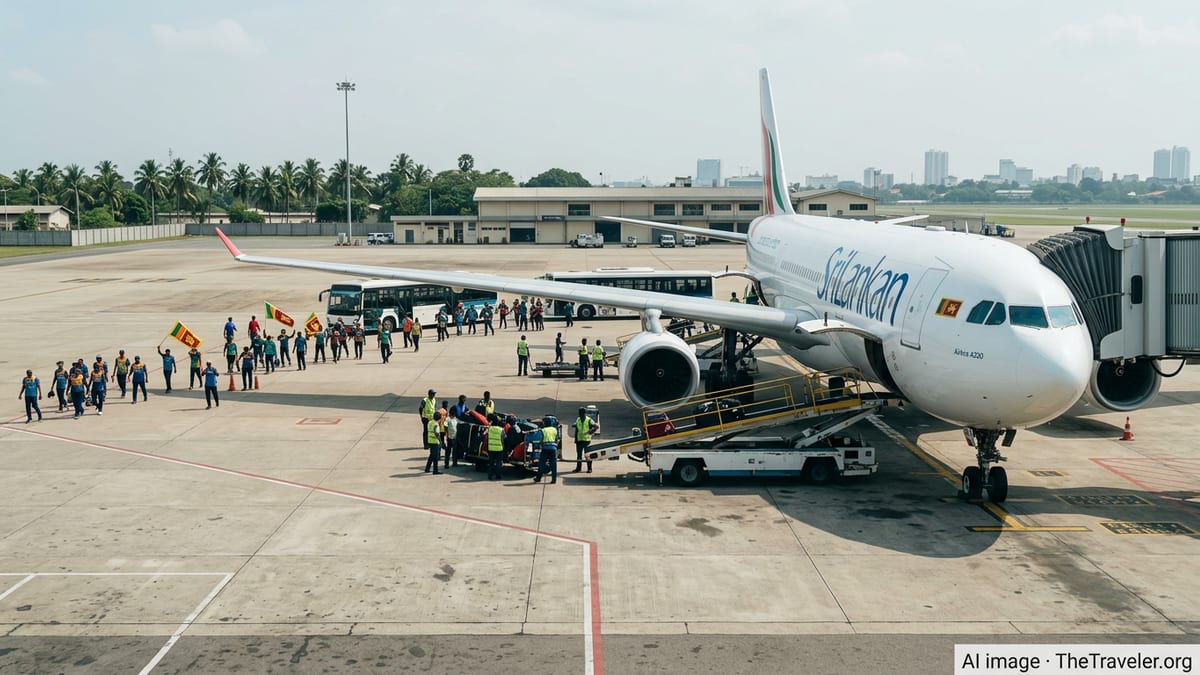
SriLankan Airlines is making aviation and cricket history at the ICC Men’s T20 World Cup 2026, operating a series of special charter and additional scheduled flights that are turning this year’s tournament into one of the most ambitious sports travel operations ever mounted by the island nation’s flag carrier.
A Small Island Carrier Steps Onto a Global Stage
With the ICC Men’s T20 World Cup 2026 being staged across multiple venues in India, SriLankan Airlines has seized the moment to showcase its long-haul and regional capabilities, positioning Colombo as a key transit hub for South Asian and Gulf-based fans heading to matches. Airline officials say demand from Sri Lankan expatriates, Indian cricket followers, and neutral supporters has exceeded pre-tournament forecasts, prompting a rapid build-out of extra capacity into key host cities.
While cricket charters are not new, the scale and timing of this year’s operation are unprecedented for SriLankan. Industry analysts note that coordinating aircraft rotations around an intensive tournament calendar, tight airport slots, and volatile regional airspace conditions has required the airline to operate with the precision of a tournament schedule itself. Aviation planners have treated marquee match days as peak holiday periods, with rolling adjustments as teams have advanced or exited.
The carrier’s management has framed the project as both a commercial opportunity and a soft-power moment. Executives have highlighted that every flight carrying fans draped in national colors doubles as an airborne advertisement for Sri Lanka as a travel destination, with the airline’s cabin crews effectively acting as tourism ambassadors as much as service professionals.
Inside the Special Flights: Schedules, Cabins and Fan Experience
The backbone of SriLankan’s World Cup strategy has been a blend of dedicated charters for fan groups and tactical increases on scheduled routes into Indian host cities. Widebody aircraft that normally ply routes to Europe and the Middle East have been temporarily redeployed on select days to absorb surges around high-profile fixtures, especially those featuring Sri Lanka or regional rivals. Late-night and dawn departures have been slotted to align with match finish times, allowing supporters to fly shortly after the final ball.
On board, the airline has leaned into the cricket theme without turning flights into full-fledged fan parties. Flights linked to key fixtures have featured match highlight reels on seatback screens, tournament-branded headrest covers, and snack offerings tailored to South Asian tastes. Cabin announcements have referenced results and upcoming fixtures, while some flights have hosted former players and commentators who mingled with fans in the aisles and posed for photos.
Themed charter sectors have also catered to corporate clients, broadcasters and hospitality partners, who have used the aircraft as moving networking lounges. In business class, executives have held informal briefings and sponsorship huddles over Sri Lankan tea service, while economy cabins have pulsed with drum beats and impromptu chants as supporters from different countries traded predictions on their team’s prospects.
Moving Teams, Officials and Broadcasters Under Pressure
Beyond fan traffic, SriLankan Airlines has quietly played a role in moving national squads, match officials and broadcast crews around the region. Working with tournament organizers and national boards, the carrier has dispatched short-notice charters to reposition teams between venues on tight turnarounds, often landing in host cities less than 24 hours before a game. These operations have demanded meticulously choreographed ground handling, from expedited immigration channels to secure baggage transfers for team kits and technical gear.
Aviation planners say one of the defining features of this World Cup has been the need for agility amid fast-changing match-ups and knockout scenarios. When results reshaped the Super Eight and semi-final lineups, aircraft routing plans written weeks in advance had to be rewritten overnight. Charter planners ran parallel scenarios, holding slots and crews in reserve pending the outcome of late-evening fixtures to ensure that whichever team advanced would still have a dedicated aircraft and a rest-compliant crew the next morning.
For broadcasters, who operate to minute-by-minute production schedules, SriLankan has provided tailored services including early check-in counters, priority screening for sensitive equipment and, in some cases, lightly modified cabin layouts to accommodate camera cases and lighting rigs. Airline staff have described some flights as “flying production trucks,” with technical teams editing footage on laptops as they hop between host cities.
Navigating Airspace Disruptions and a Tight Regional Network
The World Cup has played out against a backdrop of fluctuating airspace restrictions in parts of West Asia, forcing many carriers to rethink routings for flights linking South Asia with Europe and Africa. SriLankan Airlines has had to adjust on the fly, sometimes adding fuel stops or lengthening routings to keep charter flights on the right side of temporary closures while still delivering teams and supporters on time. Operations control centers have run near-continuous scenario planning, with dispatchers tracking geopolitical updates alongside weather charts.
These constraints have underscored how exposed large, multi-venue tournaments are to external shocks. When other teams at the World Cup required alternative travel due to airspace disruptions, attention throughout the cricket world turned to the resilience of tournament air logistics. SriLankan, operating from an island heavily reliant on aviation connectivity, has marketed its ability to thread complex routings as a competitive advantage, arguing that its experience managing long overwater sectors naturally translates to the contingencies demanded by major events.
Despite the challenges, on-time performance for the airline’s cricket-linked flights has remained robust, according to people familiar with internal data. Some delays have been inevitable when matches went down to the wire, but ground staff have become adept at processing waves of jubilant or crestfallen fans with minimal bottlenecks, often fast-tracking charter passengers through dedicated check-in zones at Colombo’s Bandaranaike International Airport.
Tourism Windfall and What Comes After the Final
For Sri Lanka’s wider travel economy, the World Cup has provided a timely boost at the tail end of the high season. Hoteliers in Colombo and key resort areas report upticks in short-stay bookings from fans who have built beach stopovers around their match itineraries. Destination marketers say many first-time visitors who arrived for cricket have extended trips to explore the island’s cultural sites, wildlife parks and surf beaches after seeing promotional material on board SriLankan flights.
Tourism officials are already describing the airline’s World Cup operation as a template for future sports travel campaigns. By pairing match tickets and ground arrangements with air seats, they hope to sell integrated packages for future ICC events and regional tournaments, using lessons learned from this month’s complex charter schedules. Discussions are underway about creating a permanent “cricket corridor” marketing concept, positioning Colombo as the natural gateway for fans following South Asian teams to global events.
Within SriLankan Airlines, executives see the World Cup as an important proof of concept at a time when the carrier continues to rebuild after economic shocks and pandemic-era disruptions. Strong load factors on special flights have bolstered the case for selectively adding capacity during major regional events, from cricket series to religious pilgrimages. As the final overs of the tournament approach, planners are already poring over data on routes, yields and operational performance to fine-tune the airline’s playbook for the next big sporting occasion to capture the imagination of Sri Lankan travelers.