

More news on this day
SriLankan Airlines is reporting a fresh uplift in passenger revenue after deploying an artificial intelligence and machine learning powered revenue management system that is reshaping how the carrier prices seats and manages demand across its network.
Get the latest news straight to your inbox!
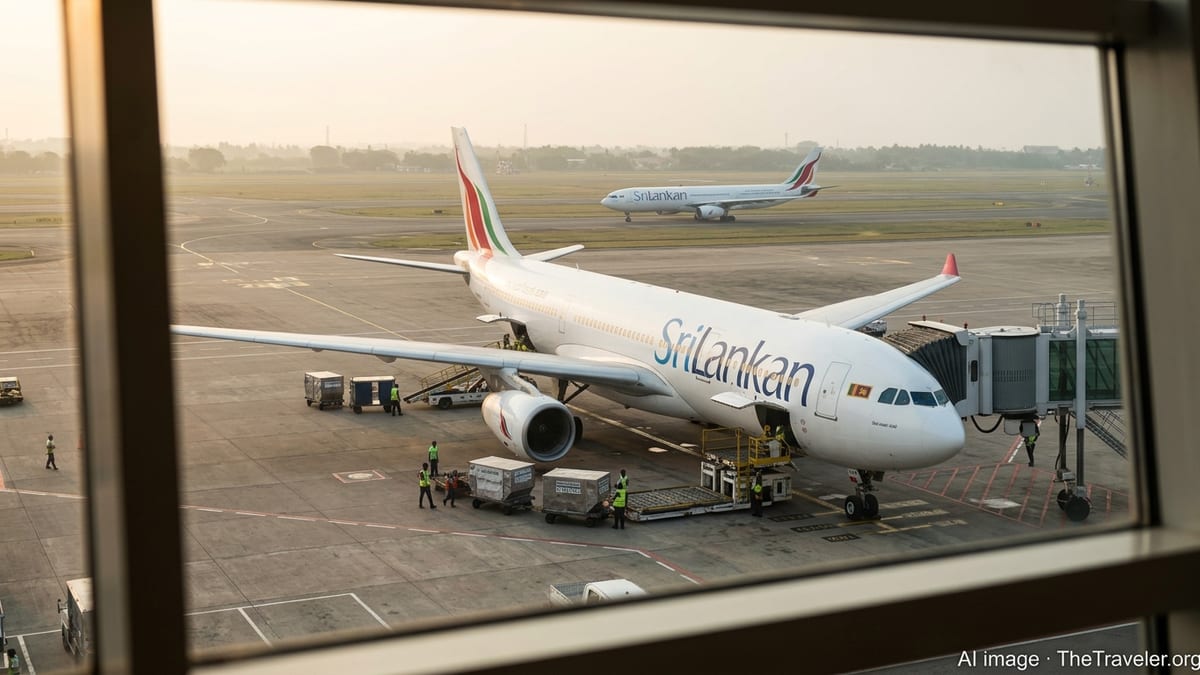
AI and Machine Learning Move to the Heart of Pricing
Recent disclosures from SriLankan Airlines and technology provider PROS indicate that the carrier has completed a major overhaul of its revenue management platform, transitioning from a traditional leg-based model to an origin and destination focused system underpinned by AI and machine learning. The cloud-based solution continuously analyses booking patterns, competitive fares, seasonality and demand fluctuations to recommend optimal prices and seat allocations in real time.
According to publicly available information, SriLankan’s management frames the upgrade as a core element of a wider digital transformation strategy intended to stabilise finances after several challenging years. By shifting to an AI-enabled decision engine, the airline seeks to capture more granular demand on connecting itineraries, reduce reliance on manual overrides and improve the consistency of pricing decisions across its global network.
The new platform, delivered in partnership with long-time technology collaborator PROS, is designed to scale with network changes and to incorporate new data sources as they become available. This allows the airline to refine forecasts more frequently, react faster to competitive moves and test new pricing strategies without disruptive system changes.
Industry analysts note that such AI and ML based revenue management systems are becoming standard for full-service airlines as they compete in increasingly dynamic markets. For SriLankan, operating from a small home market but serving a broad mix of transfer and point-to-point traffic, the ability to anticipate and monetise complex flows is particularly critical.
Revenue Growth and Network Performance Signals
Financial information released in the airline’s recent annual reporting points to a modest but notable rise in passenger revenue following the rollout of the upgraded revenue management platform. While the improvement comes against a backdrop of recovering travel demand, management commentary attributes part of the uplift to better fare optimisation, route rationalisation and demand-synchronised schedules enabled by enhanced analytics.
The airline has reported year-on-year revenue growth and improved yields on key markets where the AI-powered system can fully deploy origin and destination controls. Publicly available documents suggest that these results are strongest on high-connectivity routes through Colombo, where transfer traffic and multiple cabin products give the system greater scope to segment demand and fine-tune pricing.
In tandem with the technology transition, SriLankan has undertaken a network review, trimming underperforming routes while adding frequencies or capacity where data indicates resilient or growing demand. The AI and ML tools support this process by modelling revenue impacts of schedule and capacity changes, helping the carrier prioritise markets that deliver the strongest contribution per available seat.
Although the airline still faces legacy debt and exposure to fuel and currency swings, the revenue uptick provides evidence that data-driven decision making is helping to narrow losses and strengthen cash generation. Observers highlight that sustained benefits will depend on continuing to train models with high quality data and integrating revenue management outputs more deeply into commercial planning.
Partnership with PROS and Cloud-Based Innovation
The shift in revenue management at SriLankan Airlines builds on a relationship with PROS that stretches back nearly two decades. Recent case material from the technology provider shows the carrier migrating to a cloud-hosted, AI and ML infused revenue management application designed for continuous optimisation and faster time to market for new capabilities.
The cloud architecture allows SriLankan to run complex forecasting and optimisation routines without heavy on-premise infrastructure, while also accessing regular software enhancements. This setup is particularly important for airlines in emerging markets, where capital constraints and legacy systems can otherwise delay adoption of modern decision-support tools.
PROS highlights SriLankan’s move from leg-based to origin and destination control as a pivotal step that enables the AI models to evaluate entire journeys rather than individual flight segments. This approach typically yields more accurate valuations of connecting itineraries and reduces situations where seats are sold too cheaply on one leg, blocking higher-value demand across the network.
By aligning the new platform with its broader distribution and digital sales initiatives, SriLankan aims to present more competitive offers across direct and indirect channels. The airline has been investing in enhanced online booking flows and smarter ancillary merchandising, initiatives that are likely to benefit from the more granular forecasts generated by the revenue management system.
Digital Transformation Extends Beyond Pricing
The adoption of AI and ML in revenue management is part of a wider technology refresh at SriLankan Airlines. Publicly available information from the carrier outlines initiatives ranging from digital sales platforms and mobile enhancements to the deployment of an AI-powered customer service chatbot named Yaana. These tools are intended to improve the end-to-end travel experience while also driving incremental revenue through better targeting and engagement.
On the operational side, the airline is investing in data-driven fleet and schedule planning, leveraging analytics to better match aircraft types and frequencies to market demand. Improved coordination between network planning, sales and revenue management is viewed as vital to maximising the benefits of the new pricing engine, since accurate inputs on capacity and schedule changes directly influence forecast quality.
The carrier is also using analytics to support cost-rationalisation efforts, including more efficient deployment of crews and resources at its Colombo hub. While these initiatives are distinct from the revenue management system, they contribute to the same objective of strengthening financial resilience and positioning the airline for sustainable growth.
For passengers, the combined effect of these digital projects is starting to appear in more personalised offers, clearer fare structures and improved availability of self-service options. Industry watchers suggest that as SriLankan continues to refine its AI models, travellers may see more dynamically tailored pricing and ancillary bundles aligned with booking behaviour and trip purpose.
Implications for Regional Competitiveness
SriLankan Airlines operates in a region where competition from Gulf carriers, South Asian rivals and low-cost operators is intense. In this environment, the ability to respond quickly to changing demand and pricing moves can significantly influence market share and profitability. An AI and ML powered revenue management platform gives the airline a toolset that is more comparable to those used by larger global competitors.
Reports on industry trends indicate that carriers which successfully embed advanced revenue management into their commercial culture tend to achieve higher unit revenues and better manage capacity risk. For SriLankan, this could translate into more sustainable operations on long-haul routes and improved performance on regional sectors where low-cost competition is strong.
The airline’s experience is being closely watched by other mid-sized flag carriers grappling with limited home markets and volatile macroeconomic conditions. If SriLankan can demonstrate a durable revenue uplift tied to its AI and ML driven platform, it may strengthen the case for similar investments across the region, particularly among airlines seeking to modernise without extensive fleet expansion.
As global travel demand continues to evolve, the early results from SriLankan Airlines suggest that sophisticated, data-centric revenue management is becoming less an optional upgrade and more a prerequisite for competitive survival in commercial aviation.