

More news on this day
SriLankan Airlines’ celebration of baby Kumudini Soham More’s first flight is drawing renewed attention to the national carrier’s focus on family travel, as regional data and recent initiatives indicate that multigenerational tourism is becoming a powerful driver of the airline’s expanding global network.
Get the latest news straight to your inbox!
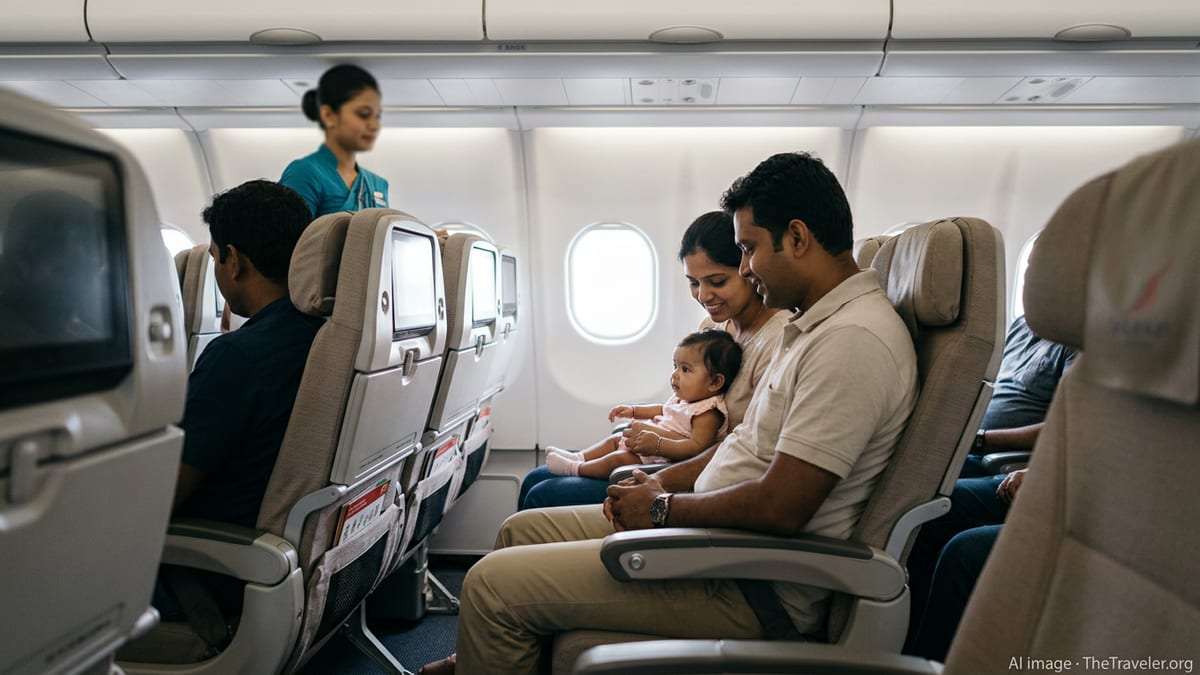
A Symbolic First Flight Amid Growing Family Travel Demand
The story of baby Kumudini Soham More’s inaugural journey has resonated widely among travellers who see air travel not only as transport but as a shared family milestone. Families increasingly document and share such first-flight moments, and this visibility is reinforcing the perception of SriLankan Airlines as a carrier that caters to parents, infants and young children on regional and long-haul routes.
Publicly available tourism statistics for Sri Lanka show that overall arrivals have climbed beyond pre-pandemic peaks in 2025, with families from India and other regional markets playing a prominent role in this recovery. Reports indicate that a growing proportion of arrivals consist of family groups combining leisure, cultural exploration and visits to relatives, a trend that supports higher passenger loads for airlines with dense regional connectivity.
SriLankan Airlines, which currently serves dozens of destinations across Asia, the Middle East and key long-haul points, has positioned itself as a gateway for such travel. Its strong presence in India, in particular, has underpinned a rise in short-break holidays and multi-stop itineraries that are attractive to parents seeking manageable flight durations and familiar services when travelling with young children.
Within this context, the highlighting of an infant’s first flight is more than a feel-good anecdote. It reflects a wider shift in how airlines present their role in family life, framing air journeys as emotionally meaningful experiences that can begin even in a passenger’s earliest months, and linking these moments to national tourism ambitions.
Family Tourism Fuels Sri Lanka’s Visitor Growth
Recent coverage of Sri Lanka’s tourism performance indicates that the country has surpassed its previous all-time annual arrival record, with more than 2.3 million visitors recorded in 2025. Industry reports note that families from India arriving on SriLankan Airlines services have featured prominently in symbolic milestones used to illustrate this surge.
Travel trade analysis points to several reasons for this momentum: more frequent regional flights, competitive fares for short-haul family trips, and a growing portfolio of attractions suited to children and multigenerational groups. Coastal resorts, wildlife experiences, heritage sites and shopping-focused city breaks collectively form itineraries that are easier to market as family-friendly packages.
Tourism authorities and regional partners have also emphasized Sri Lanka’s role as a convenient hub in South Asia, with Colombo functioning as a connection point for families continuing onward to Southeast Asia or the Middle East. SriLankan Airlines’ network strategy has complemented these efforts by maintaining links that support both point-to-point leisure travel and connecting traffic.
Within this framework, each individual family arrival, such as the More family’s journey with baby Kumudini, is part of a much larger pattern. Families are contributing to longer average stays, diversified spending across destinations and seasons, and repeat visits as children grow older and parents seek to revisit or deepen earlier travel experiences.
Airline Initiatives Tailored to Families and Young Travellers
Corporate information released by SriLankan Airlines in 2024 and 2025 highlights a series of initiatives that align closely with the needs of families. The airline has expanded its FlySmiLes frequent flyer ecosystem with features such as family pooling, making it easier for parents to consolidate miles and redeem benefits for children’s tickets or upgrades.
SriLankan Cares, the carrier’s corporate responsibility arm, has organized multiple programmes focused on children and youth, ranging from educational tours of airport and airline operations to special excursions timed with celebrations such as World Children’s Day. These activities provide young participants with early exposure to aviation and tourism, positioning air travel as both aspirational and accessible.
On the commercial side, SriLankan Holidays, the leisure travel division, has played an active role in designing packages that appeal to families from key markets, including India, the Middle East and emerging secondary cities. These packages typically combine flights with hotel stays, transfers and curated experiences that minimize logistical stress for parents while maximizing time at attractions suited to younger travellers.
Digital marketing campaigns, including award-winning efforts such as the Ramayana Trail initiative, have further reinforced Sri Lanka’s image as a destination where spiritual, cultural and leisure elements can be woven into family itineraries. While not exclusively targeted at families, such campaigns demonstrate how narrative-driven marketing can attract multigenerational groups seeking meaning as well as relaxation from their trips.
Long-Term Strategy: New Adventures and Network Expansion
The celebration of a baby’s first flight is also taking place against the backdrop of SriLankan Airlines’ broader strategic transformation. The airline has outlined a multi-year plan aimed at stabilizing its finances, modernizing its fleet and pursuing measured growth in capacity, all while reinforcing its role as a key enabler of national tourism objectives.
Recent corporate updates report improvements in on-time performance and passenger revenue, alongside a tangible rise in passenger numbers during the current financial year. Additional aircraft deployments on selected long-haul and regional routes have allowed the airline to increase frequencies and refine schedules, which is particularly important to families planning around school holidays and limited vacation windows.
The carrier’s leadership has also highlighted sustainability and community engagement as pillars of its long-term vision. Initiatives such as upcycling retired cabin materials into lifestyle products and supporting educational programmes for children indicate an attempt to align commercial growth with broader social and environmental expectations.
For travelling families, these developments translate into more route options, improved reliability and the prospect of new global adventures originating in Colombo. Whether they are first-time flyers like baby Kumudini Soham More or seasoned travellers returning to familiar destinations, such passengers are central to the airline’s aspiration to be seen as a trusted companion across life’s many journeys.
Regional Partnerships and the Future of Family Travel
The emphasis on family tourism is not confined to Sri Lanka’s borders. SriLankan Airlines has been working with regional tourism boards, such as Tourism Malaysia and partners in the Middle East, on familiarisation tours and joint promotions designed to stimulate two-way travel and encourage families to consider multi-country itineraries.
Media coverage of these collaborations describes hosted tours for journalists and travel agents that spotlight family-oriented attractions, sustainable urban developments and value-driven holiday options. Such initiatives are intended to feed back into packaged offerings and itineraries that families can book through travel agencies or online channels.
At the same time, evolving discussions about airport infrastructure, visa procedures and service standards within Sri Lanka underscore the importance of maintaining a seamless experience from check-in to arrival. Comments shared in public forums and traveller communities suggest that parents with young children pay close attention to ease of transit, ground handling and customer support when choosing an airline for long-haul trips.
As SriLankan Airlines looks toward future anniversaries and potential network expansions, stories like baby Kumudini’s first flight capture the personal side of these developments. They underscore how the carrier’s performance, partnerships and policy environment ultimately converge on individual families in airport queues and aircraft cabins, shaping how a new generation will remember its earliest global adventures.