

More news on this day
SriLankan Airlines is reporting its strongest revenue performance in years, with the carrier attributing a significant share of the uplift to a new origin and destination revenue management platform that uses artificial intelligence and machine learning to optimise fares across its network.
Get the latest news straight to your inbox!
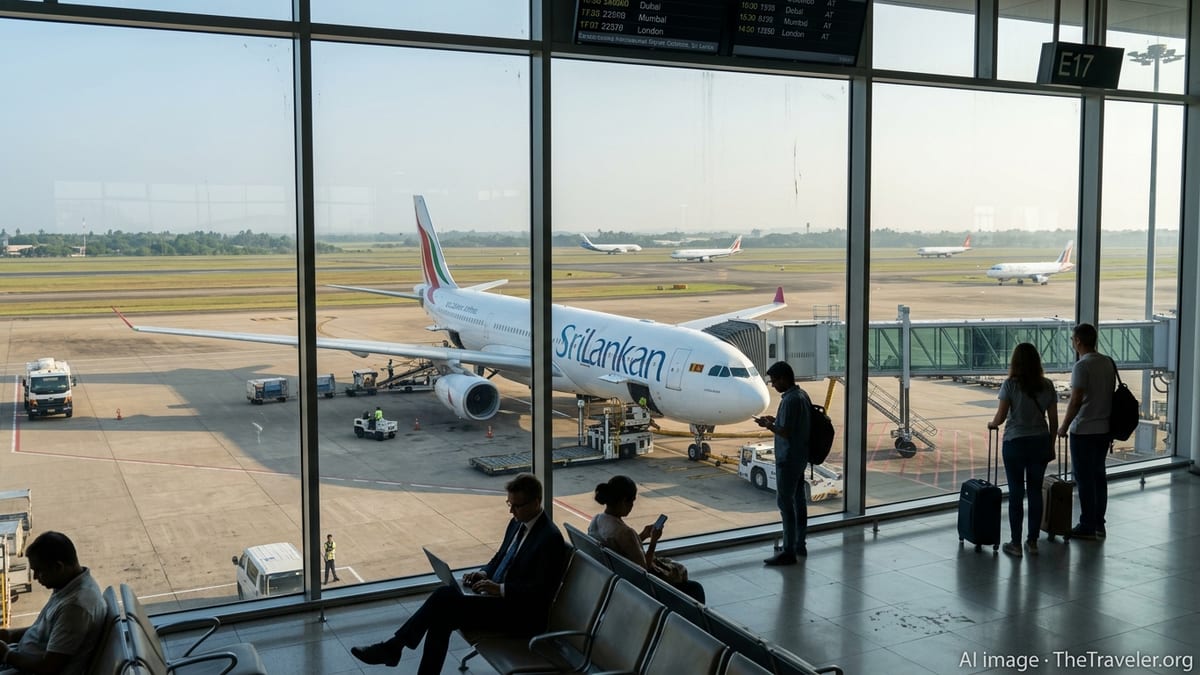
AI Driven Shift in Revenue Management Strategy
Publicly available information from SriLankan Airlines’ latest annual disclosures indicates that the Colombo based carrier has completed a major overhaul of its revenue management architecture, moving away from traditional leg based controls to an origin and destination focused model. The transition, finalised in late 2024, is built on a cloud based platform that applies artificial intelligence and machine learning to forecast demand and set availability in real time.
The airline reports that the system, powered by PROS Revenue Management Advantage and complementary availability tools, continuously evaluates booking patterns, remaining capacity and competitive pricing to determine which fare classes to open or close for every city pair on its network. This marks a structural change for SriLankan, which historically managed inventory on a segment by segment basis, limiting its ability to prioritise higher yielding itineraries spanning multiple legs.
According to the carrier’s financial filings, the new platform is designed to support a more passenger centric commercial strategy by aligning fares, offers and seat access with individual travel needs and willingness to pay. The use of advanced analytics and machine learning models allows the airline to respond more quickly to shifts in demand, particularly on complex flows linking South Asia, the Middle East and Europe where connecting traffic plays a decisive role in profitability.
Management commentary in recent reports underscores that this technological shift is part of a broader push to modernise digital sales channels and restore the airline’s financial health after several years of pandemic related disruption and macroeconomic pressure in Sri Lanka.
Unprecedented Revenue Growth Across Key Markets
While SriLankan Airlines remains in a multi year restructuring phase, recent financial results show a marked improvement in top line performance since the rollout of the origin and destination platform. The airline highlights strong growth in passenger revenue and improved load factors on core routes, including services linking Colombo with the Middle East, India, Southeast Asia and selected long haul destinations.
Data from the 2023 to 2025 reporting period indicates that total passenger revenue has outpaced capacity growth, suggesting a clear yield benefit from more precise control of seat inventory and pricing. The carrier attributes part of this performance to its ability to protect high value, long haul and connecting itineraries, rather than filling aircraft primarily with low fare point to point traffic.
Reports also point to healthier contribution from connecting flows that route travellers through Colombo between South Asia, the Gulf and Europe. By viewing demand through an origin and destination lens, the AI enabled system can identify where to hold back inventory for later booking, which itineraries to prioritise, and how to adjust prices dynamically as departure approaches. Industry analysts note that such capabilities are increasingly critical for mid sized network airlines competing against large Gulf and Asian hub carriers.
Although the airline is still working through legacy debt and balance sheet challenges, the revenue uplift associated with the new platform is being framed internally as an “unprecedented” step change compared with historic performance, particularly when measured against pre pandemic benchmarks.
Technology Partners and the Wider AI Airline Trend
SriLankan’s adoption of an AI powered origin and destination platform places it within a broader wave of carriers turning to machine learning based decision tools to drive commercial performance. Technology providers such as PROS and Accelya have been rolling out increasingly sophisticated forecasting and dynamic pricing engines that sit at the heart of airlines’ offer and order strategies.
Industry coverage shows that PROS’ Revenue Management Advantage uses machine learning algorithms to ingest large volumes of historical and real time data, from competitor fares to booking curves and no show rates, in order to recommend optimal controls for each fare product. Similar platforms are being deployed by full service and low cost carriers worldwide as they pursue granular segmentation and personalised offers.
Accelya, which has a long relationship with SriLankan Airlines in areas such as market share analytics and sales performance, has also been expanding its AI capabilities through products like its FLX platform and AIViator intelligence layer. These solutions enable airlines to bring AI into pricing, merchandising and revenue accounting, reflecting a sector wide recognition that data science and automation are now central to commercial success.
Analysts following airline technology trends note that smaller and mid sized national carriers can derive outsized benefits from such systems, as they lack the in house development resources of global mega carriers but operate in intensely competitive markets where every incremental revenue gain is significant.
Passenger Experience and Network Optimization Benefits
Beyond immediate financial outcomes, SriLankan Airlines is positioning the AI enhanced origin and destination platform as a tool to refine its customer proposition and route planning. By tracking detailed booking behaviour across origin and destination pairs, the carrier can identify underserved markets, peak travel windows and preferred connection times through its Colombo hub.
This data driven insight feeds into schedule planning and capacity allocation, supporting decisions on where to deploy widebody aircraft, which frequencies to add, and how to time banked connections to minimise transit times. Public documents suggest that SriLankan is using these capabilities to reinforce its role as a connector between South Asia, the Middle East and key leisure and labour corridors.
On the customer side, the airline indicates that the new revenue management framework is being integrated with its digital sales platforms, including direct website and mobile channels as well as agency distribution. Over time, this integration is expected to enable more personalised offers, targeted promotions and ancillary bundles that reflect individual trip purposes and budgets, rather than one size fits all fare structures.
Travel industry observers point out that such changes can improve both perceived value and operational efficiency. When fares and seat availability better match true demand, airlines tend to see fewer last minute disruptions, more stable cabin mixes and a smoother check in and boarding process, all of which contribute to a more reliable travel experience.
Positioning SriLankan Airlines for Future Competition
The deployment of an AI and machine learning powered origin and destination platform is emerging as a central pillar of SriLankan Airlines’ long term turnaround plan. As the flag carrier navigates ongoing restructuring and evaluates future fleet and network decisions, the ability to model demand at a granular level gives it a stronger analytical basis for investment and partnership choices.
Market commentators note that SriLankan faces a particularly complex competitive landscape, contending with major Gulf carriers, expanding Indian airlines and low cost competitors in Southeast Asia. In this environment, optimising every seat and every itinerary is essential to maintaining relevance and financial viability.
By combining modern revenue management technology with broader digital initiatives, SriLankan Airlines is seeking to reposition itself as a more agile, data driven operator, capable of capturing higher yielding traffic flows through Colombo while still serving price sensitive segments. The reported revenue gains since the platform’s introduction suggest that the strategy is beginning to translate into measurable financial results, even as the airline continues to work through wider structural challenges.