

More news on this day
SriLankan Airlines is set to increase flights between Colombo and Melbourne to 10 per week from August 2, 2026, a move that reflects growing tourism flows, strong family travel demand and the deepening economic and cultural ties linking Sri Lanka and Australia.
Get the latest news straight to your inbox!
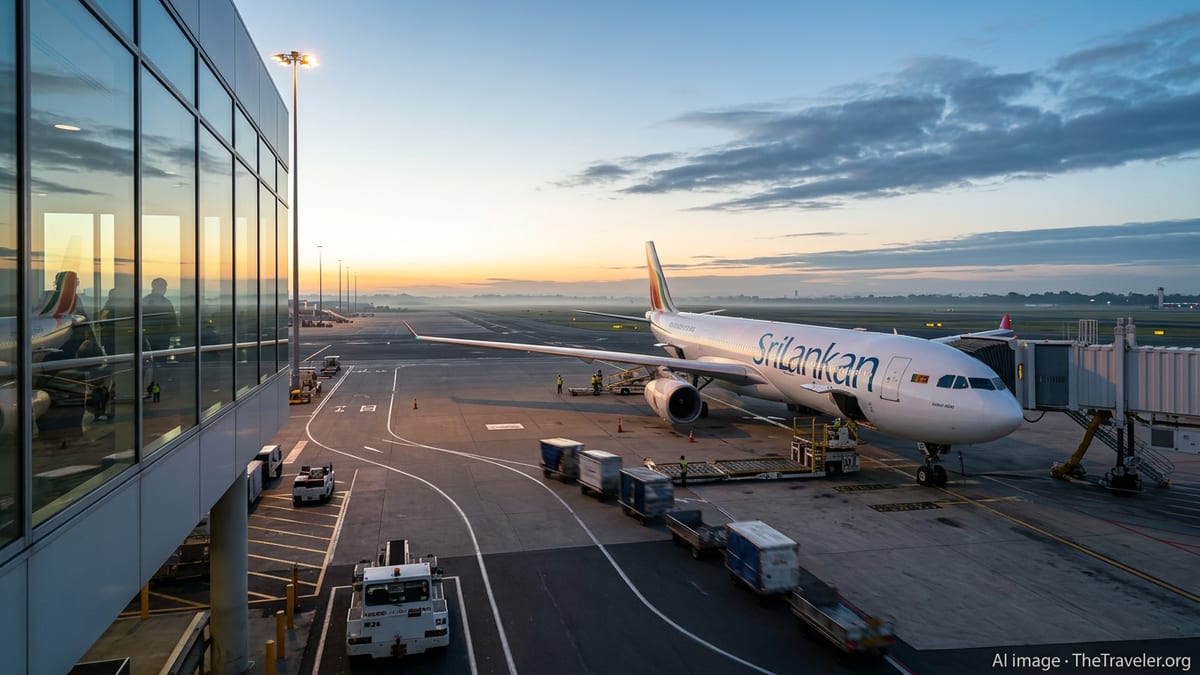
More Flights on a Key Indian Ocean Gateway
According to published coverage in Sri Lankan business media, the flag carrier will add three weekly services on the Colombo–Melbourne route, lifting frequencies from a daily operation to 10 flights per week starting August 2, 2026. Reports indicate that the additional services will be scheduled to provide more choice across peak travel days and connect more smoothly with onward departures from Colombo.
Information published by aviation data providers shows that SriLankan Airlines is currently the only full-service operator offering non-stop flights between Colombo’s Bandaranaike International Airport and Melbourne Tullamarine. The route has evolved steadily since its launch, with frequency increases in recent years tracking a rebound in demand after the pandemic and the gradual recovery of Sri Lanka’s tourism sector.
Publicly available information from industry analysts notes that SriLankan deploys widebody Airbus A330 aircraft on the sector, providing both economy and business class cabins. The extra frequencies are expected to increase weekly seat capacity significantly, reinforcing Colombo’s role as a connecting hub between Australia, South Asia and the broader Indian Ocean region.
Marketing material for the route emphasizes one-stop connectivity from Melbourne via Colombo to key cities in India, the Maldives and the Middle East. The added flights are therefore positioned not only to serve point-to-point traffic between Sri Lanka and Australia, but also to attract transfer passengers seeking alternatives to traditional Southeast Asian hubs.
Rising Tourism and VFR Demand Between Sri Lanka and Australia
Tourism statistics published by Sri Lanka’s authorities and recent industry commentary point to a steady increase in Australian visitor arrivals, supported by growing awareness of Sri Lanka as a beach, culture and wildlife destination. Improved flight access, combined with a favorable exchange rate for many Australian travelers, has helped position the island as a competitive alternative to longer-haul holidays.
Reports in Colombo-based financial media highlight that the stronger schedule to Melbourne is driven as much by visiting-friends-and-relatives travel as by leisure tourism. A sizable Sri Lankan diaspora in Victoria, particularly in Melbourne’s suburbs, generates consistent year-round demand as residents travel back to Sri Lanka for family events, education-related visits and seasonal holidays.
Analysts note that this blend of tourism and diaspora traffic offers airlines more resilience across economic cycles. When corporate travel or high-end leisure demand softens, visiting-friends-and-relatives segments often remain robust, especially where migrant communities maintain close links to their country of origin through frequent trips.
Travel trade representatives quoted in local coverage add that outbound travel from Sri Lanka to Australia is also on the rise, including students, business travelers and holidaymakers connecting to onward services across the Pacific. The uplift in capacity on Colombo–Melbourne is therefore expected to support flows in both directions, reinforcing two-way tourism and people-to-people ties.
Competitive Pressures and Growing Capacity on the Route
The move by SriLankan Airlines comes as competition on the Colombo–Melbourne corridor intensifies. Low-cost carrier Jetstar has previously announced plans to launch a three-times-weekly non-stop service between Melbourne and Colombo from late August 2026, creating the first direct low-fare option on the route operated by an Australian airline.
Analysis from aviation consultancies suggests that the overlap of these expansion plans will materially increase overall seat capacity between Sri Lanka and Australia. For price-sensitive travelers, especially students and young families, the entry of a low-cost competitor alongside a full-service incumbent may translate into more fare options and varied product offerings.
For SriLankan Airlines, boosting frequencies ahead of an expected new entrant strengthens its position in the market and helps secure loyalty among both diaspora travelers and tour operators. Industry observers indicate that higher frequencies typically improve connectivity and make an airline’s schedule more attractive for travel agents building complex itineraries through a hub.
At the same time, the added capacity will test the depth of demand on the route, particularly outside peak holiday seasons. Published commentary from aviation analysts points out that maintaining healthy load factors will depend on SriLankan’s ability to leverage Colombo’s hub role and attract transfer traffic from across South Asia and the Middle East into its Melbourne services.
Economic and Cultural Links Shape Network Strategy
The enhancement of SriLankan’s Melbourne operation aligns with broader efforts by Sri Lanka to deepen economic engagement with Australia. Publicly available trade and investment data show Australia among Sri Lanka’s significant export markets, while Australian institutions maintain education, development and tourism partnerships across the island.
Colombo-based business publications have noted that Melbourne, as a major economic and cultural center with a diverse South Asian community, has become an important focal point for Sri Lankan cultural events, business forums and diaspora initiatives. Increased air connectivity is expected to facilitate further collaboration in sectors such as education, professional services and tourism promotion.
Within the airline’s broader network strategy, reports from recent annual filings indicate a focus on maximizing Colombo’s potential as a mid-sized hub connecting South Asia, the Middle East and Australasia. Strengthening the link to Melbourne fits this approach by feeding traffic into and out of a large and growing catchment area in southeastern Australia.
Travel industry observers suggest that the additional Colombo–Melbourne flights may also support Sri Lanka’s efforts to position itself as a convenient stopover destination. With more schedule choice, airlines and tour operators can package short breaks in Colombo or beach resorts into itineraries that link Australia with the Indian subcontinent and beyond.
Implications for Travelers and the Tourism Industry
For passengers, the shift from seven to 10 weekly flights means greater flexibility in planning trips, particularly around school holidays and festive periods that are popular for family reunions. More frequent departures reduce the need for long layovers or inconvenient travel days, which can be especially important for travelers with children or tight work schedules.
Travel agents and tour operators in both countries are expected to benefit from the enhanced schedule, with more options to build packages that combine Sri Lanka’s coastal resorts, hill country and cultural sites with city stays in Melbourne. Additional capacity can also support group travel, including sports tours, student groups and incentive trips.
From a tourism development perspective, the expansion signals renewed confidence in Sri Lanka’s recovery as a destination. Airlines typically add frequencies where medium-term demand prospects appear strong, and this latest move on Colombo–Melbourne will be watched closely by hoteliers, inbound operators and airport authorities assessing future investment decisions.
As SriLankan Airlines prepares to roll out the increased schedule in August 2026, the Colombo–Melbourne corridor is emerging as a key bridge between South Asia and Australia. The reinforced air link is likely to play a growing role in connecting families, supporting tourism growth and underpinning the broader web of cultural and economic ties that bind the two nations.