

More news on this day
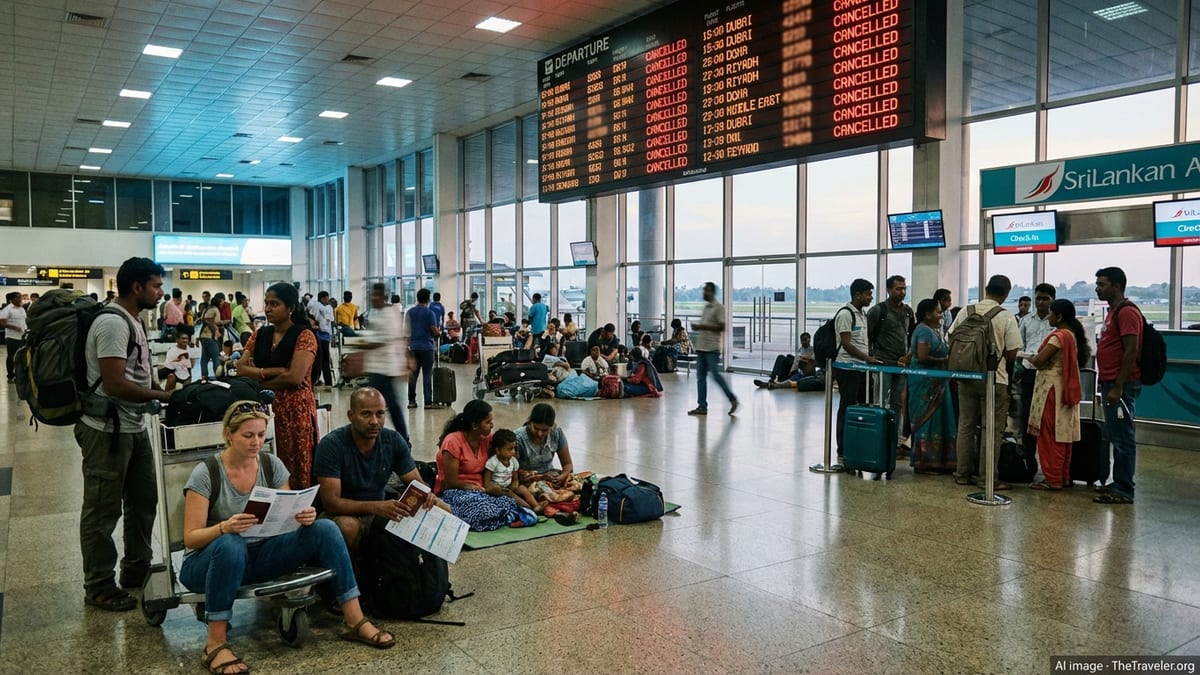
Travelers across South Asia and the Gulf are facing a fresh wave of disruption after SriLankan Airlines abruptly cancelled 10 flights to and from the Middle East, citing sudden airspace closures and escalating regional tensions following US and Israeli strikes on Iran.
What SriLankan Airlines Has Cancelled and for How Long
The Colombo-based carrier confirmed on Saturday, February 28, that it has grounded all scheduled services between Sri Lanka and five key Gulf cities, in one of the most significant single-day disruptions to its Middle East network in recent years. The move follows temporary airspace closures affecting several states in West Asia after a joint US-Israeli attack on targets in Iran and subsequent regional retaliation.
In a statement, SriLankan Airlines said all flights departing Colombo for the Middle East are cancelled until 12:00 noon on March 1, 2026, describing the step as a safety and security measure. The airline added that it is closely monitoring notices from aviation regulators and will review operations as soon as safe corridors reopen.
The decision affects both outbound and inbound services. On the outbound side, flights UL265 (Colombo–Riyadh), UL229 (Colombo–Kuwait), UL253 (Colombo–Dammam), UL225 (Colombo–Dubai) and UL217 (Colombo–Doha) have been pulled from the schedule. Corresponding return legs UL230 (Kuwait–Colombo), UL266 (Riyadh–Colombo), UL254 (Dammam–Colombo), UL226 (Dubai–Colombo) and UL218 (Doha–Colombo) are also cancelled, leaving many travelers stranded across multiple hubs.
The airline has apologized to passengers and stressed that the disruption is driven by factors beyond its control, pointing to fast-moving changes in airspace status across the wider Middle East. Customers are being urged to reconfirm itineraries before heading to the airport, with rebooking and refund policies being applied on a case-by-case basis.
How Wider Middle East Airspace Closures Sparked the Chaos
SriLankan’s move is part of a broader aviation shock rippling across the region after a sharp escalation in hostilities involving Iran, Israel and the United States. Authorities in Iran and several neighboring countries have either fully closed or severely restricted their airspace to civilian traffic, while flight-tracking data shows large swathes of sky over Iran and parts of Iraq, the Gulf and the Levant suddenly devoid of commercial jets.
The temporary closures are designed to keep civilian aircraft away from potential conflict zones as militaries reposition assets and assess the risk of further strikes. But because these corridors are central to routes linking South Asia, Southeast Asia, Europe and the Gulf, even a short-term shutdown can have a disproportionate impact on global schedules.
Major carriers including Turkish Airlines, Air India and IndiGo have already cancelled or suspended multiple services to Middle Eastern destinations, while rerouting long-haul flights around the affected areas. For travelers, that has meant a patchwork of diversions, extended flight times and last-minute cancellations that are complicating journeys far beyond the immediate conflict zone.
In Sri Lanka, the Civil Aviation Authority has activated a contingency plan to help manage the fallout. Officials say a special facilitation program is in place to support passengers and airlines, and that Mattala Rajapaksa International Airport in the island’s south is on standby to receive diverted aircraft should Colombo’s main Bandaranaike International Airport experience congestion or further operational constraints.
Impact on Passengers in Colombo, the Gulf and Beyond
The immediate human impact is being felt most acutely by migrant workers, family visitors and transit passengers who rely on Sri Lanka’s connections to the Gulf. Routes to Riyadh, Kuwait, Dammam, Dubai and Doha are lifelines for Sri Lankan expatriate communities and a key part of the country’s outbound tourism and labor traffic.
On Saturday, passengers reported confusion at airports as notices of cancellation filtered through. With many affected travelers booked on overnight connections and weekend departures, airline help desks and call centers have come under intense pressure. Some passengers leaving Colombo have been advised not to come to the airport until they have confirmed alternative arrangements, while those stuck in Gulf hubs are being rebooked on later services where possible, subject to evolving airspace restrictions.
For travelers originating in Europe, North America or East Asia but transiting the Gulf or South Asia, the disruption is adding an extra layer of uncertainty. Itineraries routed through Dubai, Doha or other Gulf hubs may now face missed connections to Colombo or other South Asian points, especially where onward sectors are among those grounded. Travel insurers and corporate travel managers are bracing for a surge in claims and re-routing requests.
Hotels near key airports in the region are seeing a sudden influx of stranded passengers, with some carriers arranging accommodation and meal vouchers while others ask travelers to make their own arrangements and claim later. With no firm timeline yet for the full reopening of affected airspace, many passengers are taking a wait-and-see approach rather than cancelling trips outright.
How Sri Lanka and Regional Airlines Are Responding
SriLankan Airlines has urged affected passengers to stay in close contact through its customer service channels and to work with travel agents for rebooking options. While the carrier has not yet announced a blanket waiver policy, it is generally offering fee-free date changes or refunds for flights directly impacted by the cancellations, subject to fare rules and seat availability on future services.
The Sri Lankan aviation regulator says it has coordinated an emergency action plan with the Ministry of Ports and Civil Aviation and other stakeholders to ensure that airlines have flexibility to adjust routes and timings once safe corridors reopen. Officials emphasize that there is currently no security threat to Sri Lankan airspace and that flights to destinations outside the affected Middle Eastern region are operating normally.
Across the wider region, other airlines are taking similar steps. Turkish Airlines has cancelled flights to multiple Middle Eastern countries until early March and suspended selected services to Gulf states for at least the current weekend. Major Indian carriers have paused flights to and from the Middle East while offering passengers the option to reschedule or obtain refunds. Aviation experts note that additional cancellations are likely if airspace closures are extended or expanded to new areas.
Behind the scenes, network planning teams are engaged in a complex daily puzzle, juggling aircraft rotations, crew duty limits and alternative routings that avoid no-fly zones. The situation remains highly fluid, with schedules being updated hour by hour as new advisories are issued by national aviation authorities.
What Travelers Should Do Now
For anyone due to fly between Sri Lanka and the Middle East through the coming days, the most important step is to monitor flight status closely and avoid making assumptions based on historic schedules. Travelers should use official airline channels or reputable travel agents to confirm whether their flight is operating and, if not, what rebooking or refund options are available.
Given the extent of airspace closures, same-day alternatives may be limited, especially on high-demand routes to Gulf labor hubs. Some travelers may be offered routings via alternative points that bypass the affected skies, but these can involve significantly longer journey times and additional stops.
Those with flexible plans may wish to postpone non-essential trips until at least after March 1, when several airlines and regulators are due to review their current suspension periods. For essential travel, experts advise allowing extra time for check-in, being prepared for schedule changes after departure, and ensuring that any travel insurance policy specifically covers disruption linked to conflict and airspace closures.
With tensions in the region still evolving, SriLankan Airlines and its regional peers are likely to err on the side of caution in the days ahead. For now, passengers are being urged to stay informed, remain patient and prepare for an unsettled period in Middle East air travel, as safety considerations temporarily outweigh convenience on some of South Asia’s busiest routes.