

More news on this day
Travelers across South Asia and the Gulf are facing fresh disruption after SriLankan Airlines cancelled 10 flights to and from key Middle Eastern hubs, as widening airspace closures linked to an escalating conflict involving Iran, Israel and the United States trigger another wave of travel chaos.
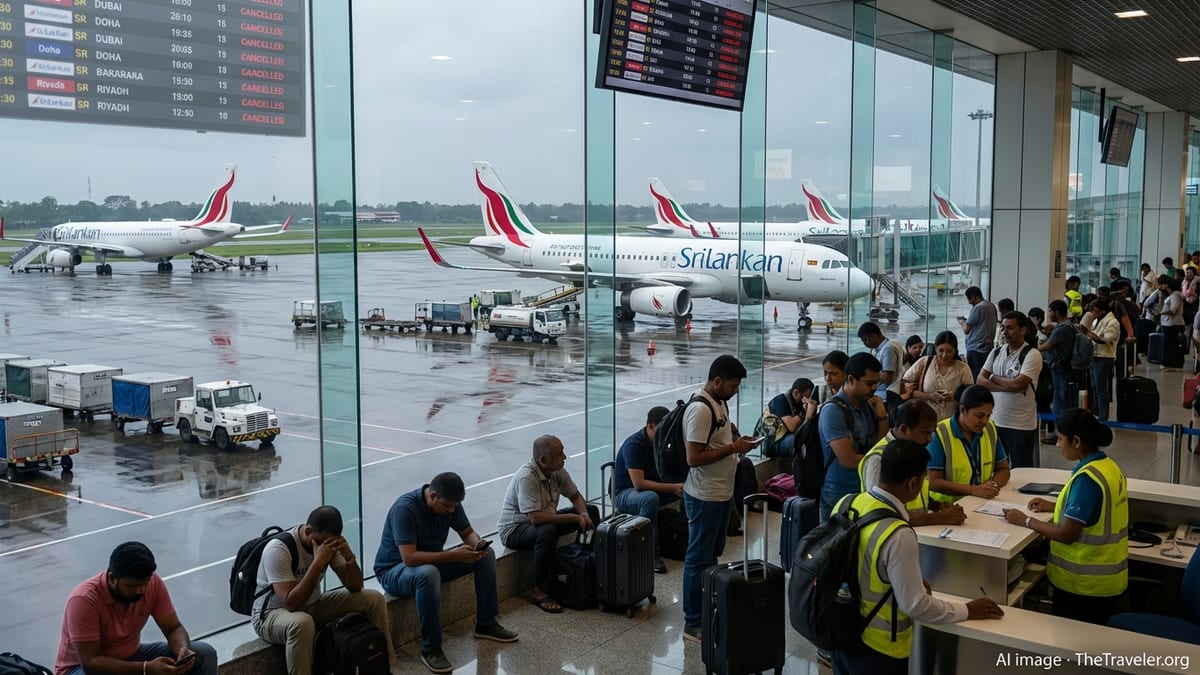
What SriLankan Airlines Has Cancelled so Far
SriLankan Airlines confirmed on Saturday, 28 February, that all of its scheduled services between Colombo and five major Middle Eastern cities have been halted, citing the closure of parts of regional airspace and heightened security risks. The carrier said the decision was taken “in the interest of passenger safety and operational security” as the conflict rapidly evolves.
Ten specific flights have been grounded: outbound services UL265 (Colombo–Riyadh), UL229 (Colombo–Kuwait), UL253 (Colombo–Dammam), UL225 (Colombo–Dubai) and UL217 (Colombo–Doha), along with the corresponding return legs UL266 (Riyadh–Colombo), UL230 (Kuwait–Colombo), UL254 (Dammam–Colombo), UL226 (Dubai–Colombo) and UL218 (Doha–Colombo). The cancellations cover operations through at least 1200 noon on 1 March 2026, with the airline warning that the timeline could change depending on security assessments.
In a notice to customers, SriLankan Airlines said all flights departing from Colombo to the Middle East have been suspended during this window and urged passengers not to travel to the airport without checking their latest flight status. The carrier has pledged to share further updates through its contact centres and official communication channels as airspace restrictions and risk levels become clearer.
Local aviation authorities in Sri Lanka have also cautioned that additional delays and last-minute changes remain possible, even for flights outside the directly affected routes, as regional airspace remains in flux and airlines adjust flight paths around closed or high-risk zones.
How the Middle East Conflict Is Disrupting Airspace
The SriLankan cancellations are part of a much wider aviation shock triggered by joint military strikes on Iranian targets and a rapid sequence of retaliatory moves that have unsettled the entire Middle East air corridor. In the hours following the strikes, airspace over Iran largely emptied as commercial pilots diverted away, while neighboring countries including Iraq, Kuwait, Bahrain and parts of Syria imposed temporary closures or severe restrictions.
Gulf hubs that normally act as linchpins for global travel, such as Dubai and Doha, have seen waves of diversions, cancellations and ground stops as authorities weigh security threats and manage congested skies around closed zones. Tracking data shows a sharp reduction in overflights across key east–west corridors that typically channel traffic between Europe, Africa and Asia, forcing carriers to reroute or truncate services with little notice.
India’s aviation regulator has advised airlines to avoid multiple conflict-adjacent airspaces, complicating routings for carriers linking South Asia with Europe and the Americas. For SriLankan Airlines, whose Middle East network relies heavily on straightforward routings across or near the affected regions, the combination of closures and heightened risk has left little operational flexibility in the short term.
Safety experts note that after the downing of a civilian aircraft over eastern Ukraine in 2014 and the Iranian shootdown of a passenger jet in 2020, airlines and regulators have become considerably more cautious about operating anywhere near active conflict zones. The rapid decision by SriLankan and several other airlines to suspend services underscores how quickly a geopolitical flashpoint can ripple through the global flight system.
Stranded Passengers and Knock-On Effects for Regional Travel
The suspension of SriLankan’s Middle East services is already stranding passengers at both ends of the route network. In Colombo, travelers bound for Gulf destinations reported being turned back from airport check-in counters or notified of cancellations only hours before departure, with many scrambling to secure alternative connections via third countries that remain open.
In Riyadh, Kuwait City, Dammam, Dubai and Doha, Sri Lankan migrant workers and transit passengers have found themselves stuck in terminals as return flights vanished from departure boards. With Gulf carriers simultaneously trimming services and reconfiguring routes, options to rebook at short notice are sharply limited and often come at higher cost or involve long, circuitous itineraries.
Travel agents across Sri Lanka and the wider South Asian region say they are facing a surge in calls from anxious customers trying to adjust itineraries not only for immediate departures but also for trips scheduled in the coming weeks. Corporate travel managers, in particular, are reassessing business travel to the Gulf and beyond, weighing the risk of sudden airspace closures against operational needs.
Tourism flows are also expected to feel the impact. The Middle East is a key source market and transit corridor for visitors heading to Sri Lanka’s beaches and cultural attractions, while Sri Lankan travelers frequently route through Gulf hubs to reach Europe and North America. Prolonged disruption could therefore dampen arrivals, complicate outbound tourism and place additional pressure on an industry that has only recently begun to stabilize after the pandemic and earlier political unrest.
How Other Airlines Are Responding Across the Region
SriLankan Airlines is far from alone in pulling back from the region’s skies. Major South Asian carriers such as Air India and IndiGo have suspended most or all of their Middle East routes for at least several days, citing the same combination of airspace closures and security warnings. Indian airports have set up special help desks to manage the influx of disrupted passengers seeking refunds, waivers or rebooking options.
In Turkey, flag carrier Turkish Airlines and low cost operator Ajet have cancelled flights to a swathe of Middle Eastern destinations, including Iran, Iraq, Syria, Lebanon and Jordan through early March, and scrubbed select services to Gulf states such as Qatar, Kuwait, Bahrain, the United Arab Emirates and Oman. The airlines say they are monitoring the situation in real time and may extend or expand cancellations if restrictions persist.
Global long haul carriers based in Europe, the Gulf and North America are also revising routings to avoid conflict-adjacent airspace where possible. This can add significant time and fuel burn to journeys between Europe and Asia or between North America and India, but many operators view the precaution as essential given the uncertainties around missile activity and air defense systems in the region.
Airports from Dubai and Doha to Muscat and Abu Dhabi are working under emergency protocols, juggling diversions, aircraft repositioning and crew duty time limits. For passengers, this often translates into longer layovers, last minute gate changes and a higher likelihood of missed connections, even on routes not directly touching the most affected airspaces.
What Affected Travelers Should Do Now
For SriLankan Airlines customers booked to or from Riyadh, Kuwait, Dammam, Dubai or Doha through at least midday on 1 March, the first step is to confirm whether their flight is among the ten listed in the cancellation notice. Passengers are being urged to contact the airline’s call centre, reach out to their travel agent or use official customer service channels rather than heading straight to the airport, where staff are dealing with limited options and high demand.
The airline has indicated that rebooking assistance and alternative travel arrangements will be offered where possible, though the tight regional capacity and ongoing airspace restrictions mean that immediate same day options may be scarce. Travelers with flexible plans are being advised to postpone nonessential journeys until there is greater clarity on the security situation and the reopening of key flight corridors.
Passengers transiting the Middle East on separate tickets face particular complications, as missed onward connections may not be automatically protected. Travel advisers recommend maintaining close communication with all involved airlines, keeping receipts for additional expenses and monitoring official advisories from national aviation and foreign affairs authorities for the latest risk assessments.
As the conflict and related airspace closures continue to evolve, airlines are stressing that schedules should be considered provisional. For now, anyone planning to cross the region in the coming days should be prepared for last minute changes, carry essential items in hand luggage and build in generous buffers around critical connections as the Middle East remains one of the most volatile chokepoints in global aviation.