

More news on this day
SriLankan Airlines has restored daily flights from Colombo to Riyadh and Dubai after weeks of severe disruption in Gulf skies, moving quickly to reconnect key labour, business and transit markets as Middle East airspace gradually reopens under enhanced safety protocols.
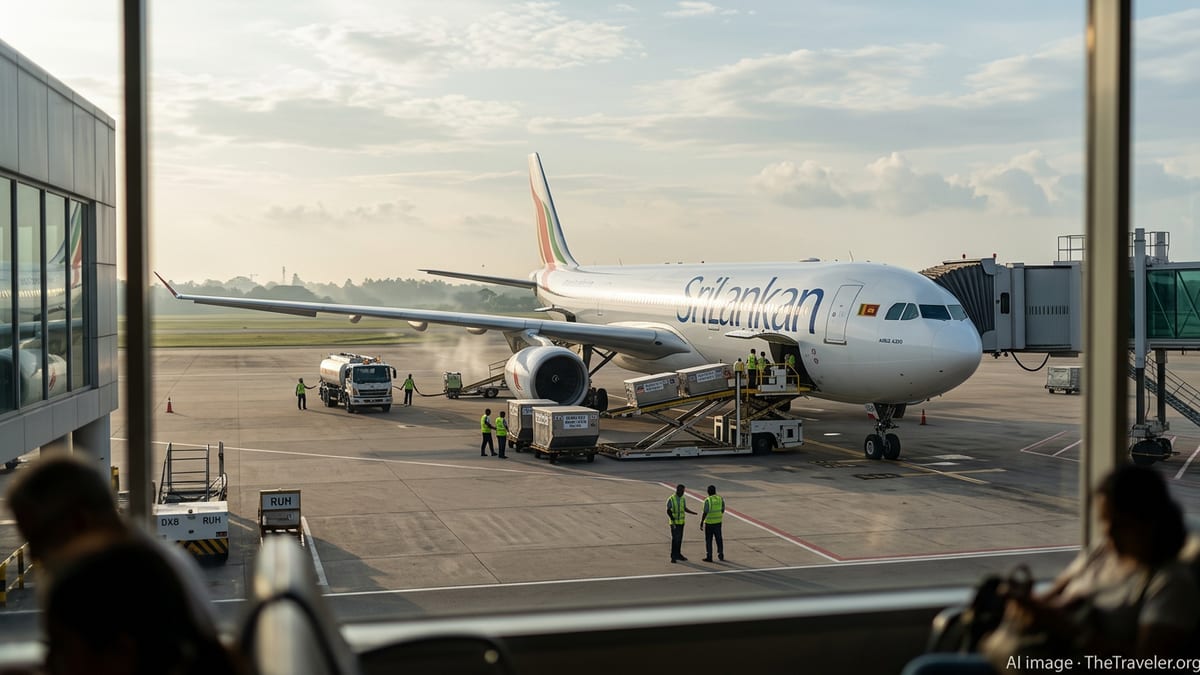
Daily Links Reinstated on Key Gulf Routes
The flag carrier confirmed that its Colombo–Riyadh service will return to a daily schedule from tonight, with the Colombo–Dubai route ramping up to daily operations from tomorrow. The move follows a period of limited and special services, during which the airline operated selected flights to repatriate passengers and maintain essential connectivity while large parts of regional airspace remained restricted.
Riyadh and Dubai are among SriLankan’s most strategically important routes, carrying large numbers of Sri Lankan migrant workers as well as business travellers and transit passengers heading to Europe and North America. Bringing frequencies back to daily is expected to ease a mounting backlog of travellers who saw itineraries cancelled, rerouted or delayed during the height of the airspace closures.
Capacity is initially being restored using the airline’s Airbus narrowbody and widebody fleet, with schedules designed to connect with peak bank departures out of Colombo. Industry observers say the rapid return to daily operations on these two routes signals confidence that the most acute phase of the disruption has passed, even as airlines remain cautious about further expansion in the region.
Middle East Airspace Gradually Reopens
The resumption of daily flights comes as aviation authorities across the Gulf loosen restrictions that had brought regional air travel close to a standstill. Over recent days, a growing number of carriers have resumed limited services through Saudi and Emirati airspace, with operations carefully sequenced to prioritise stranded travellers and essential traffic.
Colombo’s Bandaranaike International Airport has seen a step-by-step increase in Middle East operations, shifting from special one-off flights to a more predictable, though still carefully managed, schedule. Officials in Sri Lanka have confirmed that a series of flights to Dubai and Riyadh operated in recent days, paving the way for SriLankan’s decision to commit capacity to regular daily rotations.
Aviation analysts note that while airspace corridors are reopening, capacity across the region remains below normal levels and schedules are still more fragile than before the crisis. They caution passengers to monitor flight status closely and allow extra time at airports as airlines and air traffic controllers adjust to new routings and operational requirements.
Safety, Rerouting and Operational Precautions
SriLankan Airlines has underscored that passenger safety continues to dictate every aspect of its network decisions in the Middle East. The carrier says its operations team is working in continuous coordination with regional aviation authorities and international safety regulators to determine which air corridors are considered secure before reinstating services.
In recent days, the airline operated select services on carefully chosen flight paths and altitudes, avoiding sensitive areas and relying on dynamic risk assessments that can be updated in real time. The return to daily services on the Riyadh and Dubai routes will continue under these heightened safety protocols, with routing, fuel loads and alternates all planned to account for potential last-minute changes in airspace availability.
Cabin crew and pilots have been briefed on updated safety procedures, including revised diversion options and communication protocols with air traffic control. Ground staff in Colombo and across the Middle East have also been instructed to maintain flexible handling arrangements in case of sudden schedule adjustments, ensuring that passengers can be re-accommodated swiftly if conditions change.
Stranded Travellers Find Relief as Capacity Returns
The restoration of daily services is expected to bring much-needed relief to thousands of Sri Lankans working in Saudi Arabia and the United Arab Emirates, many of whom faced uncertainty about when they could return to their workplaces or travel home. Travel agents in Colombo report a surge in demand for seats on the first wave of reinstated flights to both Riyadh and Dubai.
During the period of airspace closures, SriLankan Airlines, alongside other carriers, mounted special operations to move priority passengers, including those on expired visas and travellers with pressing medical or family emergencies. However, the limited number of flights and the unpredictability of airspace access left many would-be passengers in limbo, often with rapidly changing itineraries.
With daily frequencies back, fare levels and seat availability are expected to stabilise over the coming days, though travel consultants warn that high demand could persist in the short term. Passengers are being advised to confirm bookings well in advance, keep contact details updated with airlines or agents, and regularly check for schedule notifications.
Strategic Importance for Sri Lanka’s Aviation and Tourism
Beyond easing an immediate travel crunch, the reinstatement of daily flights to Riyadh and Dubai carries broader implications for Sri Lanka’s aviation and tourism recovery. The Gulf region functions both as a major origin market for visitors and as a vital connecting hub for long-haul tourists heading to Sri Lanka via Dubai and other Middle Eastern gateways.
SriLankan Airlines has been working to rebuild its network and restore frequencies following earlier global disruptions, with Gulf routes seen as critical to underpinning load factors and generating foreign exchange. Daily services to Riyadh and Dubai feed not only labour traffic but also growing segments of leisure and medical tourism, particularly from Saudi Arabia, where interest in Sri Lanka as a short-haul holiday destination has been rising.
Industry stakeholders say stable air links to the Gulf are essential to sustaining Sri Lanka’s tourism targets and supporting broader economic activity, from hospitality and retail to cargo exports that rely on belly-hold capacity. As Middle East airspace continues to reopen and travel confidence returns, SriLankan’s move to restore daily services is being viewed as a key step in normalising regional connectivity while keeping safety at the forefront.