

More news on this day
SriLankan Airlines has resumed daily passenger flights from Colombo to Riyadh and Dubai, restoring two of its busiest Gulf routes after a week of sweeping cancellations triggered by escalating conflict in the Middle East and widespread regional airspace disruptions.
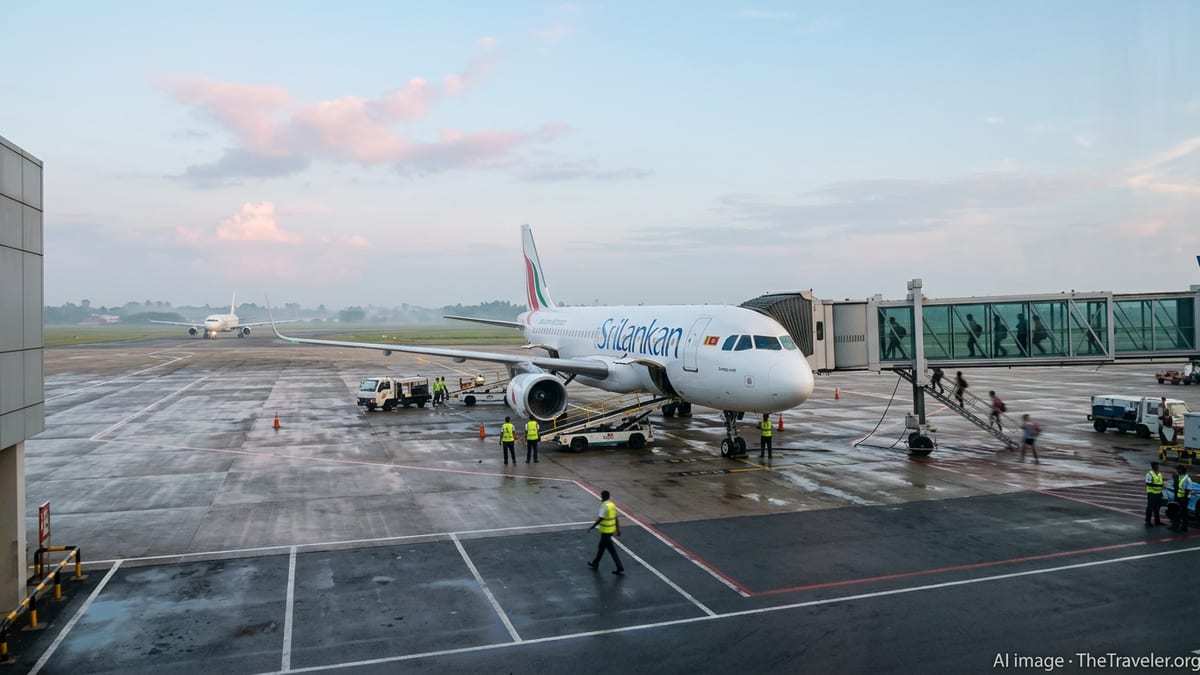
Key Gulf Links Return After Sweeping Suspensions
The restart of daily services to the Saudi and Emirati hubs marks a significant step in Sri Lanka’s efforts to stabilise international connectivity following days of uncertainty for travellers. The carrier had temporarily suspended all flights from Colombo to Middle Eastern destinations, including Dubai, Doha, Kuwait and Riyadh, as conflict in the region prompted sudden airspace closures and shifting safety advisories.
Industry and government officials in Colombo reported that more than 30 SriLankan Airlines flights were cancelled in the first three days of the crisis, part of a wider disruption that saw over 200 flights by various carriers affected as routes over parts of West Asia were curtailed. Passengers were left facing last minute itinerary changes, extended stopovers and, in some cases, being stranded in transit hubs.
With daily operations to Riyadh and Dubai now reinstated, SriLankan is signalling cautious confidence that the most acute phase of the disruption has passed, even as other Middle East routes remain under close review. Aviation authorities have framed the move as a calibrated reopening rather than a return to business as usual.
The airline confirmed that flights between Colombo and Riyadh would resume from Monday night local time, with the Dubai service returning to a daily schedule from Tuesday. Both routes are key corridors for Sri Lankan migrant workers, religious travellers and transit passengers connecting to wider networks in the Gulf and beyond.
Safety-First Routing and Operational Adjustments
SriLankan Airlines has stressed that safety remains its overriding priority as it brings the Riyadh and Dubai routes back online. Officials say the carrier is continuing to work with regional air navigation authorities to avoid higher risk airspace and, where necessary, to operate flights on longer, more southerly tracks that bypass sensitive conflict zones.
The airline had already been diverting some European services away from traditional Middle East overflight corridors as tensions escalated, accepting higher fuel burn and extended flight times in exchange for improved risk margins. Similar planning is now being applied to Gulf operations, with flight dispatch and safety teams conducting rolling risk assessments on each route.
Passengers on the resumed Riyadh and Dubai services can expect minor schedule tweaks and occasional airborne holding as traffic is funnelled through a narrower band of approved airspace. SriLankan has advised travellers to allow additional time for check in and security screening, and to monitor flight status closely on the day of departure given the still-fluid regional picture.
Regulators have underscored that the decision to restart the two routes followed consultation with foreign affairs and defence officials, as well as input from airport operators and air traffic management specialists. They emphasise that the flights will be subject to rapid adjustment, including possible same-day cancellations, should the security environment deteriorate.
Stranded Passengers, Backlogs and Rebooking Challenges
The resumption of daily flights is expected to ease pressure on a growing backlog of passengers who were disrupted when SriLankan abruptly suspended Middle East operations at the height of the crisis. Thousands of workers on short-term home leave in Sri Lanka, as well as tourists and business travellers in the Gulf, saw their plans thrown into disarray as cancellations cascaded across multiple days.
Travel agents in Colombo and in Gulf cities such as Dubai and Riyadh report that demand for seats on the first restored flights has been intense, with some departures already heavily booked by passengers whose journeys were cancelled earlier. Priority is largely being given to those holding existing tickets, particularly migrant workers facing deadlines to return to their employers.
Consumer advocates note that the sudden halt in services exposed gaps in communication, with some passengers learning of cancellations only after arriving at the airport. SriLankan has pledged to improve real-time notifications through text alerts and online channels, and to clarify its policies on refunds and rebooking in crisis scenarios.
Airline officials acknowledge that it will take several days, and possibly weeks, to fully work through the backlog of disrupted itineraries, especially for travellers who need to connect beyond Riyadh or Dubai. They have urged passengers to stay in touch with the airline or their booking agents, and to avoid unnecessary trips to airports until their revised travel plans are confirmed.
Economic and Diaspora Stakes for Sri Lanka
The restoration of daily flights to Riyadh and Dubai carries weight far beyond the immediate convenience of smoother travel. The two cities are critical gateways for Sri Lanka’s large expatriate workforce in Saudi Arabia and the United Arab Emirates, whose remittances form a key pillar of the island nation’s fragile post-crisis economy.
Economists warn that prolonged disruption on Gulf routes could have dampened worker mobility, delayed deployments and complicated contract renewals, with knock-on effects for household incomes across Sri Lanka. By prioritising the Riyadh and Dubai sectors in its phased restart, SriLankan is seeking to safeguard this vital economic lifeline while still hewing to safety guidance.
Tourism stakeholders also see the move as an important signal to the global market that Sri Lanka remains reachable despite turmoil in neighbouring regions. Dubai in particular functions as a high-capacity transit hub, funnelling visitors from Europe, North America and Africa into Colombo via interline and codeshare arrangements.
Government officials have framed the airline’s reactivation of the two routes as part of a broader effort to keep Sri Lanka integrated into global aviation networks even as concessionary measures, such as temporary cargo limits on Europe services, are adopted to navigate the crisis. They argue that maintaining at least a skeleton of key connections will speed recovery once regional tensions ease.
What Travellers Should Know Before Flying
Despite the welcome return of daily flights, travel experts caution that conditions for flying between South Asia and the Middle East remain more volatile than before the latest escalation. Flight schedules can still change at short notice, particularly if additional airspace restrictions are imposed or if security advisories are updated by individual states along the route.
Passengers booked on SriLankan’s Riyadh and Dubai services are being urged to reconfirm their flights regularly, pay close attention to departure time adjustments and ensure that contact details in their bookings are up to date so they can receive alerts. Flexible planning, including allowing extra time for connections and avoiding same-day critical commitments on arrival, is strongly recommended.
Travel insurers say customers should review policy wording carefully to understand what is covered in the event of conflict-related disruptions, as not all plans treat geopolitical unrest in the same way. Some may offer limited compensation for delays or cancellations, while others may exclude such events entirely.
For now, SriLankan Airlines is presenting the restored daily services to Riyadh and Dubai as a carefully managed reopening phase, not a full return to normalcy. How long that cautious stance must be maintained will depend on developments far beyond Colombo’s control, as air traffic across the wider Middle East continues to adjust to the shifting contours of regional tension.