

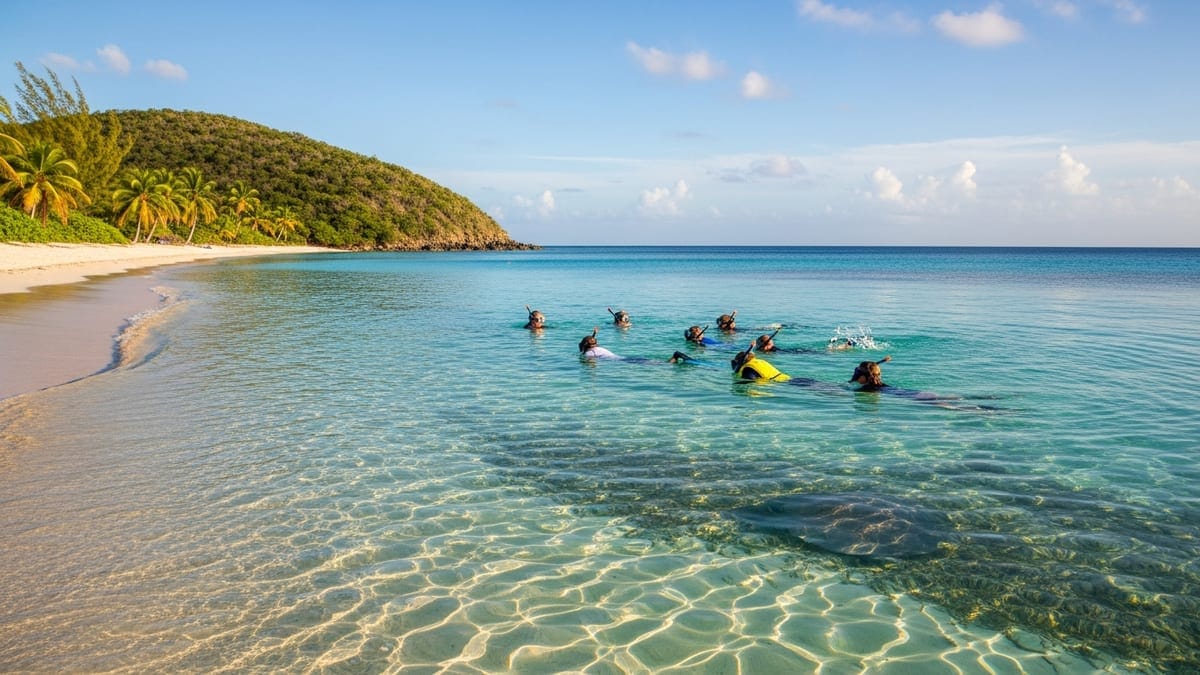
St John in the U.S. Virgin Islands is one of the Caribbean’s premier snorkeling destinations, with crystalline water, sheltered bays and miles of protected reef inside Virgin Islands National Park and the Virgin Islands Coral Reef National Monument.
Whether you want to float lazily over seagrass beds with sea turtles, drift along a coral-covered cay or explore remote rocky shorelines by boat, the island offers an unusually rich variety of underwater experiences for beginners and seasoned snorkelers alike.
Understanding St John’s Underwater World
More than 40 percent of Virgin Islands National Park lies underwater, which means a huge swath of St John’s coastline is protected from heavy development and destructive anchoring.
The result is a mosaic of habitats packed into a small island: fringing coral reefs, patch reefs, seagrass meadows, mangrove shorelines and sandy coves. Each habitat shelters its own cast of marine life, from tiny damselfish and cleaning gobies on the reef, to grazing green sea turtles and conch in the seagrass, to juvenile fish sheltering in mangrove roots.
Coral reefs remain the star attraction for visiting snorkelers. Around St John these tend to be shallow fringing reefs and coral heads rising from white sand, rather than the very steep walls seen in some other Caribbean destinations.
This makes them ideal for snorkelers, who can hover above branching elkhorn and brain coral formations in 5 to 20 feet of water and watch reef fish like blue tang, parrotfish, sergeant majors and angelfish at close range. Seagrass beds fill many of the sheltered bays. They may look plain from the surface, but peer down and you will often find turtles grazing, stingrays half-buried in the sand and starfish scattered among the blades.
Like many coral systems worldwide, St John’s reefs have faced hurricanes, warming seas and localized runoff. You may see areas of bleached or broken coral alongside healthier patches teeming with life.
Conditions can vary from bay to bay and even year to year, which is one reason up-to-date local advice is so valuable. The good news is that protected status, careful park management and growing awareness among visitors are helping the reefs hang on, and in some places slowly recover.
As you plan your snorkeling, remember that “best” is subjective. Calm, sandy bays might appeal if you are new to snorkeling or traveling with children, while confident swimmers may seek out the more exposed cays and rocky points where currents concentrate fish life. Understanding the island’s key habitats and how they change with wind and swell will help you pick the right spot for each day’s conditions.
Trunk Bay: Iconic Underwater Trail for Easy Coral Viewing
Trunk Bay is St John’s most famous beach, frequently listed among the world’s most beautiful and also home to the island’s only marked underwater snorkel trail. The bay is part of Virgin Islands National Park and has an amenity fee, which helps support lifeguards, restrooms, showers, concessions and snorkel rentals.
For many visitors, Trunk Bay is their first introduction to St John snorkeling, and it remains one of the most accessible places to learn the basics in clear, shallow water.
The underwater trail runs along the west side of tiny Trunk Cay, a short swim from shore. Floating buoys and underwater plaques guide you along a roughly 300 to 400 foot route, with signs describing common corals and reef fish and explaining how to protect them.
Expect to see brain coral, finger coral, sea fans and schools of blue tang, wrasses and sergeant majors, along with occasional barracuda or an eagle ray cruising past. The depth is generally under 20 feet, which allows you to drift slowly, read the plaques and still feel comfortably close to the surface.
Conditions at Trunk Bay are usually calm, especially in the morning, but the water can get choppier the farther out you go around the cay. Beginners often stay close to the trail and turn back where they feel comfortable, while more experienced snorkelers can explore beyond the official loop along the outer edges of Trunk Cay where the reef continues into slightly deeper water.
Because the beach is so popular, especially when cruise-ship passengers arrive from St Thomas, aim to visit early in the day for a quieter experience and clearer views.
From a conservation standpoint, Trunk Bay is also where you will see the park’s reef etiquette messaging in action. Rangers and signage emphasize using mineral-based, reef-safe sunscreen, never standing on coral and keeping fins and hands away from delicate formations.
It is important to follow those guidelines, because even light contact can damage living coral tissue. If you need to rest, do it by floating calmly or swimming back to sandy shallows rather than standing on rocks or coral heads.
Maho Bay and Francis Bay: Sea Turtle Territory for All Levels
On the north shore, Maho Bay and nearby Francis Bay are two of St John’s top snorkeling spots for relaxed, family-friendly swims and frequent turtle sightings. Maho has become especially famous for its green sea turtles, which graze on the lush seagrass beds just offshore.
The bay is long and gently curved, with a flat sandy bottom that deepens gradually. Parking and small food and gear businesses sit just across the road from the beach, making it easy to rent equipment or grab lunch between snorkels.
To find turtles at Maho, swim out over the seagrass and move slowly, scanning the bottom for oval shapes and movement among the grass. Green turtles often stay focused on feeding, allowing you to watch from a respectful distance as they surface for air every few minutes.
Southern stingrays and the occasional spotted eagle ray may pass through as well. At the edges of the bay, especially toward the rocky points, you will see more reef structure with small coral heads and schooling fish. Conditions in Maho are usually calm, which is why it is recommended for beginners and children learning to snorkel.
Francis Bay, just to the east, offers a slightly wilder feel while remaining accessible by road. It has a mix of sandy bottom and seagrass with scattered coral heads, plus rocky shorelines on either side of the bay that attract more reef fish.
Visibility often runs very good here, and it can be a quieter alternative when Maho gets crowded. The bay lies within the national park, and you may see sea turtles and rays similar to those at Maho, along with trunkfish, butterflyfish and schools of small silvery baitfish pursued by jacks.
These bays are good places to appreciate the role of seagrass in the ecosystem. While coral reefs get most of the attention, healthy seagrass beds help stabilize sand, improve water clarity and provide habitat for everything from juvenile fish to conch and invertebrates. When snorkeling over seagrass, avoid kicking the bottom or stirring up sediment, both to preserve visibility and to minimize disturbance to the animals that live there.
Waterlemon Cay and Leinster Bay: Drift Snorkeling and Dense Reefs
For many dedicated snorkelers, Waterlemon Cay on the north shore ranks among the best spots on St John. The small cay sits within Leinster Bay and is encircled by a fringing reef that offers the sense of snorkeling a complete underwater world in miniature.
Getting there involves a scenic drive to the Annaberg area, then a shoreline walk along the Leinster Bay Trail. Once at the beach facing the cay, it is about a 10 minute swim out to the small pocket of sand on Waterlemon itself.
The real magic, however, is in the water around the cay. Coral heads, fields of sea fans and swaying gorgonians ring the islet, along with clouds of reef fish and the occasional turtle, ray or barracuda. Confident snorkelers often time their swim with the prevailing current and do a partial drift snorkel, entering on the up-current side and letting the flow carry them along before cutting back to shore.
Park information notes that currents can be strong on the side facing Tortola, so most people stick to the more sheltered southern and western arcs where conditions are friendlier.
Closer to the mainland shore, Leinster Bay itself has a shallow snorkel area with coral heads on sandy bottom, seagrass zones and a drop-off where blue chromis and other small schooling fish hover in the water column. It is a good warm-up before venturing all the way out to Waterlemon.
You reach these areas after a short hike along the water, and the relative effort required helps keep the site less crowded than drive-up beaches like Trunk or Maho.
Because Waterlemon Cay is more exposed and currents are a real factor, it is best suited to strong swimmers who are comfortable in deeper water and can manage a longer surface swim.
Wearing a bright snorkel vest or flotation belt is wise, as is going with a buddy and checking conditions before committing to the full circuit. When the wind is up or swell is running, visibility can drop and the swim becomes more strenuous. On calm days, though, few places on St John can match the sense of immersion in reef life that you get circling this little cay.
Salt Pond, Lameshur and the South Shore: Remote Reefs and Rugged Coast
St John’s south shore feels more remote and rugged than the north, with fewer roads and a drier landscape above the waterline. For snorkelers, though, it offers some excellent sites, especially if you do not mind a short hike or dirt road to reach them. Salt Pond Bay is one of the best known.
From a small parking area you walk down a short trail to a crescent of white sand with turquoise water. The bay is protected by headlands on either side, and the best snorkeling tends to be along the rocky eastern shoreline, where big boulders and coral-encrusted ledges create shelter for sponges, sea fans and schools of reef fish.
In the seagrass just off the beach at Salt Pond, green sea turtles and southern stingrays are common, and the mood is usually peaceful thanks to the bay’s relative isolation compared to the north shore.
Behind the beach sits the actual salt pond, which sometimes has crystallized sea salt along its edges in drier months. From here, determined hikers can continue on the Ram Head Trail for sweeping coastal views before cooling off with another snorkel.
Farther west along the south shore, Great and Little Lameshur Bays reward visitors who tackle the rougher access road. Rental car companies often require four wheel drive here, so check your agreement before heading out. Great Lameshur is rockier, while Little Lameshur offers a sandier beach, but both have appealing snorkeling along the rocky points and out toward Yawzi Point, which separates the two bays.
The underwater terrain features rock walls, coral studded ledges and crevices where you may find squirrelfish, grunts, spiny lobster and anemones with attendant cleaner shrimp.
These south shore sites feel a bit wilder than the marquee north shore beaches. You may share the water with only a handful of other snorkelers, and it is easier to imagine how the island looked before tourism grew.
That remoteness also means you need to be more self-reliant: bring plenty of water, sun protection, your own snorkel gear if rentals are not nearby and a dry bag if you plan to combine your snorkel with a hike. Pay special attention to weather, as the south side can be more exposed to swell on some days, creating surge and reducing visibility along the rocks.
Boat-Access and Advanced Snorkeling: Haulover, Cays and Offshore Reefs
While many of St John’s best known snorkel spots are accessible from the beach, some of the island’s most pristine reefs are best explored by boat. Local operators run half-day and full-day snorkel trips that might stop at offshore cays, tucked-away pockets of the national park or areas inside the adjacent Virgin Islands Coral Reef National Monument, where anchoring is restricted and mooring use is carefully managed.
These boat excursions open up a different side of St John’s underwater world, often with clearer water and less-visited reefs.
North and South Haulover Bays, for example, sit on opposite sides of a narrow isthmus and can be reached by car and a short path, but are often included in conversations about more advanced snorkeling because of their rocky, pebble beaches and relatively steep underwater slopes.
Coral-encrusted boulders, ledges and scattered sand channels harbor a wide mix of fish species, along with sea fans and gorgonians swaying in the surge. With limited sand to stand on and little shore-based infrastructure, Haulover rewards confident snorkelers who are comfortable entering and exiting over rocks and assessing conditions before heading out.
Boat trips might also visit more distant cays and patch reefs where coral cover can be higher and fish life especially dense. At these sites you may glide over gardens of sea whips, pillars of star coral and shallow ridges decorated with sponges and hard corals.
Larger pelagic visitors such as barracuda, tarpon or eagle rays are more likely in these less-disturbed zones, and it is not unusual to encounter turtles migrating between feeding areas. Because many of these reefs lie inside protected waters, operators typically brief guests on park rules, mooring use and responsible behavior around wildlife.
If you are an experienced snorkeler interested in boat-access sites, look for small-group operators that emphasize safety and environmental stewardship. They should provide flotation if needed, watch surface conditions carefully and choose spots that match the skill level of everyone on board.
While independent boaters also explore these reefs, they need to be familiar with the park’s marine regulations, which restrict anchoring in many areas and designate specific moorings by boat size.
What You’ll See: Marine Life & Seasonal Conditions
No two snorkel sessions on St John are exactly alike, but certain marine characters are so common that you will likely meet them within your first few swims. On the reef itself, look for parrotfish, often grazing noisily at the coral surface; blue tang and surgeonfish schooling in loose groups; butterflyfish and angelfish flitting among crevices; and grunts or snappers lining up under ledges.
Tiny, jewel-toned damselfish guard patches of algae, while wrasses patrol open areas. In sandy patches and seagrass, southern stingrays, garden eels and conch may appear, and along rocky slopes you might spot spiny lobsters tucked into holes or trumpetfish hanging vertically to blend with sea fans.
Three species of sea turtles are possible around St John, though the green sea turtle is by far the one most snorkelers encounter, especially at Maho, Francis and Salt Pond where seagrass is abundant. Hawksbill turtles, which favor spongy reef habitats, occasionally appear on deeper reefs near cays and rocky points.
Leatherbacks nest in the region but are rarely seen by snorkelers. When you do see turtles, give them room to surface and breathe without feeling crowded. Approaching too closely or trying to touch them not only stresses the animals but can violate local wildlife protection regulations.
Seasonal conditions will shape your experience. Winter months can bring occasional north swells that affect exposed north shore beaches, reducing visibility and creating stronger surge along reef edges. During these times, south shore bays like Salt Pond or Lameshur may offer clearer, calmer water.
In summer and early fall, seas are often flatter and water temperature climbs into the low to mid 80s Fahrenheit, which can make long snorkel sessions comfortable but also raises stress on coral during marine heatwaves. Afternoon trade winds may chop up the surface, so early morning outings frequently offer the smoothest, clearest conditions.
Storms and hurricanes, while obviously disruptive in the short term, are part of the long history of Caribbean reefs, toppling some coral structures while opening space for new growth.
When you observe broken or dead coral along with healthier patches, you are seeing a snapshot of a dynamic system responding to both natural forces and human impacts. Choosing where and how you snorkel, and how carefully you move in the water, can help tip the balance toward recovery rather than further damage.
Safety, Regulations and Responsible Snorkeling
Snorkeling on St John is generally safe for healthy swimmers, but the combination of sun, current, boat traffic and sometimes-remote locations means it pays to prepare. First and most important is an honest assessment of your swimming ability.
If you are not comfortable floating in deep water or dealing with small waves, stick to the calmer bays like Trunk, Maho, Francis or Cinnamon, and consider using a snorkel vest or pool noodle for buoyancy. Always snorkel with a buddy, keep an eye on changing conditions and leave the water if you feel cold, tired or disoriented.
Virgin Islands National Park and the adjacent marine monument have specific rules about where snorkeling and boating can occur, and park compendiums make clear that snorkeling is allowed near beaches and inside designated boat exclusion zones but restricted in active boat channels and dock areas.
In practice, that means you should stay inside buoy lines marking swim zones, especially at popular beaches, and be very cautious anywhere boats are coming and going. If you arrive by private boat, use moorings where provided instead of anchoring on or near reef, follow speed limits in mooring fields and keep a lookout for snorkelers in the water.
Environmental responsibility is a central theme of snorkeling on St John. Reef-safe sunscreen is strongly encouraged, and some local businesses and tours now require it. Check ingredient lists and avoid products containing chemicals known to harm coral, such as oxybenzone and octinoxate.
Many snorkelers opt for long-sleeved rash guards and hats to reduce the amount of sunscreen needed. In the water, follow the “stand only in sand” mantra. Fin kicks should be slow and controlled to avoid striking coral or stirring up sediment. Never touch or take marine life, including shells, and resist the temptation to feed fish, which can disrupt natural behavior.
Before heading out, consider a stop at the park visitor center in Cruz Bay for up-to-date information on beach conditions, closures, jellyfish or coral disease advisories, and any new regulations.
Rangers sometimes host talks on sea turtles, birds and reef ecology, which can add context to what you see underwater. With a bit of planning and respect for the rules, you can enjoy some of the Caribbean’s most accessible reefs while helping ensure they stay healthy for the next generation of snorkelers.
The Takeaway
St John’s snorkeling scene is remarkable not just for its postcard-worthy beaches, but for the sheer variety of underwater experiences available in a relatively small area. First-time snorkelers can ease into the water at Trunk Bay’s underwater trail or Maho’s turtle-filled shallows, while more experienced visitors can venture to Waterlemon Cay, Haulover or boat-access reefs where currents, depth and marine life are more intense.
Throughout the island, a backdrop of protected parkland and national monument waters keeps much of the coastline relatively undeveloped and the underwater environment surprisingly intact.
What you see on any given day will depend on wind, swell and season, but you can count on a kaleidoscope of reef fish, encounters with turtles and rays and the quiet pleasure of floating above coral gardens while tropical hills rise in the distance.
The same protections that make St John a standout snorkeling destination also ask something of visitors: to choose reef-safe products, follow park guidelines, treat wildlife with respect and move through the water as gently as possible. Do that, and you will not just take home vivid memories and photos. You will also have played a small part in keeping one of the Caribbean’s most beautiful underwater landscapes alive and thriving.
FAQ
Q1: Do I need to be an expert swimmer to snorkel on St John?
Most snorkel spots on St John are suitable for anyone who is a reasonably confident swimmer and feels comfortable floating in deep water. Calm bays like Trunk Bay, Maho Bay and Francis Bay are especially beginner-friendly, and flotation vests or noodles can add an extra margin of safety.
Q2: What is the best time of year to snorkel on St John?
Snorkeling is possible year-round, with warm water temperatures even in winter. Many visitors favor late spring through early summer for typically calm seas and good visibility. In winter, north swells can occasionally affect exposed beaches, while late summer and fall bring higher heat and the Atlantic hurricane season, which you should factor into travel plans.
Q3: Where am I most likely to see sea turtles?
Green sea turtles are commonly seen in seagrass meadows at Maho Bay, Francis Bay and Salt Pond Bay. Move slowly over the grass, keep some distance and watch for them rising to breathe. You may also see turtles near some reefs, but the protected, grassy bays are usually the most reliable places.
Q4: Is snorkel gear easy to rent on the island?
Yes. Several beaches, including Trunk Bay and Cinnamon Bay, have on-site concessions that rent masks, snorkels and fins, and there are multiple dive and watersports shops in Cruz Bay and Coral Bay. If you plan to snorkel many days, bringing your own well-fitting mask and snorkel is often more comfortable.
Q5: Are there lifeguards on St John’s beaches?
Lifeguards are typically stationed at Trunk Bay during posted hours, but many other beaches, including Maho, Francis, Salt Pond and the Lameshur bays, do not have lifeguards. You should always treat the ocean with respect, swim within your abilities and avoid snorkeling alone in remote areas.
Q6: Can I snorkel anywhere I like within the national park?
Snorkeling is permitted in most nearshore areas adjacent to beaches and inside marked swim or boat exclusion zones. It is not allowed in active boat channels or near docks where vessel traffic poses a risk. Pay attention to local signage, buoys and any instructions from park staff about restricted areas or temporary closures.
Q7: What kind of sunscreen should I use to protect the reefs?
The park strongly encourages the use of mineral-based sunscreens that do not contain chemicals linked to coral damage, such as oxybenzone, octinoxate and certain other UV filters. Many visitors choose zinc oxide or titanium dioxide formulas and supplement them with rash guards and hats to minimize both sunburn and chemical load on the reef.
Q8: Are currents a problem for snorkelers on St John?
In most sheltered bays currents are mild, but at more exposed spots such as Waterlemon Cay, Haulover and some offshore cays, currents can be noticeable and occasionally strong. Check conditions locally, stay within areas that match your skill level and avoid attempting full circuits of cays if you are unsure about your stamina or the direction of the flow.
Q9: Is it safe to touch or feed the fish and turtles?
No. For both legal and ecological reasons, you should not touch or feed marine life. Physical contact can injure animals or introduce disease, and feeding disrupts their natural behavior and diet. Observing quietly from a respectful distance is better for the animals and leads to more natural, rewarding encounters.
Q10: How can I find out which snorkel spots are best on a given day?
Conditions change with wind and swell, so it is wise to ask for current advice. Park rangers at the visitor center, local snorkel and dive shops, and reputable tour operators can all provide up-to-date information on which bays are calm, where visibility is best and whether any sites have temporary advisories or closures.