

More news on this day
P&O Cruises is preparing to base its flagship vessel Iona in St Kitts for part of the 2027 winter season, marking a new homeport in the eastern Caribbean and underscoring the growing role of the twin-island nation in regional cruise deployment.
Get the latest news straight to your inbox!
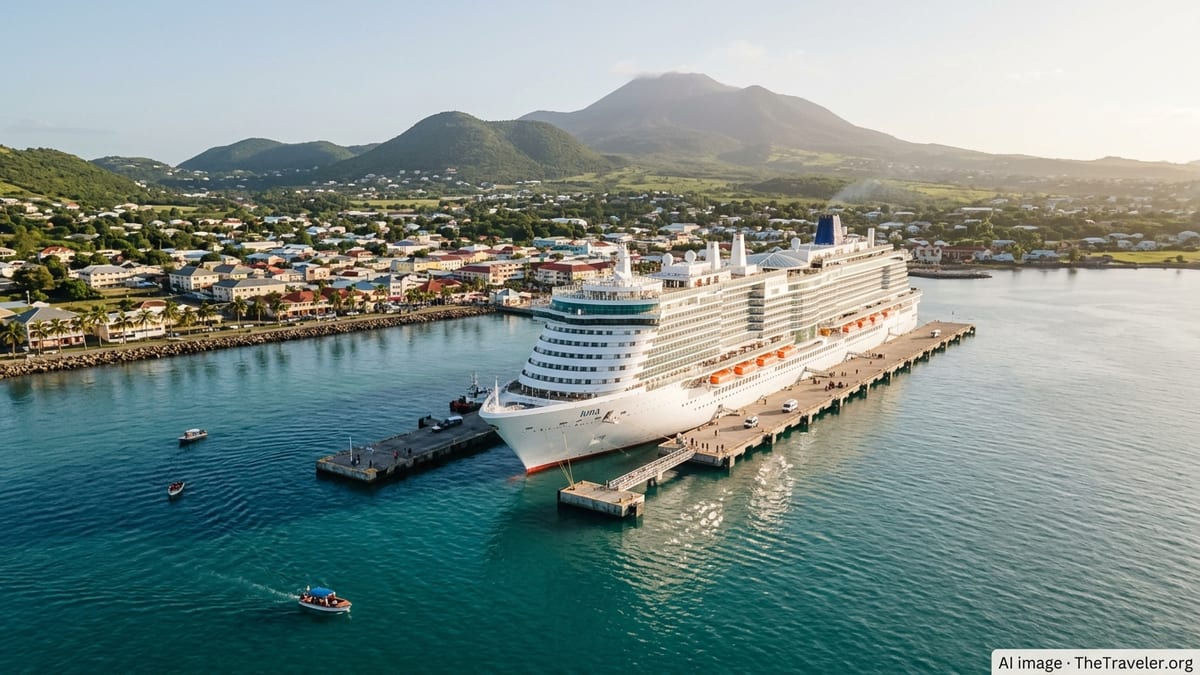
New Homeport Underscores Caribbean Growth Strategy
The decision to add St Kitts as a homeport for Iona in 2027 aligns with a broader shift among major cruise brands toward diversifying embarkation points across the Caribbean. Publicly available deployment materials for multiple cruise operators indicate a steady expansion of homeport options beyond long-established hubs such as San Juan, Miami and Bridgetown, with newer seasonal bases emerging to support more flexible itineraries.
Iona, one of P&O Cruises’ largest and newest ships, has been a key part of the company’s growth in both Northern Europe and the Caribbean. Earlier schedules highlighted Iona’s introduction to Caribbean voyages from Southampton, with extended itineraries featuring multiple calls across the region. The transition to using St Kitts as a homeport in 2027 builds on that pattern by positioning the ship directly within the Caribbean basin for the heart of the winter season.
Industry deployment patterns suggest the move is intended to shorten flight times for guests, enable more intensive island-hopping itineraries and give the cruise line greater operational flexibility. Locating a homeport in the eastern Caribbean also allows for efficient access to both popular and emerging destinations within a week-long or ten-night cruise framework.
While detailed sailing schedules for Iona in 2027 are still being refined, initial program outlines indicate that the homeporting arrangement in St Kitts will sit alongside the ship’s existing UK-based operations, rather than replacing Southampton departures entirely. This dual approach allows P&O Cruises to continue serving loyal ex-UK guests while tapping into growing fly-cruise demand to the Caribbean.
St Kitts Positions Itself as a Regional Turnaround Hub
For St Kitts, hosting Iona as a homeport represents a significant step up from traditional port-of-call status. Over the past decade, published tourism and port development information has highlighted the island’s investments in pier capacity, guest facilities and airport connectivity, all aimed at capturing a larger share of cruise and air arrivals.
Homeport operations, often referred to in the sector as turnaround calls, require additional infrastructure compared with standard day visits. This includes efficient baggage handling areas, customs and immigration processing tailored to cruise volumes, and reliable ground transport links to the nearest international airport. Recent improvements around the Basseterre waterfront and adjacent commercial areas suggest that St Kitts has been preparing to meet these requirements.
Turnaround activity typically brings higher per-visitor spending than transit calls because guests often overnight on the island before or after their cruise, use local hotels and restaurants, and rely on local transport and services. Economic impact assessments from other Caribbean homeports have shown that this combination of cruise and land-based spending can generate a measurable uplift in tourism receipts and employment.
By attracting a ship the size of Iona for the 2027 season, St Kitts joins a select group of Caribbean destinations that have successfully evolved from call ports into full-fledged homeport bases. The move is expected to support local service providers ranging from tour operators and taxi cooperatives to provisioning companies and technical support firms.
Implications for Itineraries and Passenger Experience
Iona’s deployment from St Kitts is likely to result in a mix of eastern and southern Caribbean routes, with itineraries designed to combine marquee islands and slightly less frequented ports. Past schedule patterns for the ship’s Caribbean voyages have included calls at islands such as Barbados, St Lucia, Antigua and St Maarten, alongside smaller destinations that appeal to repeat cruisers seeking new experiences.
Using an island-based homeport gives planners greater flexibility to design loops that maximise time in warm-weather destinations while reducing the number of full sea days. For guests, this can translate into more port calls within a seven- or fourteen-night sailing, as well as more convenient flight options from key source markets in the UK and Europe to the Caribbean.
The passenger experience at the start and end of a cruise is also expected to benefit from facilities tailored for embarkation. As St Kitts expands its role in the region, operators are focusing on streamlined check-in processes, shaded waiting areas, and coordinated scheduling between airport arrivals and cruise departures to minimise congestion and waiting times.
Travel trade commentary suggests that homeporting Iona in St Kitts may also open up new packaging opportunities, such as cruise-and-stay combinations with boutique resorts on St Kitts and sister island Nevis. These products typically appeal to guests who want to extend their holiday beyond the cruise itself while remaining in the same destination.
Competitive Landscape Among Caribbean Homeports
The inclusion of St Kitts in Iona’s 2027 deployment comes amid heightened competition among Caribbean destinations to secure homeport business from major cruise brands. Recent seasonal brochures and deployment announcements from several lines point to a trend of rotating homeports among islands such as Barbados, Jamaica, Puerto Rico and now St Kitts, as operators seek to differentiate offerings and respond to changing airlift patterns.
Caribbean governments and port authorities have increasingly positioned homeporting as a strategic objective, given its potential to stabilise visitor numbers during the core winter season. Ports that can offer modern terminals, adequate berth capacity, reliable aviation links and efficient regulatory frameworks are often best placed to attract this type of deployment.
For P&O Cruises, selecting St Kitts as a homeport for Iona in 2027 signals confidence in the island’s ability to meet these operational expectations. It also adds a new dimension to the company’s Caribbean portfolio, which has traditionally been anchored by ex-UK sailings and select fly-cruise options using more established embarkation points.
Analysts following the cruise sector note that homeport diversification can help spread visitor flows more evenly across the region, easing pressure on heavily trafficked hubs while distributing economic benefits more widely. In this context, St Kitts’ new role with Iona may be viewed as part of a broader rebalancing of Caribbean cruise tourism.
What the Move Means for Future Deployment
Although full details of Iona’s 2027 program have yet to be released, the designation of St Kitts as a homeport is already prompting interest from travel agents and repeat cruisers planning ahead. Advance deployment signals often shape booking patterns years in advance, particularly among guests who prefer to secure specific cabins or sailing dates.
Sector observers suggest that the success of Iona’s season in St Kitts could influence future deployment decisions, both for P&O Cruises and for other brands within the wider corporate group. Strong performance in terms of guest satisfaction, operational reliability and local partnership delivery could encourage further homeport commitments or expanded schedules in subsequent years.
The announcement also adds momentum to the narrative of Caribbean diversification, where smaller states and territories play a more prominent role in hosting large, modern ships. As cruise lines refine their strategies for the late 2020s, destinations that can demonstrate readiness for turnaround operations, support sustainable tourism practices and maintain strong air connectivity are likely to see increased interest.
For now, the 2027 homeporting of Iona in St Kitts stands out as a notable milestone for both the cruise line and the island. It reinforces the Caribbean’s central place in winter cruising while signalling that the map of key embarkation ports is still evolving.