

More news on this day
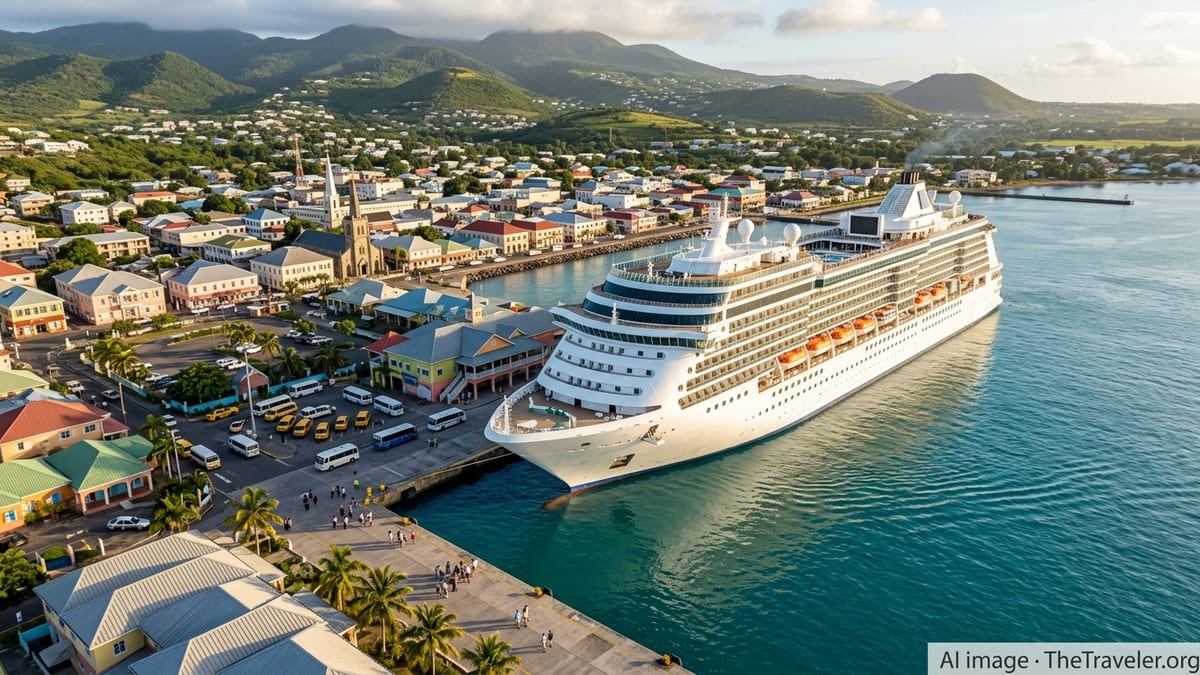
St Kitts is preparing to elevate its role in Caribbean cruising as P&O Cruises’ LNG-powered flagship Iona is poised to use the Eastern Caribbean island as a strategic homeport from 2027, signaling a shift in regional itineraries and fresh momentum for tourism investment.
Get the latest news straight to your inbox!
Iona’s 2027 Deployment Signals Strategic Shift
P&O Cruises’ Iona, one of the largest and most modern ships regularly serving the British market, is expected to base part of its 2027 Caribbean program out of St Kitts, according to industry deployment schedules and brochure updates. While the line has long favored Barbados and other traditional hubs for winter homeporting, the inclusion of St Kitts as a turnaround point highlights the island’s growing operational capacity and appeal for large-scale cruise operations.
Publicly available itinerary information for winter 2026 to early 2028 shows a broader realignment of Caribbean routes among major brands, with St Kitts increasingly positioned as a key call and, in select seasons, an embarkation and disembarkation point. This context gives weight to St Kitts’ emerging role, even as full commercial details around Iona’s 2027 homeport pattern continue to be phased into consumer-facing schedules.
The deployment of a ship the size of Iona, which can carry more than 5,000 guests at double occupancy, is viewed in the cruise trade as a strong indicator that an island has both the berthing infrastructure and airlift potential to support regular turnarounds. For St Kitts, this places the destination on a shortlist of Eastern Caribbean ports positioned to capture homeport traffic tied to the UK and European fly-cruise market.
St Kitts Builds on Expanding Cruise Infrastructure
St Kitts has spent more than a decade scaling up its cruise facilities, including the construction of an additional pier at Port Zante and the steady expansion of its shopping, dining, and excursion offerings around Basseterre. These investments were designed to accommodate multiple large ships simultaneously, and recent seasons have seen records in single-day passenger volumes as newer vessels add the island to their itineraries.
Reports from cruise line deployment documents and port schedules show St Kitts appearing more frequently in long-range planning, not only as a port of call but as part of complex regional loops that connect the Eastern Caribbean with transatlantic and North American gateways. This pattern suggests that operators view the island as a flexible node capable of supporting both short Caribbean circuits and longer repositioning voyages.
The island’s move to introduce new digital border processes, including an electronic travel authorization system for certain visitors, further underscores an effort to streamline arrivals. While cruise passengers are typically processed under different rules than air arrivals, the broader modernization of travel formalities indicates a government focus on reducing friction across all segments of inbound tourism ahead of anticipated growth.
Rewriting Eastern Caribbean Cruise Routes
The expected use of St Kitts as a homeport by Iona in 2027 comes as cruise companies adjust Eastern Caribbean itineraries to meet changing traveler demand and capacity growth. With large new ships entering service and brands targeting longer, more varied voyages, ports that can handle high passenger volumes while offering distinct onshore experiences are increasingly favored as regional hubs.
Industry brochures and planning documents for late 2026 and 2027 show St Kitts appearing in combination with destinations such as St Lucia, Antigua, Barbados, and the Virgin Islands, creating multi-country circuits that balance sea days with culturally rich port calls. Positioning St Kitts as either the starting point or a key anchor in these loops allows lines to spread passenger flows across several islands while still concentrating logistics and provisioning in a small number of ports.
As cruise companies refine their winter schedules for 2027, analysts expect St Kitts to gain further prominence in itineraries marketed to British and European travelers seeking warm-weather escapes. The island’s ability to connect via regional air links to major Caribbean gateways, alongside direct seasonal flights from the UK, strengthens its case as a viable embarkation point for large ships like Iona.
Tourism Growth and Economic Implications for St Kitts
An expanded role as a cruise homeport carries significant economic implications for St Kitts beyond traditional port-of-call spending. Turnaround operations typically generate higher per-passenger expenditures, with guests requiring pre- and post-cruise hotel stays, ground transportation, dining, and local services. Businesses in and around Basseterre, from small guesthouses to tour operators, are positioned to benefit if 2027 brings sustained homeport activity.
Publicly available commentary from regional tourism bodies and cruise trade publications indicates that Caribbean destinations are increasingly seeking to diversify their tourism mix by capturing more cruise-related services and supply-chain spending. For St Kitts, this could translate into new opportunities in provisioning, maintenance support, and crew services as lines base ships or rotate deployments through the island more regularly.
However, greater cruise throughput also requires careful management of visitor flows, particularly on days when multiple large vessels call alongside a homeport turnaround. Destination planners in the region have highlighted the need for balanced development that protects heritage sites, manages traffic, and ensures that local communities see tangible benefits from increased cruise activity. How St Kitts calibrates infrastructure, environmental protections, and community engagement in the run-up to 2027 will shape the long-term impact of Iona’s presence.
Regional Competition and Long-Term Positioning
St Kitts’ emergence as a prospective 2027 homeport for Iona takes place against a backdrop of intensifying competition among Caribbean islands to attract next-generation cruise ships. Established hubs such as Barbados, San Juan, and various Florida ports continue to command substantial capacity, but carriers are also experimenting with new bases to support diversified deployment and reduce congestion.
By leveraging modern port infrastructure and its location in the northeastern Caribbean, St Kitts is positioning itself as a complementary hub within this broader network rather than a direct replacement for larger, long-standing ports. The island’s relative proximity to key sailing regions allows lines to design itineraries that can pivot between the Lesser Antilles and routes that connect to the Bahamas or transatlantic crossings.
As cruise lines finalize and refine their 2027 deployments over the coming months, St Kitts’ role with Iona and other large ships is expected to become clearer through updated schedules and marketing materials. For now, the inclusion of St Kitts in long-range planning for a ship of Iona’s scale is viewed within the industry as a notable step toward the island’s transformation from a popular call into one of the Caribbean’s emerging cruise hubs.