

More news on this day
St Kitts is being highlighted in emerging deployment plans as a central Caribbean base for major cruise lines toward 2027, signaling a shift in regional routes and tourism growth strategies.
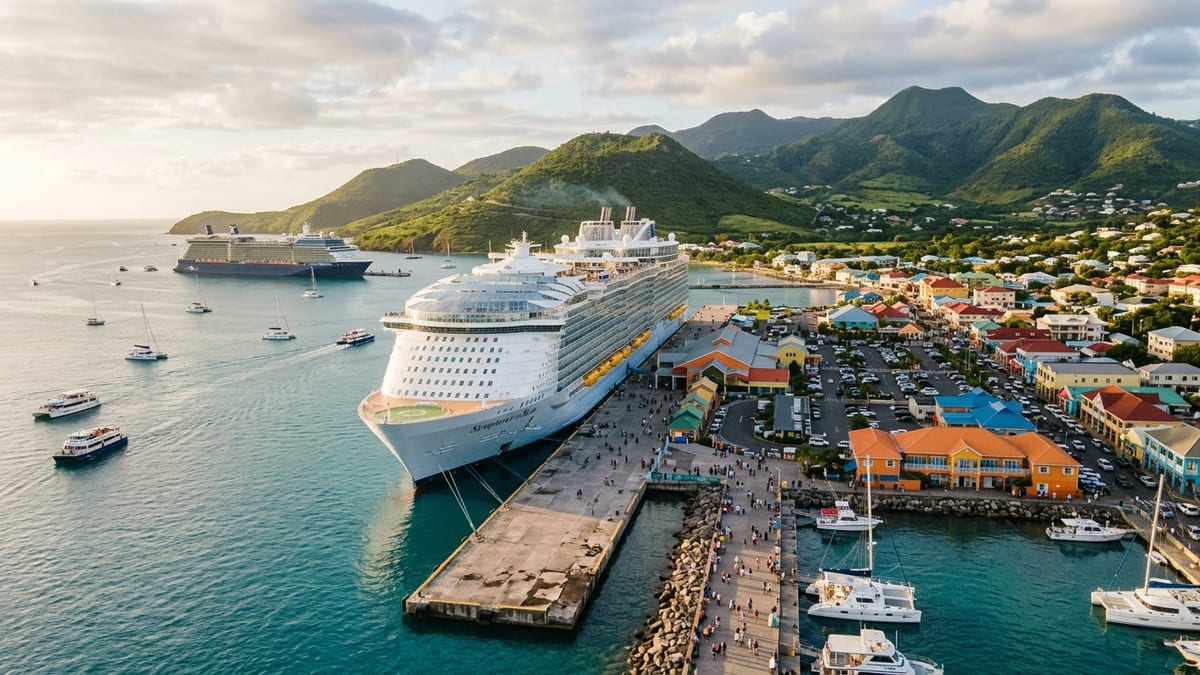
New Cruise Deployments Put St Kitts in the Spotlight
Recent winter 2027 and 2028 deployment materials from major cruise brands show St Kitts appearing more frequently as both a marquee port of call and a key turnaround gateway in longer Caribbean programs. While P&O Cruises continues to base Iona in Southampton, its expanding Caribbean collections, along with broader industry schedules, point to a rising strategic role for St Kitts in connecting transatlantic sailings with island-hopping itineraries.
Publicly available brochures and trade coverage show St Kitts featuring in complex, multi-island routes that link popular eastern Caribbean destinations such as Antigua, St Maarten, Tortola and Barbados with North American and European source markets. This pattern is seen across several lines, and analysts note that a port’s appearance on longer, higher-yield itineraries often precedes more consistent deployment and, eventually, partial homeport functions such as embarking and disembarking larger passenger volumes.
Industry commentary around winter 2027 collections indicates that cruise companies are seeking a more diversified mix of Caribbean ports to reduce congestion and to support rising passenger capacity across multiple brands. Against this backdrop, St Kitts is being positioned as a flexible platform: a reliably deep-water call, an attractive tourism destination, and a potential operational node for provisioning, crew changes and partial turnarounds.
Although St Kitts is not yet a year-round primary homeport for the UK-based Iona, travel trade discussion and itinerary design trends give the island a more central place in the network of Caribbean routes that will carry British and European guests in the 2026–2028 seasons. This stronger integration into premium itineraries is viewed by regional observers as a stepping stone to more formal homeport status for selected sailings.
Port Investments Align With Larger-Ship Operations
The evolving role of St Kitts within cruise deployment plans comes as the island continues to benefit from modern port infrastructure designed for today’s large-capacity vessels. The Port Zante cruise facility, expanded in recent years, provides multiple berths capable of handling new-generation ships of the size class of P&O Iona and other large LNG-ready fleets, a key requirement for lines contemplating more intensive use of a Caribbean base.
Local and regional business reports highlight ongoing efforts in and around Basseterre to improve passenger flows from the pier into the capital, with upgrades to terminal facilities, retail offerings and transportation hubs. These enhancements enable the port to process higher volumes on peak days when several ships call, and they form the basic platform that cruise lines look for when evaluating any port for embarkation or partial homeport usage.
In parallel, industry-facing publications point to a gradual strengthening of logistics services at St Kitts, from ship chandlery and fuel supply to waste management and security operations. While many Caribbean ports can welcome ships and handle shore excursions, only a subset are equipped with the broader ecosystem needed for turnarounds where thousands of passengers and large quantities of baggage are handled in a compressed timeframe.
Observers note that by aligning its port capacity, landside services and regulatory processes with the expectations of major cruise brands, St Kitts is positioning itself as an operationally attractive partner for complex itineraries. This is especially relevant in a period when lines are seeking contingency-friendly ports that can support flexible deployment if schedules or homeport strategies change.
Tourism Economy Braces for Higher Visitor Volumes
The prospect of St Kitts serving a more central role in Caribbean cruise patterns has important implications for the local tourism economy. The island’s hospitality sector has been preparing for a gradual rise in cruise arrivals, with new and renovated hotels, an expanding portfolio of villa and guesthouse accommodations, and a steady build-out of restaurants, beach clubs and tour operators tailored to day visitors.
Published tourism data for the wider Organisation of Eastern Caribbean States show that cruise passengers contribute significantly to visitor spending on shore excursions, retail and food and beverage, even when they do not stay overnight. For St Kitts, a shift from being primarily a port of call to handling embarkations and disembarkations would encourage more pre- and post-cruise stays, spreading revenue into the higher-value overnight segment.
Travel trade analyses suggest that this evolution typically brings both opportunities and risks. On the positive side, a stronger cruise presence can energize small businesses, expand employment in guiding, transportation and hospitality, and justify public investment in waterfront and city-center improvements. At the same time, rapid growth in same-day visitors can strain urban infrastructure, natural sites and heritage attractions if not carefully managed.
Local business voices, as reflected in regional media, are closely watching how itineraries for 2026 and 2027 solidify and how lines like P&O integrate St Kitts into their marketing of Caribbean experiences to British and European guests. The expectation is that more consistent exposure on large-ship itineraries will reinforce St Kitts’ brand as a must-see island, attracting both cruise and independent travelers.
Regional Cruise Routes Enter a New Phase
The intensifying focus on St Kitts fits into a broader reconfiguration of Caribbean cruise geography. As new ships join fleets and additional homeports open in North America and Europe, lines are recalibrating how they connect transatlantic crossings, winter sun itineraries and summer programs in the region. Ports that can serve multiple functions in this network are likely to gain prominence.
Analysts observing winter 2027 deployment announcements point out that lines are increasingly designing itineraries around a web of strong, well-equipped ports rather than a small set of dominant hubs. In this emerging landscape, St Kitts has an opportunity to act as both a scenic destination and a practical node for passenger movements, particularly for guests flying in from Europe for extended Caribbean voyages.
Shifts in route design can also redistribute visitor flows among islands. As more itineraries incorporate St Kitts and neighboring ports in the northeastern Caribbean, tourism boards in the region are reviewing their strategies for joint promotion, airlift coordination and excursion development. Collaboration among islands is viewed as vital to ensuring that cruise-driven growth remains balanced and sustainable.
For travelers, these changes are likely to translate into more varied options, with itineraries that start or finish in less traditional ports and offer a broader mix of cultural, historical and beach experiences. For St Kitts, the visibility gained through its inclusion in large-ship programs toward 2027 strengthens its claim to be an emerging hub in the evolving Caribbean cruise map, even as formal homeport patterns continue to develop.