

More news on this day
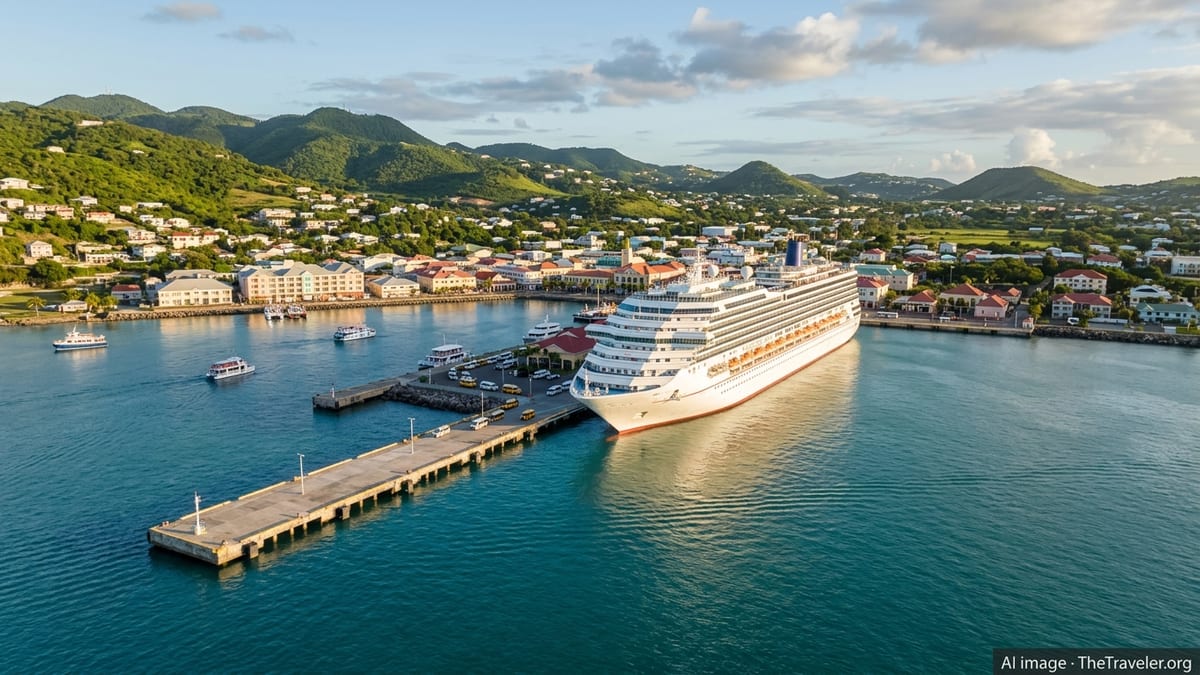
St Kitts is stepping into a new role in Caribbean cruising, with P&O Cruises’ Iona set to homeport at Port Zante from November 2027, signaling a shift from traditional port-of-call status to a full-scale embarkation hub for British and European passengers.
Get the latest news straight to your inbox!
Homeporting Deal Marks a Strategic Turning Point
According to published coverage from regional and trade outlets, St Kitts has secured homeporting operations with P&O Cruises beginning in the 2027 winter season. The program is scheduled to see Iona, one of the line’s newest and largest vessels, operating fly-cruise itineraries in the Caribbean with embarkation and disembarkation in Basseterre. The development positions St Kitts as a gateway port rather than solely a mid-itinerary stop, altering long-established cruise patterns in the eastern Caribbean.
Travel industry reports on P&O’s 2027 and 2028 deployment indicate that Iona will join sister ship Arvia in operating 14-night Caribbean sailings, with St Kitts added as a key departure point alongside long-standing hubs such as Barbados and Antigua. For British and European passengers, this creates an additional starting port within the region, supported by direct air links and pre- and post-cruise stays on the island.
Regional news outlets describe the agreement as a significant milestone in St Kitts’s tourism strategy, noting that homeporting typically delivers higher economic value than transit calls. Passengers flying in to begin and end their cruises are more likely to use local hotels, restaurants and transport services, broadening the distribution of visitor spending beyond the port zone.
Iona Brings Large-Scale Cruise Operations to Port Zante
Iona is one of the largest cruise ships serving the British market, with publicly available fleet data listing capacity of more than 5,000 passengers and around 1,800 crew. The vessel is part of Carnival Corporation’s Excel class and is powered by liquefied natural gas, reflecting the industry’s gradual move toward lower-emission propulsion. Its deployment as a homeporting ship at St Kitts signals that Port Zante’s infrastructure is now geared to handle sustained operations at this scale.
Coverage of Iona’s earlier itineraries highlights that the ship has already operated long Caribbean voyages from the United Kingdom, including extended sailings calling at Antigua, St Kitts and other regional ports. The new program shifts that dynamic by placing the ship in the Caribbean for a sustained winter season with embarkation directly in St Kitts, rather than relying solely on departures from Southampton or other European ports.
Industry analysis suggests that the presence of a vessel of Iona’s size on a homeporting basis will increase the island’s cruise throughput during peak winter months. Turnaround days are expected to become focal points of activity, with thousands of passengers disembarking at the end of a voyage, while another full complement arrives to board, all within a compressed window.
Port Zante Upgrades Enable Hub Status
St Kitts’s move into the homeporting space is built on more than a decade of port investment. Publicly available information on Port Zante shows that the facility added a second cruise pier, enabling it to handle up to four large cruise ships simultaneously and to accommodate some of the world’s biggest classes of vessels. Infrastructure financed in part through national investment programs has focused on expanding berthing capacity and passenger handling areas.
Recent regional reporting indicates that further upgrades are under way or planned to support the P&O homeporting program, including enhancements to terminal buildings and processes aimed at managing embarkation and disembarkation flows. Plans for a modern cruise terminal are described as central to delivering a seamless experience for passengers checking in, clearing security and boarding at Port Zante.
These developments align with broader Caribbean port trends, in which destinations move from single-pier tourist calls to multi-ship, multi-function cruise complexes. For St Kitts, the evolution from a pier built to accommodate one or two ships to a facility preparing for regular large-vessel turnarounds marks a structural shift in how the island participates in regional maritime tourism.
Economic Impact and Tourism Growth Projections
Government and regional media reports project that homeporting is expected to contribute to a significant rise in visitor numbers over the next several years. Some estimates suggest that overall tourism arrivals to St Kitts and Nevis could double by 2027, supported in part by the new fly-cruise model. Under this approach, passengers fly into St Kitts, spend time on the island before departure, embark on their Caribbean cruise and then return to disembark, creating multiple touchpoints for local spending.
Local coverage emphasizes that this model has the potential to distribute tourism revenue beyond traditional shore excursion operators and port retailers. Hotels, guesthouses, restaurants, taxis and tour companies across the island may see higher demand, particularly around turnaround weekends when passenger arrivals and departures peak. Ancillary services such as catering, provisioning, maintenance and logistics for a large homeported vessel are also expected to generate additional employment and business opportunities.
At the same time, analysts point out that successfully managing such growth will require coordinated planning in areas such as traffic management, airport capacity and environmental safeguards. The shift from brief daytime calls to longer, more complex visitor stays raises questions about how best to preserve St Kitts’s natural and cultural assets while accommodating increased volumes.
New Caribbean Travel Patterns for British and European Passengers
The decision to base Iona in the Caribbean with St Kitts as a homeport introduces new itinerary options for travelers from the United Kingdom and continental Europe. Rather than sailing from European ports for transatlantic crossings, many passengers will now fly directly to the Caribbean to join their voyages. Industry announcements describe 14-night fly-cruise holidays built around St Kitts, Barbados and Antigua, giving travelers a wider choice of starting points and route combinations.
This shift is expected to reshape how British and European travelers experience the region. St Kitts is likely to be seen not just as one stop among many, but as a central hub where travelers begin and end their journeys, explore the island more deeply and potentially extend their stay. For repeat cruisers already familiar with traditional embarkation ports, the addition of St Kitts as a gateway may offer a fresh entry point into the eastern Caribbean.
Travel observers note that the move also underscores the growing importance of mid-size Caribbean destinations in cruise line deployment strategies. As larger ships like Iona seek diversified ports capable of handling modern passenger volumes and operational requirements, islands that have invested early in infrastructure and regulatory readiness, such as St Kitts, are positioned to capture new demand and redefine their place on the regional cruise map.