

More news on this day
London St Pancras Eurostar terminal, long criticised for cramped queues and airport-style waits, is set for a sweeping overhaul as station managers and Eurostar unveil an ambitious package of changes designed to ease overcrowding, cut boarding times and future-proof the hub ahead of new EU border controls and a fresh wave of cross-Channel competition.
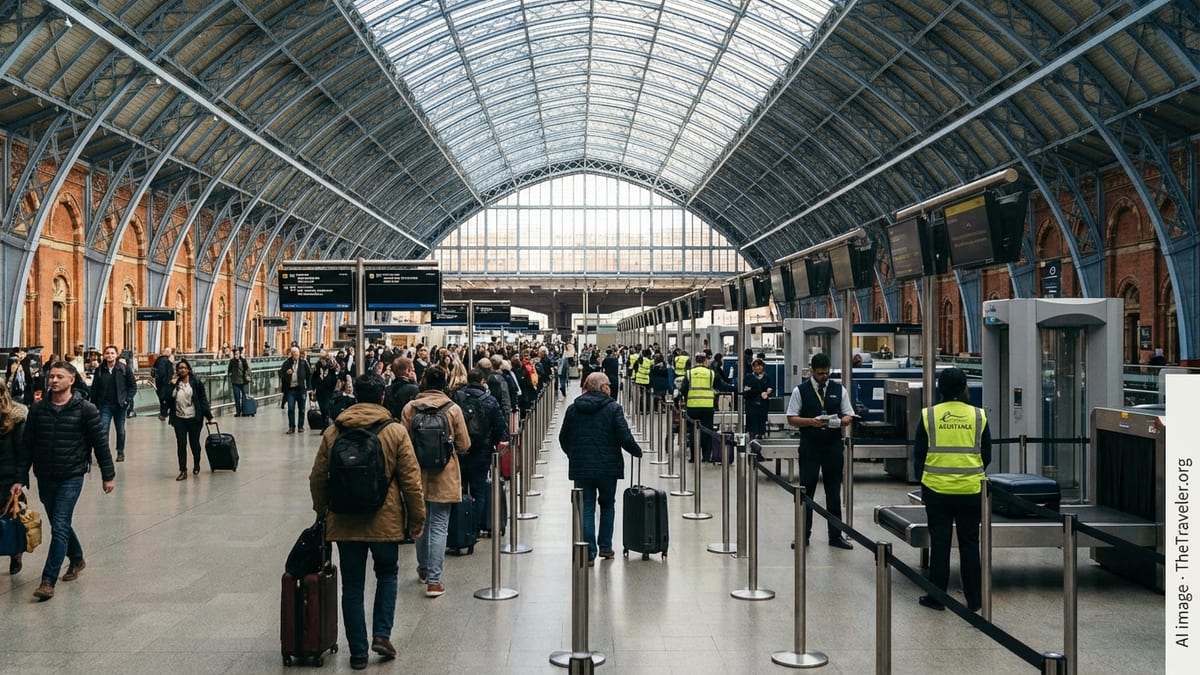
From Flagship Gateway to Bottleneck: How Overcrowding Became the Norm
In recent years, scenes of snaking queues, jam-packed departure halls and anxious passengers checking departure boards have become emblematic of travel through the Eurostar terminal at St Pancras International. What was once celebrated as a spacious, cathedral-like gateway to the continent has frequently struggled to cope with surging demand, a post-Brexit increase in passport checks and a station layout that offers limited room to expand.
Capacity constraints have been laid bare during peak holiday periods, rail strikes and weather-related disruptions, when thousands of travellers have been funnelled into a relatively small international zone. Station owner HS1 and Eurostar have both acknowledged that the current set-up, which can handle around 1,800 passengers per hour through departures, has turned a supposedly seamless rail journey into an experience often likened to a crowded airport concourse.
Compounding the challenge has been the need to balance modern border control requirements with the realities of operating inside a Grade I-listed Victorian building. The result has been a patchwork of queuing areas, security lanes and check-in points that were gradually bolted onto the original design, rather than planned as a coherent passenger flow from the outset.
Industry reports commissioned by HS1 have warned for some time that, without substantial intervention, St Pancras risked becoming a serious brake on the growth of international rail. That concern is now feeding directly into a multimillion-pound revamp programme intended to unlock capacity and restore confidence in the terminal’s ability to cope with the next decade of demand.
A Bold Capacity Upgrade: Doubling Passenger Throughput
The most eye-catching element of the plan is a major expansion and reconfiguration of the international departures zone, backed by an investment estimated at between £80 million and £100 million. HS1 and London St Pancras Highspeed say the aim is to more than double the number of passengers who can be processed each hour, from today’s levels to as many as 5,000 at peak, within the existing building envelope.
A feasibility study led by architecture practice Hawkins Brown, building on earlier capacity work for HS1, has mapped out a three-phase upgrade. The first phase focuses on relatively quick wins within the current terminal footprint, including reorganising queuing areas and adding security and border-control capacity to lift hourly throughput by thousands of passengers over the next four years.
Later phases will involve a more fundamental reshaping of the international zone and its links to the main concourse, turning currently underused or poorly configured spaces into part of a continuous passenger journey. The long-term objective is to create a layout that can handle projected growth in international rail traffic comfortably at least into the mid-2030s, and potentially to 2040, without the need for intrusive structural works to the historic train shed.
Crucially, the investment is being framed as an enabling project not only for Eurostar’s own ambitions but also for anticipated new operators. With Virgin and other would-be competitors exploring cross-Channel services from London, HS1 wants St Pancras to operate more like a compact international airport terminal, capable of handling several brands side by side within a shared, high-capacity check-in and security system.
Goodbye Airport-Style Waits: Shorter Check-In and Faster Boarding
For passengers, the most tangible change will be a planned reduction in how long they are asked to arrive before departure. At present, Eurostar advises travellers to be at St Pancras 45 to 75 minutes before their train, and at the busiest times even earlier, leading to long spells spent waiting in the departure lounge with few options to move or sit comfortably.
Station managers and Eurostar executives now want to move decisively away from that model. They have set a target of cutting effective waiting times to as little as 15 minutes for most travellers once the changes are fully in place, with an interim goal of boarding starting about 30 minutes before departure and passengers moving far more quickly through the formalities.
The strategy hinges on recasting St Pancras from a place where passengers dwell in the departure hall for up to an hour into one where they spend more of their time freely in the main concourse or arriving closer to departure. By tackling the main bottlenecks at security and passport control and smoothing the flow into the platforms, HS1 believes the Eurostar experience can start to resemble a turn up and go service more akin to domestic rail, rather than a small-scale airport.
Officials close to the project stress that retail expansion inside the secure area is not the priority. Instead, the focus is on simplifying movement, cutting queue times and removing the need for early arrival that has contributed so much to overcrowding. In practice, that will mean more space for queuing where it is needed, but also giving passengers the ability to bypass the departure hall more quickly and head straight for their train once checks are complete.
Rebuilt Queues, Extra Lanes and a New Look International Zone
Behind the headline promises of shorter waits lies a detailed piece of operational choreography. One of the most important changes will involve opening up the largely unused arrivals hall and folding it into the international departures operation. By knocking through and reconfiguring internal walls and circulation routes, HS1 plans to substantially expand the footprint available for security and border-control facilities.
That extra space will be used to add more security lanes and passport booths, greatly increasing the number of passengers who can be processed in parallel at peak times. Station managers say this will directly address the pinch points that currently force queues to zigzag through the terminal and, at their worst, spill back towards the main concourse.
The international zone itself is also set for a rethink, with designers tasked with improving visibility, signage and passenger flow while respecting the heritage features of the building. The intention is to replace today’s sometimes confusing maze of barriers and rope lines with clearer, more intuitive routes that move passengers smoothly from ticket checks through security, passport control and on to the platforms with minimal backtracking.
While full design details have yet to be made public, the overall direction is towards a more open layout in which each stage of the process is visible and logically ordered. This, HS1 hopes, will not only reduce bottlenecks but also cut the stress that many passengers currently report when faced with unclear queues and uncertain waiting times.
Preparing for EES: New EU Biometric Rules Without New Chaos
The overhaul at St Pancras is being driven in part by the looming introduction of the European Union’s Entry/Exit System, a digital border control regime scheduled to start rolling out in October 2025. Under the scheme, non-EU travellers, including most UK citizens, will be required to provide fingerprints and facial biometrics on first entry into the Schengen area, with their data stored for future crossings.
Because St Pancras is one of only three fixed French border points on UK soil, it will play a key role in implementing EES for rail passengers. Earlier warnings from industry and parliamentary committees raised the alarm that without significant extra capacity, the need to capture biometrics could add many minutes to each passenger’s processing time and trigger serious delays, particularly at busy times and on family travel days.
To avoid that scenario, HS1, Eurostar and French border authorities are working to integrate new self-service registration kiosks and biometric capture points into the redesigned international zone. The goal is to frontload as much of the process as possible before travellers reach the staffed booths, so that border officers can focus mainly on verification rather than data entry.
Eurostar has publicly expressed confidence that, with these upgrades, the station can absorb the demands of EES without a return to the worst overcrowding seen in recent years. Nonetheless, officials acknowledge that the first months of the system’s operation could be challenging, and say they are building in flexibility to adjust layouts, staffing and passenger guidance as real-world data comes in.
Learning from Past Disruption and Post-Brexit Bottlenecks
The push to future-proof St Pancras comes after a series of painful lessons. Since the UK left the European Union, additional checks for British passport holders have lengthened border procedures, forcing Eurostar to cap ticket sales on some services because there simply was not enough time to process a full train’s worth of passengers before departure.
On several occasions, infrastructure failures and extreme weather have highlighted just how fragile the current set-up can be. Power cuts, flooding on the line and disruptions in France have all resulted in large numbers of stranded travellers crowding into the station, with limited space to manage them safely and comfortably. Images of families sitting on the floor amid piles of luggage or packed tightly into holding areas have undercut the perception of high-speed rail as a stress-free alternative to short-haul flights.
HS1 and Eurostar argue that the forthcoming changes are as much about resilience as they are about average journey times. By increasing the number of security lanes, expanding border control positions and rationalising queues, they hope to ensure that even when there are delays on the network, the terminal itself does not become a secondary crisis point.
Operational experts involved in the project say the new design will include more flexibility to open and close sections of the international zone depending on demand, re-route passengers during incidents and scale up staffing quickly at the busiest pinch points. These changes, they believe, should reduce the risk of the cascading delays that have previously plagued peak-period services.
Competition, New Routes and the Push to 30 Million Passengers
Beyond immediate comfort and reliability, the St Pancras revamp is also about unlocking long-term growth. Eurostar has set itself an ambitious target of carrying around 30 million passengers a year by 2030, up sharply from pre-pandemic levels, and is eyeing an expanded network of routes to cities such as Frankfurt, Geneva and other European destinations.
The station’s physical limits have been one of the main constraints on those ambitions. If each train requires lengthy boarding times and labour-intensive border checks in a cramped terminal, there is only so much capacity that can be squeezed out of the existing timetable. Shortening the time each passenger spends in the terminal and increasing the number who can be processed per hour is therefore central to any strategy for adding more services or reintroducing seasonal routes.
At the same time, Virgin and other aspiring cross-Channel operators are preparing their own business cases, encouraged by growing demand for low-carbon alternatives to flying. HS1’s plan is to create a more flexible international terminal at St Pancras that can serve multiple rail companies efficiently, using shared security and border facilities in much the same way as an airport terminal handles several airlines.
For travellers, the emergence of competition could mean more choice of departure times, destinations and price points. But that competition is only likely to materialise if investors and regulators are confident that St Pancras will be capable of handling the extra footfall without repeating the overcrowding problems that have dogged recent holiday seasons.
What Passengers Can Expect in the Coming Years
Although much of the heavy lifting will take place behind the scenes, passengers are likely to notice a series of incremental changes at St Pancras over the next few years. Early steps may include clearer signage, modified queuing systems and pilot layouts intended to test how people move through the space before more permanent construction begins in earnest.
HS1 has signalled that the first major phase of works could get under way around 2027 or 2028, following the completion of design and operational planning. During that period, some temporary disruption within the terminal is inevitable, but both HS1 and Eurostar insist that maintaining service levels and avoiding a repeat of recent crowding incidents will be a central part of the phasing strategy.
As the Entry/Exit System comes into force from late 2025, travellers will also start to encounter new biometric registration kiosks and slightly different sequences of checks at the station. Officials advise passengers to pay close attention to updated guidance about recommended arrival times, which may fluctuate during the initial roll-out before stabilising as the new processes bed in.
If the plans deliver as promised, regular users of the route could, within a few years, experience a very different atmosphere inside the Eurostar terminal at St Pancras: shorter queues, a less crowded departure zone and a process that feels far less like an airport and much more like the quick, city-centre rail link that high-speed travel advocates have long championed.