

More news on this day
Regional airline Star Air is quietly redrawing India’s domestic tourism map, adding and resuming routes that more tightly connect Karnataka and Maharashtra and elevate smaller cities as national gateways for leisure and business travel.
Get the latest news straight to your inbox!
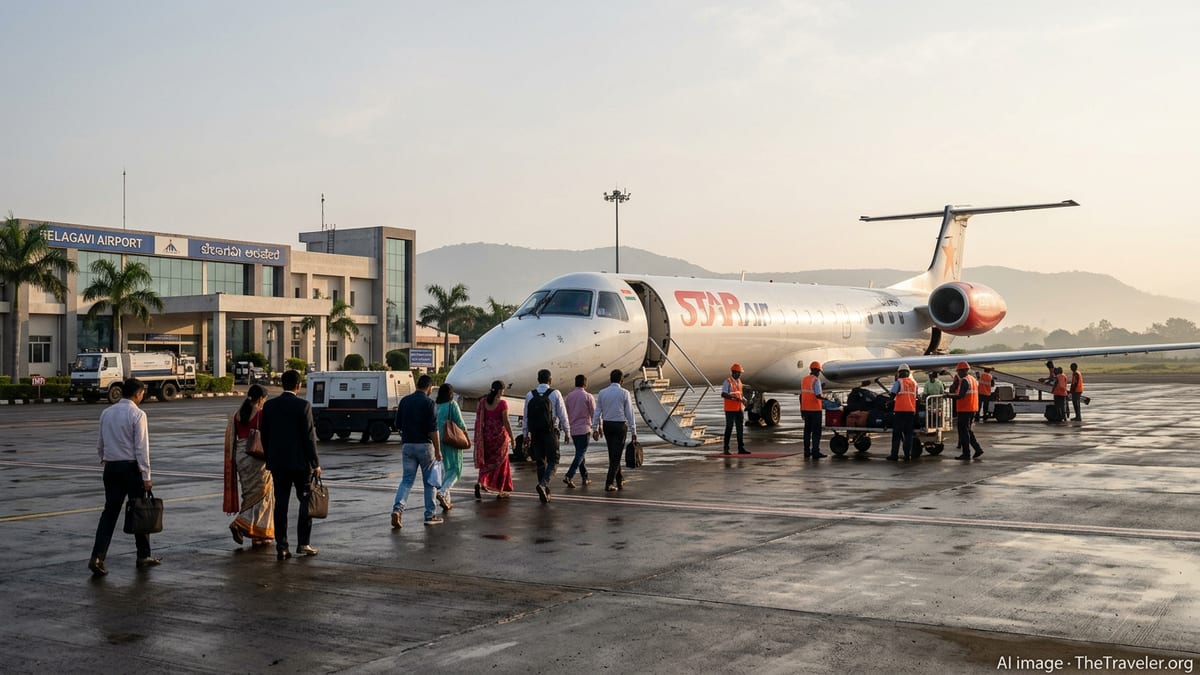
New Links Turn Tier-2 Cities Into Tourism Gateways
From its bases in South and West India, Star Air has steadily expanded services that stitch together Karnataka and Maharashtra beyond the traditional metro pairings. In recent schedules, the airline has focused on routes that link fast-growing regional centres such as Belagavi, Kolhapur, Nagpur and Nanded with Bengaluru, Hyderabad, Pune and Mumbai, deepening access to both states’ tourism and industrial heartlands.
Belagavi in north Karnataka, long viewed as a frontier city between the two states, is emerging as a key beneficiary. After a period of suspended services on certain sectors, Star Air has moved to resume and reinforce connectivity from Belagavi to Mumbai while also adding links to central India. Local officials and tourism operators say these additions are already reshaping how travellers from across the country plan trips into coastal Karnataka, the Western Ghats and nearby Maharashtrian districts.
Kolhapur, historically a road and rail hub in southern Maharashtra, is seeing its airport transformed into a regional air bridge. Star Air’s recent decisions to operate direct flights from Kolhapur to Bengaluru, Hyderabad and Nagpur mean that tourists headed to temple towns, wildlife reserves or hill stations along the Karnataka–Maharashtra border can now bypass congested metros and fly point to point.
For travellers, the growing mesh of routes is changing perceptions of distance. Weekend visitors from Nagpur can now reach Karnataka’s cultural and heritage circuits with a single short flight, while families from Bengaluru can access Mahabaleshwar, coastal Konkan and Vidarbha more easily via Kolhapur and Nagpur, turning what were once overnight journeys into quick regional hops.
Belagavi and Kolhapur Anchor a Cross-Border Network
Belagavi’s Sambra airport has in recent years swung between rapid growth and sudden loss of capacity, as airlines adjusted networks and redeployed aircraft. Star Air’s renewed focus on the city, including the resumption of its Belagavi–Mumbai operations and the introduction of direct links to Indore, is being interpreted locally as a signal that the carrier sees long-term potential in north Karnataka’s catchment.
The Belagavi–Mumbai service in particular is crucial. It restores a direct air bridge to India’s financial capital, a key gateway for both inbound tourists and outbound residents seeking international connections. Travel agents in the city report that with the route returning to schedules, they are fielding more enquiries for combined itineraries that pair Mumbai city breaks with heritage and nature experiences in and around Belagavi.
Across the state border, Kolhapur airport is following a similar trajectory. Star Air’s decision to add Bengaluru, Hyderabad and Nagpur to its existing links from Kolhapur to Mumbai, Ahmedabad and Tirupati effectively turns the Maharashtrian city into a spoke that reaches deep into Karnataka’s economic core. Officials in both states say such cross-border connectivity is critical for distributing tourist flows more evenly beyond traditional hotspots.
Industry observers point out that the network effect is powerful. As more routes are layered onto Belagavi and Kolhapur, tour operators can package multi-city circuits that traverse both states: temple and fort trails, monsoon drives through the Ghats, and agritourism stays in sugarcane and mango-growing belts, all built around short, direct flights rather than long road hauls.
Nagpur and Nanded Link Heartland Cities to Southern Gateways
Star Air’s strategy is not limited to border cities. In Maharashtra’s interior, Nagpur and Nanded have become important nodes in the airline’s push to link heartland markets with southern tourism gateways. Schedules in recent seasons have introduced or expanded routes from Nagpur to Bengaluru and Pune, while also tying the city to Kolhapur and other tier-2 stations.
Nagpur’s position at the geographical centre of India allows it to serve as a natural interchange for travellers from central and eastern regions heading toward Karnataka’s tech corridors and coastal getaways. Tourism stakeholders note that direct regional flights make it far easier for travellers from Vidarbha and adjoining states to build short holidays in places such as Hampi, Gokarna or Coorg without having to route through Mumbai or Delhi.
Nanded, an important religious destination in Maharashtra, is likewise gaining fresh relevance in the regional aviation map. Star Air has resumed and expanded operations at the city’s airport, reinforcing links to southern and western destinations. For Sikh pilgrims travelling to Nanded’s historic gurdwaras and for families combining spiritual visits with leisure stays elsewhere in Karnataka and Maharashtra, the additional frequencies and city pairs are a tangible convenience.
Aviation analysts say these moves reflect a broader shift among regional carriers. Rather than relying solely on metro-to-metro traffic, airlines such as Star Air are betting on emerging demand between smaller cities that share cultural, religious or industrial ties but have historically been separated by slow overland travel.
Regional Connectivity Translates Into New Tourism Circuits
The expansion of cross-border routes is already inspiring new tourism products. Travel companies in Bengaluru report rising interest in itineraries that start with a short domestic flight to Belagavi or Kolhapur and then continue by road into the Western Ghats, temple towns like Gokak and Narsobawadi, or lesser-known wildlife reserves straddling the Karnataka–Maharashtra border.
Similarly, operators in Nagpur and Pune are building packages that combine central India’s tiger reserves with beach stays on the Karnataka coast, using Star Air’s flights as the backbone of multi-stop journeys. Because many of these airports are part of India’s regional connectivity push, fares on select sectors are often priced to attract first-time fliers, opening up air travel and tourism to new segments of the population.
Local hospitality businesses are taking note. Hoteliers in Belagavi, Kolhapur and Nanded say that as flight schedules stabilise and new routes mature, they are seeing a gradual shift from purely business-driven stays to a more balanced mix of leisure travellers, wedding groups and weekend tourists. This, they argue, strengthens the case for further investment in boutique stays, homestays and experiential tourism products tailored to shorter trips.
For Karnataka and Maharashtra, the long-term payoff of Star Air’s expanding network may be less about any single route and more about the cumulative impact of reliable, reasonably priced connections between their second- and third-tier cities. Every additional flight, tourism officials suggest, makes it a little easier for visitors to cross the border, discover new destinations and help turn regional gateways into genuine national tourism hubs.