

More news on this day
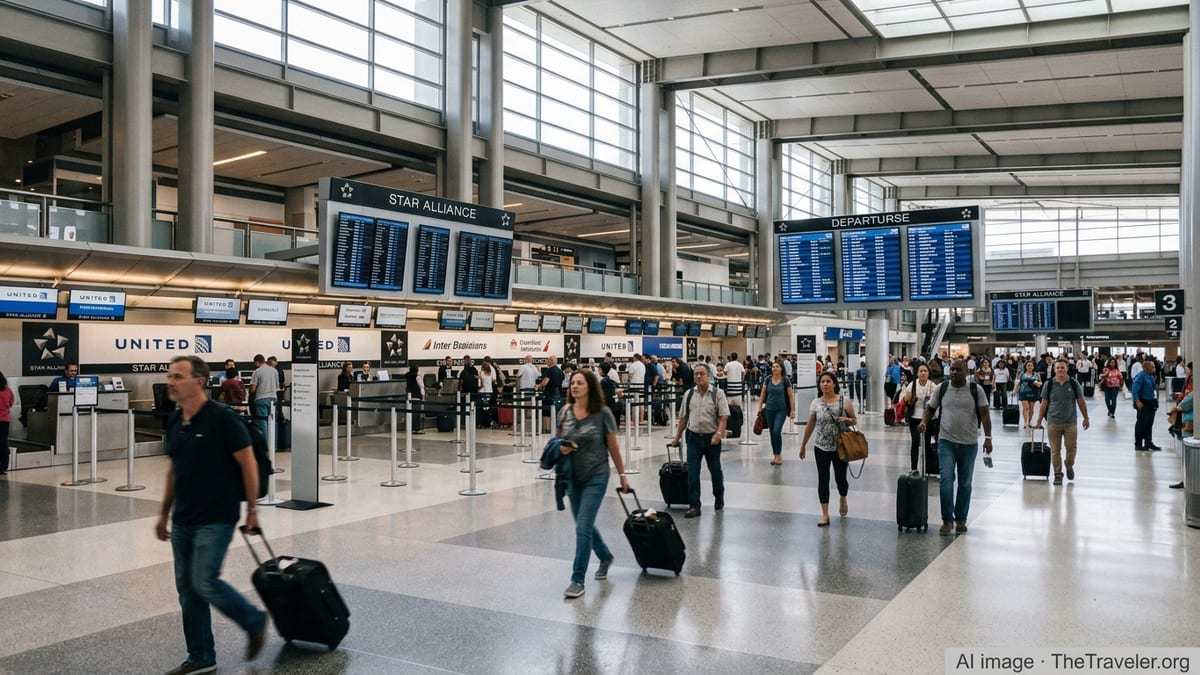
Star Alliance has introduced a new Connection Centre at Los Angeles International Airport, positioning LAX as a stronger hub for streamlined transfers across multiple member airlines and tightening the alliance’s focus on hassle free global journeys.
Get the latest news straight to your inbox!
New Nerve Centre for Complex Global Itineraries
The new Star Alliance Connection Centre at LAX is designed as a behind the scenes coordination hub focused on passengers with tight or disrupted connections across different member airlines. According to publicly available information from the alliance and Los Angeles airport operators, the facility brings together real time flight data, terminal and gate information, and baggage status to help smooth passenger flows through one of the world’s busiest and most fragmented airport layouts.
Rather than a customer facing lounge or check in area, the Connection Centre functions primarily as an operations and support platform. Staff working within the centre can monitor itineraries spanning several Star Alliance carriers, identify risk of missed onward flights, and trigger measures such as rebooking on later services, coordinating with ground teams at departure gates, or helping to prioritise the transfer of checked luggage.
Positioned within the broader digital infrastructure of the alliance, the new LAX hub builds on existing tools such as common-use check in areas and shared lounge facilities in the Tom Bradley International Terminal. The Connection Centre integrates these elements to focus specifically on irregular operations, a recurring pain point for passengers navigating multiple terminals and airlines during a single connection.
Focus on Tight Connections and Disrupted Journeys
LAX has long been a critical gateway for Star Alliance carriers serving North America, the Pacific and Latin America, but its horseshoe-shaped terminal layout and ongoing construction have made some transfers challenging. Publicly available route and schedule data show an expanding portfolio of long haul services by alliance members, including transpacific and transatlantic flights that frequently feed shorter domestic or regional legs. The new Connection Centre aims to protect these intricate itineraries when delays or weather disruptions occur.
Operational information indicates that the centre will concentrate on passengers whose itineraries are ticketed on a single Star Alliance booking but involve at least one connection at LAX. When automated systems flag a potential misconnection, case details can be pushed to staff in the Connection Centre, who then coordinate with participating airlines and airport partners on options such as moving travellers to alternative flights or adjusting seat assignments to keep families and groups together.
By centralising this work in a single hub, Star Alliance is seeking to reduce the number of passengers who arrive at LAX only to find their onward connection already closed or their baggage misrouted. The model reflects a wider industry shift toward proactive disruption management, using shared data feeds and common processes to intervene earlier in a journey rather than waiting until customers reach a transfer desk.
Leveraging LAX’s Evolving Terminal and Ground Infrastructure
The launch of the Connection Centre coincides with broader changes at Los Angeles International Airport, where terminal renovations, new ground transport links and upgraded passenger facilities are gradually reshaping the experience for connecting travellers. Publicly accessible airport planning documents describe a gradual consolidation of alliance operations around the Tom Bradley International Terminal and neighbouring concourses, supported by airside walkways and bridge connections between terminals.
The new centre is designed to take advantage of those physical improvements. With clearer patterns for which Star Alliance carriers use which gates and terminals, the hub can more accurately estimate minimum connecting times, suggest faster walking routes, and factor in congestion points such as security screening or passport control. That information can be used internally by airlines and ground handlers to prioritise certain passengers when time is tight.
As Los Angeles continues to expand rail links and shuttle connections to the airport’s terminals, the centre is also expected to support travellers starting or ending their journeys at LAX. By aligning with published ground transport schedules and connection windows, Star Alliance aims to offer more realistic end to end itineraries that account for transfer times both inside the terminal complex and between the airport and the wider Los Angeles region.
Digital Integration Across Member Airlines
The Connection Centre relies heavily on the digital backbone that Star Alliance has been developing in recent years to support shared services across its members. Information available from alliance materials points to a growing emphasis on common standards for booking data, seat maps and disruption handling rules, enabling systems at the new LAX hub to retrieve and interpret information regardless of which carrier issued the original ticket.
This technical framework allows the centre to view an entire journey instead of treating each flight segment in isolation. When one part of an itinerary is delayed, the system can immediately model the effect on onward legs operated by different airlines, and then surface options that comply with each carrier’s policies. Ground staff at LAX and other airports can then present these solutions at gates or customer service desks, helping to cut waiting times and reduce uncertainty for affected travellers.
Star Alliance is also positioning the Connection Centre as a foundation for future customer facing services. Over time, information flowing through the hub could support more accurate connection time estimates in booking engines, clearer messaging in airline apps about gate changes and walking times at LAX, and more consistent treatment of through-checked baggage when passengers combine member airlines on a single ticket.
Strengthening LAX’s Role in the Global Alliance Network
By investing in a dedicated Connection Centre at LAX, Star Alliance is reinforcing the airport’s position as one of its key transfer points in the Americas. Publicly available alliance route maps show Los Angeles as a major node linking domestic U.S. flights with services to Asia, Oceania and Latin America, creating complex flows of passengers and baggage that can benefit from central coordination.
Industry observers note that global airline alliances have increasingly sought to differentiate themselves through the quality and reliability of connecting journeys, especially as point to point low cost carriers expand on many routes. For Star Alliance, a more resilient transfer operation at LAX offers a way to appeal to travellers choosing between alliance networks for multi segment trips.
As the Connection Centre ramps up operations, its effectiveness is likely to be measured by metrics such as reduced missed connections, faster rebooking times and higher passenger satisfaction scores on multi airline itineraries. If the model proves successful in Los Angeles, similar hubs could become a template for other large alliance airports where multiple carriers, terminals and time zones converge.