

More news on this day
Star Alliance has opened a new Star Connection Centre at Los Angeles International Airport, introducing a dedicated transfer hub designed to make multi-airline connections smoother for passengers traveling across North America and beyond.
Get the latest news straight to your inbox!
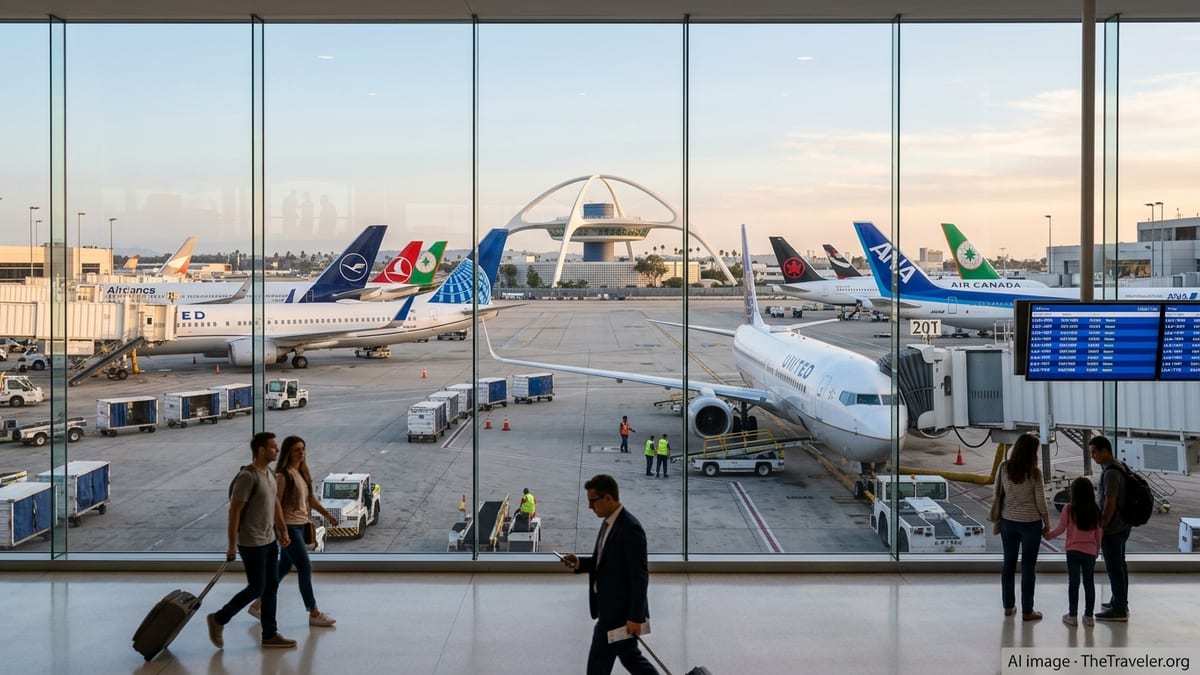
Ninth Star Connection Centre Strengthens Global Network
According to published coverage from aviation and business media, the new facility at Los Angeles International Airport is the ninth Star Connection Centre in the alliance’s global network and the first of its kind on the U.S. West Coast. The centre opened on March 23, 2026, at LAX, one of North America’s busiest international gateways.
Publicly available information indicates that the Star Connection Centre model is intended to support passengers traveling on itineraries that involve two or more member airlines on a single ticket. At LAX, the focus is on helping travelers navigate tight transfer windows, terminal changes and baggage handling across multiple Star Alliance carriers.
Network data and alliance announcements suggest that the Los Angeles location has been prioritized because of its role as a major entry point to the United States from Asia-Pacific, Europe and Latin America. The new centre is expected to handle a large volume of connections involving transpacific and transcontinental flights, as well as links to Canada, Central America and onward U.S. destinations.
The launch at LAX follows Star Alliance’s broader strategy of strengthening connection support at complex hub airports. Earlier communication from the group outlined a plan to expand these centres as part of its 25th‑anniversary initiatives, positioning connection services as a key differentiator among global alliances.
Support for Air Canada, ANA, Copa, EVA Air, LOT, Lufthansa, Turkish Airlines and United
Information released through Star Alliance member channels shows that the LAX Star Connection Centre is designed to assist passengers traveling on Air Canada, All Nippon Airways, Copa Airlines, EVA Air, LOT Polish Airlines, Lufthansa, Turkish Airlines and United Airlines. These carriers already operate extensive schedules into Los Angeles, serving a mix of long‑haul and regional routes.
The centre’s role is described as coordinating across airline partners to protect connections when flights are delayed or schedules are disrupted. This can include monitoring incoming flights, identifying at‑risk connections and working with ground operations and customer service teams to prioritize rebooking or expedited transfers when needed.
Published coverage indicates that the connection facility will not replace traditional customer service desks maintained by individual airlines but will instead act as a behind‑the‑scenes coordination point. The intention is to reduce the number of missed connections on multi‑segment Star Alliance itineraries and to make it easier for travelers to complete complex journeys using several member airlines.
The presence of United’s hub operation at LAX, combined with strong Star Alliance capacity from Canada, Europe and Asia, provides a broad base of eligible itineraries. Passengers connecting, for example, from Air Canada or Lufthansa long‑haul services into United domestic flights, or from United transcontinental services onto ANA and EVA Air departures to Asia, are expected to be among the primary beneficiaries.
Focus on Seamless Transfers at a Complex Mega‑Hub
Operational information about Los Angeles International Airport highlights that all terminals are now connected airside, which allows passengers with valid boarding passes to move between terminals without exiting security. This layout supports the mission of the Star Connection Centre, as many multi‑airline itineraries require travelers to move between United’s domestic terminals and the Tom Bradley International Terminal.
Travel industry reports describe LAX as a challenging environment for tight connections, given its size, gate distances and heavy traffic. The new centre aims to mitigate some of these challenges by improving coordination around gate assignments, transfer times and baggage transfer processes for Star Alliance customers.
Publicly available commentary from airport planning sources notes that Los Angeles has been working to enhance connectivity for alliance partners, including relocating or grouping international operations to simplify terminal‑to‑terminal movement. The Star Connection Centre at LAX appears aligned with these broader infrastructure and operational changes at the airport.
For passengers, the practical impact is expected to be more proactive communication about at‑risk connections and a greater likelihood that itineraries involving multiple Star Alliance airlines can be completed as originally booked. While the underlying processes are largely invisible to travelers, industry coverage suggests that improved data sharing and coordination are central to the new centre’s design.
Building on the Success of the Star Alliance LAX Lounge
The new Star Connection Centre builds on Star Alliance’s existing presence at Los Angeles, where the group already operates an award‑winning lounge in the Tom Bradley International Terminal. Travel and hospitality coverage has repeatedly named the Star Alliance LAX lounge as one of North America’s leading airport lounges, citing its outdoor terrace, dining options and views over the airfield.
By pairing an established premium lounge with a dedicated connection coordination hub, the alliance is positioning LAX as a flagship example of its end‑to‑end service approach. While the lounge serves eligible first and business class passengers and Star Alliance Gold members, the new connection facility is aimed more broadly at all travelers holding multi‑airline tickets across the participating carriers.
Observers note that LAX is a natural testing ground for this kind of integrated service, given its mix of long‑haul international routes and dense domestic connectivity. For Star Alliance, successful operation of the connection centre could inform similar enhancements at other hub airports in North America and beyond.
Industry analysts suggest that the combination of premium ground facilities and behind‑the‑scenes operational support is increasingly important as airlines rebuild and expand long‑haul networks. Strong connection performance can influence how travelers choose between competing alliances, particularly on journeys that involve two or more carriers and multiple regions.
Implications for North American and Global Travelers
From a traveler’s perspective, the launch of the Star Connection Centre at LAX underscores the growing importance of alliance‑level services alongside individual airline offerings. As carriers continue to rebuild transpacific and transatlantic networks, connections through major hubs like Los Angeles remain a critical part of many itineraries.
Travel publications note that passengers are increasingly sensitive to missed connections, irregular operations and baggage delays. By dedicating resources to monitoring and supporting multi‑airline transfers, Star Alliance is seeking to reduce some of the uncertainty associated with complex journeys, especially at peak travel periods.
For North American travelers, Los Angeles is a key departure and transfer point for routes to Asia‑Pacific and Latin America, as well as an alternative gateway to Europe. The enhanced support at LAX is expected to complement other Star Connection Centres around the world, giving the alliance a more consistent approach to handling disruptions and tight transfer windows.
While the full operational impact will become clearer over time as passenger volumes and schedules evolve, the opening of the Star Connection Centre at LAX marks a significant expansion of the tools available to manage multi‑airline journeys. For frequent flyers of Air Canada, ANA, Copa, EVA Air, LOT, Lufthansa, Turkish Airlines and United, Los Angeles now represents a more structured and coordinated transfer point within the Star Alliance network.