

More news on this day
Starlux Airlines is set to deepen Taiwan’s regional aviation footprint with the launch of its first direct flights to South Korea, unveiling new routes from both Taipei and Taichung to the coastal city of Busan and signaling a milestone in the carrier’s global expansion strategy.
Milestone Entry Into the South Korean Market
Starlux Airlines, Taiwan’s youngest full-service carrier, has confirmed it will launch direct flights to Busan on June 1, 2026, establishing its first scheduled services between Taiwan and South Korea. The new routes will link Busan with both Taipei Taoyuan International Airport and Taichung International Airport, positioning the southern Korean port city as the airline’s inaugural gateway into the country.
The announcement underscores how rapidly the premium-oriented airline is moving to cement its presence across key markets in Asia and beyond. For Taiwanese travelers, the development offers not only fresh leisure options in one of South Korea’s most popular seaside destinations, but also a more diversified set of departure points that better reflect shifting travel patterns across the island.
Starlux has framed the launch as a strategic step rather than a tactical seasonal move. By opening two Busan routes at once and placing them within its broader regional network, the carrier is signaling that South Korea will play an increasingly central role in its Asia strategy, alongside established strongholds such as Japan and major Southeast Asian cities.
Dual Gateways: Taipei and Taichung Take Center Stage
The Busan plans hinge on a dual-origin model that will see flights departing from both northern and central Taiwan. From Taipei Taoyuan, Starlux will offer daily service to Busan’s Gimhae International Airport, tapping a dense catchment of travelers in the capital region and connecting them into its growing network across North America and Asia.
From Taichung, the airline will operate three weekly flights to Busan, with departures scheduled on Tuesday, Friday, and Sunday mornings. These services will depart Taichung at 8:10 a.m., offering Taiwanese travelers in central regions an early start that maximizes same-day arrival time in Korea for leisure or business activities.
For years, travelers from Taichung and surrounding areas have often had to travel north to Taipei to access a broad menu of international flights. By anchoring a second Busan route in Taichung, Starlux is reshaping that dynamic and providing more balanced international access across Taiwan, reducing travel times to the airport and improving overall trip efficiency.
First Taiwanese Carrier to Link Taichung and Busan
The Taichung to Busan route carries particular symbolic weight in the launch. Starlux will become the first Taiwan-based airline to operate direct flights between Taichung and Busan, a pairing that reflects both cities’ rising tourism profiles and their roles as regional economic hubs.
For Taichung, the new service builds on a growing portfolio of international connections that already includes routes to major Japanese destinations and select Southeast Asian cities. Adding Busan to that list extends central Taiwan’s reach further into Northeast Asia and underscores how the city is emerging as more than just a domestic aviation node.
For Busan, the flights bring a new stream of Taiwanese visitors to a city known for its beaches, seafood markets, coastal temples, and film and cultural festivals. The route is expected to prove especially attractive for repeat visitors to South Korea who have already experienced Seoul and are now looking for a different side of the country, along with easier access to nearby coastal and island attractions.
Meeting Surging Demand for Taiwan–Korea Travel
The move into South Korea comes as travel between the two markets continues to climb. Official tourism data from Taiwan show that outbound travel rebounded strongly in 2025, with Japan taking the top spot for Taiwanese leisure travelers, followed by China and then South Korea. That ranking highlights the strength of Korean culture and destinations among Taiwanese tourists, from K-pop and K-dramas to food, fashion, and winter sports.
Given that South Korea already ranks as the third most popular overseas destination for Taiwanese travelers, Starlux’s new Busan routes appear designed to meet existing demand rather than attempt to create a market from scratch. The combination of a daily service from Taipei and a steady three-times-weekly operation from Taichung adds meaningful capacity while still allowing the airline to calibrate frequencies as traffic builds.
The timing, with a June 1 launch at the start of the regional summer travel season, positions the carrier to capture peak demand for beach holidays, school vacations, and multi-city itineraries that might combine Busan with Seoul or other domestic destinations in South Korea. For Taiwanese passengers accustomed to connecting via Seoul or Japan to reach Busan, the direct options promise shorter total journey times and fewer logistical headaches.
Product Consistency With Airbus A321neo Fleet
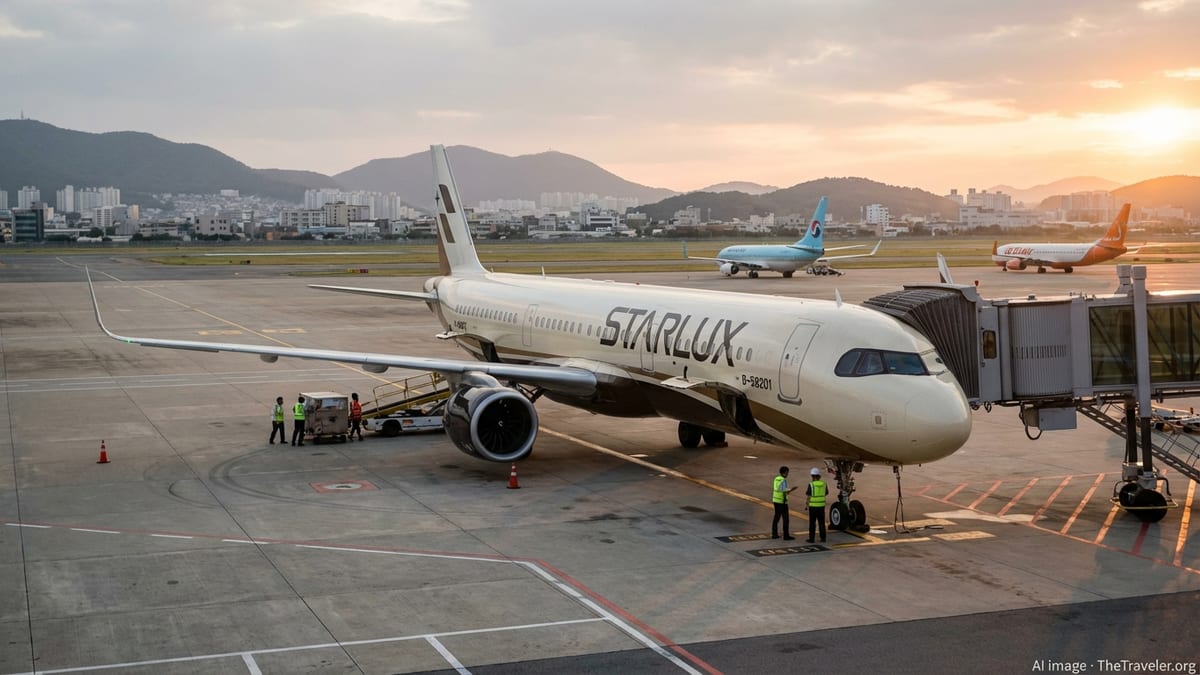
Starlux will deploy its Airbus A321neo aircraft on the new Busan routes, ensuring a consistent onboard product between Taipei, Taichung, and the Korean port city. The single-aisle jets are already a backbone of the airline’s regional network, operating to cities across Japan, Southeast Asia, and other short to medium haul destinations from its Taipei base and secondary hubs.
The A321neo cabin features the airline’s signature attention to detail, including modern in-flight entertainment, mood lighting, and a premium feel that has helped Starlux carve out a niche as a boutique full-service carrier. This approach allows the airline to maintain a clear brand identity whether passengers are flying a short regional hop or a long transpacific leg.
By standardizing equipment on the Busan services, Starlux also gains operational flexibility to adjust capacity and frequencies across its regional network as demand shifts. For passengers, the use of familiar cabin layouts and service routines reduces friction and reinforces the sense that Busan is simply another node in a cohesive, well-planned route map.
Strengthening a Rapidly Expanding Global Network
The Taiwan to Busan launch is only the latest chapter in a period of rapid growth for Starlux. Since commencing operations in 2020, the airline has built a network that now spans 31 cities and 37 routes across Asia and North America, with new long haul and regional destinations being added at a steady pace.
In North America, Starlux serves Los Angeles, San Francisco, Seattle, Ontario in Southern California, and Phoenix, where it has created a new nonstop bridge between Arizona and Taipei. In Europe, the carrier is preparing to launch its first route to Prague on August 1, 2026, extending its reach into a market that remains relatively underserved by direct flights from Taiwan.
Within Asia, the airline already operates an extensive network covering Vietnam, the Philippines, Indonesia, Malaysia, Singapore, Thailand, Japan, Hong Kong, and Macau from its Taipei hub, while expanding Taichung’s role with new services to destinations such as Tokyo. The Busan routes sit neatly within this matrix, opening new options for multi-leg itineraries and providing another regional link that can connect into long haul flights.
New Convenience and Choice for Taiwanese Travelers
For Taiwanese passengers, the practical impact of the Busan launch will be felt most immediately in terms of convenience and choice. The ability to depart directly from Taichung eliminates the need for many central Taiwan travelers to make a separate domestic journey to Taipei, a shift that can trim hours off door-to-door travel times and reduce overall trip complexity.
Travelers departing from Taipei, meanwhile, gain a new daily option that plugs smoothly into Starlux’s broader schedule at Taoyuan. With outbound flights offered at different times of day during the week, passengers can align their departures and arrivals with hotel check in times, ground transport schedules, or onward domestic flights within South Korea.
For those connecting from North America or Southeast Asia into Busan via Taipei, the addition of the Korean city to Starlux’s network offers a new one stop itinerary under a single airline brand. That can be particularly appealing to passengers drawn by the carrier’s premium cabin products or loyalty offerings, who now have another destination in Northeast Asia to consider without changing airlines en route.
Busan’s Rising Profile as a Regional Gateway
The selection of Busan, rather than Seoul, as Starlux’s first South Korean destination also speaks to the city’s growing heft as a regional gateway. As South Korea’s second largest city, Busan combines a major container port and industrial base with a strong tourism appeal built around its beaches, coastal mountains, and vibrant neighborhoods such as Haeundae and Nampo.
In recent years, Busan has invested heavily in its tourism infrastructure, including upgraded waterfront areas, convention facilities, and cultural venues that have helped diversify its visitor base. Direct flights from Taiwan are expected to support not only leisure travel, but also meetings and incentive groups, cruise passengers, and business travelers tied to manufacturing, logistics, and the broader maritime economy.
By anchoring its South Korean debut in Busan, Starlux is effectively betting on this dual identity. The new routes can cater simultaneously to Taiwanese holidaymakers in search of coastal escapes and to corporate travelers seeking a direct link to one of Northeast Asia’s most dynamic port cities, all while feeding traffic into the airline’s growing long haul network.