

More news on this day
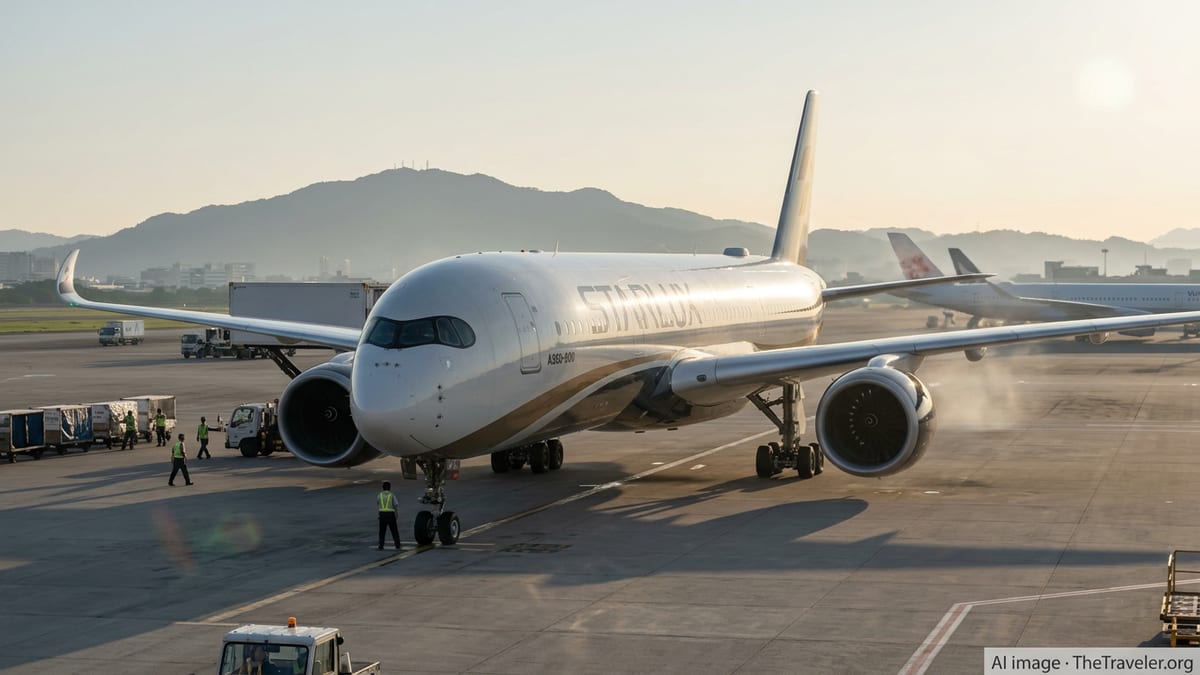
Premium Taiwanese carrier STARLUX Airlines is set to enter Central Europe in 2026, confirming plans to launch nonstop flights between Taipei and Prague and creating a new bridge between Asia and the Czech capital’s fast-rising hub.
A New Gateway Linking Taipei and Central Europe
According to recent schedule filings, STARLUX plans to inaugurate its Taipei–Prague service at the start of August 2026, adding the Czech capital to a growing long-haul network that already spans North America and key points across Asia. The new link will provide one of the most direct connections yet between Taiwan and Central Europe, bypassing traditional transfer points in East Asia or the Gulf.
The route is expected to operate from Taipei Taoyuan, the airline’s main hub, to Prague’s Vaclav Havel Airport, with timings designed to connect smoothly into STARLUX’s regional network. While final schedules and frequencies are still subject to regulatory approvals and potential adjustment, industry timetable data indicates a launch programmed for early August, positioning the service for the peak of the European summer travel season.
Prague has been steadily expanding its Asian footprint in recent years, and the STARLUX entry follows the success of other East Asia links into the Czech market. For Taiwan, the flight will complement existing Taipei–Prague services and further embed the island into Europe’s aviation map, offering travelers additional capacity and a differentiated onboard product.
The move underscores the airline’s broader strategy of building Taipei into a premium transfer hub, connecting business and leisure travelers from North America and Northeast Asia onward to emerging destinations in Europe and Southeast Asia.
Strategic Push Into a Competitive European Market
For STARLUX, Prague represents a calculated step into a European market that has rapidly diversified beyond its traditional gateways of London, Paris, and Frankfurt. Central and Eastern Europe have become appealing targets for Asian carriers seeking both lower operating costs and untapped demand, and Prague’s geographic position makes it a natural entry point for traffic flowing between Western Europe, the Balkans, and Asia.
Analysts note that the route will pit STARLUX not only against one-stop itineraries offered by Gulf and European legacy carriers, but also against Taiwan’s own flag competitors that already operate long-haul services into Europe. However, STARLUX has built its brand identity around high-touch service, refined cabin design, and a boutique feel, banking on travelers’ willingness to choose comfort and convenience over purely price-driven options.
The timing also reflects optimism about continued recovery and growth in long-haul demand. By 2026, both Asian and European markets are expected to have fully normalized, opening space for niche premium carriers to carve out profitable corridors where demand for business, technology, and high-value leisure travel overlaps.
Prague’s appeal as a tourism magnet and business destination bolsters the route’s prospects. The Czech Republic’s vibrant manufacturing and tech sectors, alongside its established tourism draw, provide a blend of corporate and leisure traffic that can help sustain year-round operations rather than relying solely on seasonal peaks.
What Travelers Can Expect on the Taipei–Prague Route
Though final aircraft assignments have yet to be formally detailed, the new Prague flights are widely expected to utilize STARLUX’s Airbus A350-900 long-haul fleet, which underpins many of its intercontinental services. The type is configured with a spacious business-class cabin, premium economy, and a modern economy section, positioning the airline to cater to a broad mix of passengers.
In keeping with its existing long-haul offering, travelers on the Taipei–Prague sector can anticipate fully flat seats in business class, upgraded in-flight entertainment, and a curated dining program that blends Taiwanese flavors with Western cuisine. The airline has consistently emphasized a boutique hospitality approach, differentiating itself with attention to detail, from amenity kits to cabin lighting and service rituals.
The projected schedule windows, aligned with late-night departures from Taipei and morning arrivals into Prague, will be particularly attractive to connecting traffic. Passengers originating in Japan, Southeast Asia, or North America should find convenient same-day transfers in Taipei, while European travelers heading onward to Asia will have access to a single-stop itinerary into a range of secondary cities that remain underserved by European carriers.
For Czech and Central European passengers, the route opens a direct link not only to Taiwan but also to STARLUX’s wider network, including key leisure destinations such as Thailand and Vietnam, as well as growing markets in the Philippines and Japan.
Economic and Tourism Impact for Taiwan and the Czech Republic
The new service is poised to deliver benefits well beyond the cabin. Direct connectivity between Taipei and Prague is likely to stimulate bilateral tourism, making it easier for Czech travelers to explore Taiwan’s cultural attractions and natural landscapes while encouraging more Taiwanese visitors to consider Prague and the wider region for leisure and study.
Industry observers point out that improved air links frequently precede stronger trade and investment flows. With both economies active in advanced manufacturing, technology, and automotive supply chains, the route creates an air bridge that can support corporate travel, project work, and the movement of specialized talent between Taiwan and Central Europe.
Prague Airport has publicly focused on expanding its long-haul portfolio, particularly to Asia, in order to diversify passenger flows and strengthen its status as a regional hub. For the airport, a premium entrant like STARLUX enhances the mix of carriers on offer, potentially drawing higher-spend transit traffic and encouraging further route development by other airlines.
For Taiwan, securing another nonstop link into the European Union strengthens its connectivity and visibility in a strategically important region, supporting both tourism branding and broader economic diplomacy efforts.
Positioning Taipei as a Premium Asia–Europe Transfer Hub
The Prague launch reinforces STARLUX’s ambition to position Taipei as a premium alternative to larger, more congested hubs for Asia–Europe transfers. With a growing roster of routes to North America, Northeast Asia, and Southeast Asia, the addition of Central Europe helps to round out a network designed for smooth east–west connections.
Travelers who have used Taipei for transfers frequently highlight the airport’s compact layout, efficient immigration processes, and increasingly polished lounge offerings, including STARLUX’s own flagship facilities. The Prague service will plug directly into this ecosystem, giving connecting passengers a relatively seamless experience compared with sprawling mega-hubs.
As airlines worldwide experiment with new long-haul routes and adjust capacity, the success of STARLUX’s Taipei–Prague flights will be closely watched by both competitors and airport planners. Strong performance could prompt additional frequencies or even new destinations in Europe, further tightening the links between Asia and Central Europe and cementing Taipei’s place on the global aviation map.