

More news on this day
American travelers are heading into 2026 with a sharpened warning map, as the U.S. Department of State expands its highest-level advisories for destinations where war, state collapse and extreme violence have made trips especially dangerous.
Get the latest news straight to your inbox!
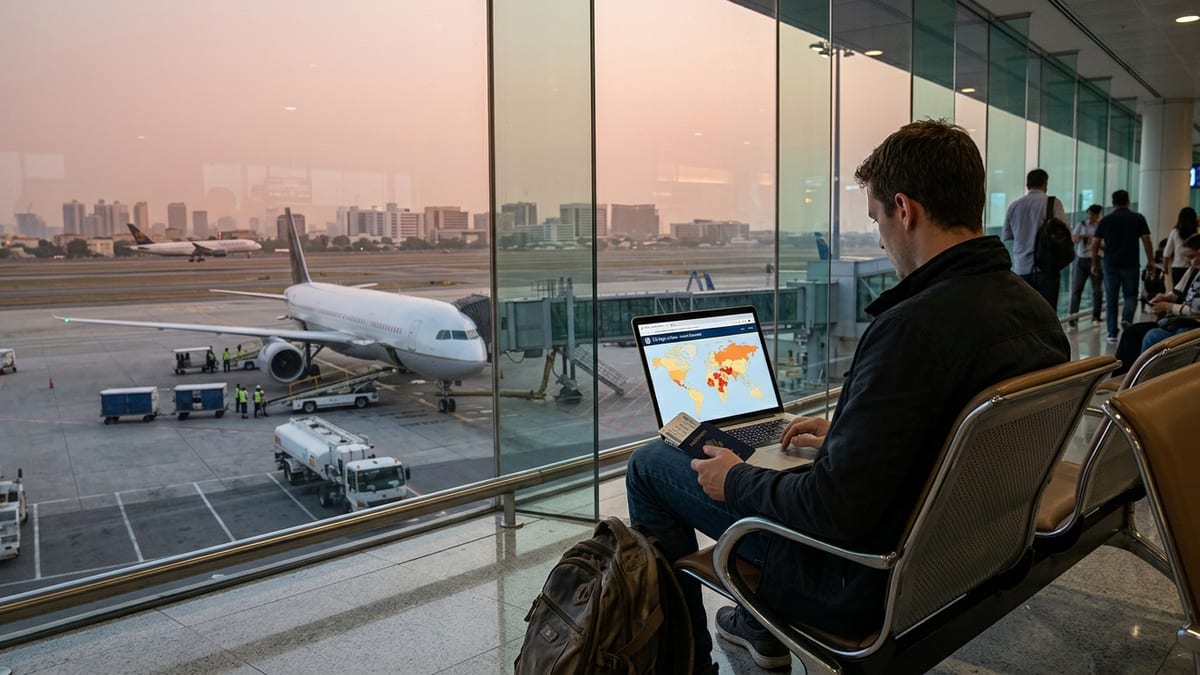
How the State Department Ranks Travel Risk
The State Department’s four-tier advisory system has become a central reference point for U.S. citizens planning international trips. At the top of the scale, Level 4 carries a blunt message: Do Not Travel. Publicly available guidance explains that these alerts are reserved for countries where the risk of death, kidnapping, arbitrary detention or other serious harm is widespread and where U.S. government capacity to help in a crisis is severely constrained.
Factors feeding into the ratings include armed conflict, terrorism, violent crime, civil unrest, health emergencies and natural disasters. Analysts note that the system is dynamic, with advisories updated when conditions deteriorate or improve, or when the U.S. government’s posture changes on the ground. In practice, that has meant more frequent revisions for parts of the Middle East, the Sahel and other volatile regions.
A worldwide caution updated in late February underscored how the advisory structure now sits atop a broader concern about global security. The message urged Americans to pay close attention to both overall country ratings and more granular security alerts that can apply to specific regions or cities within otherwise lower-risk nations.
For travelers, the labels are not legal bans but powerful signals. Airlines may still sell tickets, and tour operators may still offer itineraries, yet insurance policies, corporate travel departments and universities increasingly treat Level 4 destinations as off-limits except in extraordinary circumstances.
Level 4 “Do Not Travel” Countries Grow in 2026
As of early 2026, public tallies indicate that more than twenty countries and territories carry a Level 4 warning, a number that has crept upward over the past two years. Coverage of the latest updates points to a pronounced concentration in parts of Africa and the wider Middle East, where overlapping conflicts and institutional breakdowns have sharply raised the baseline risk for visitors.
In Africa, recent reporting highlights Burkina Faso, the Central African Republic, Libya, Mali, Niger, Somalia, South Sudan and Sudan as examples of nations now under the highest alert. The designations reflect an environment marked by active insurgencies, shifting front lines, rampant banditry and frequent attacks on civilians, including along major roads and near key infrastructure such as airports.
Elsewhere, countries such as Afghanistan, Syria and Yemen remain synonymous with extreme travel risk, with long-running wars, foreign military operations and chronic humanitarian crises limiting safe movement even for aid organizations. Observers note that in these locations, the State Department stresses not only the danger of being caught in crossfire but also the possibility of wrongful detention and the near-complete absence of consular support outside limited urban enclaves.
Security analysts say the expansion of Level 4 advisories in 2026 reflects both worsening conditions in some states and a more conservative stance by Washington after a series of high-profile incidents involving U.S. citizens abroad. The result is a global risk map that, for American travelers, now features more “red zones” than at any point in recent memory.
Middle East Tensions Push More Destinations Into the Spotlight
Recent escalation involving Iran has pushed the Middle East back to the forefront of State Department messaging. Published coverage in early March described widespread disruption to air travel following U.S. and Israeli strikes, with flights rerouted around conflict zones and connections through Gulf hubs subject to sudden changes.
Against that backdrop, a fresh worldwide caution urges Americans to maintain a high level of vigilance wherever they travel, while country-specific advisories for places such as Lebanon remain at Level 4. An updated warning for Lebanon in late February highlighted the risk of rocket fire, street clashes and targeted attacks, alongside the reality that U.S. personnel movements outside embassy compounds are tightly restricted.
Other regional states sit at Level 3, meaning Reconsider Travel, or face localized warnings that effectively put certain border regions or provinces off-limits. Analysts point out that these overlapping messages can be confusing for casual travelers, who may see promotional tourism campaigns at the same time as security bulletins referencing drone strikes, proxy militias and heightened anti-American sentiment.
Industry observers note that tour operators and airlines are increasingly relying on specialist risk consultants to make routing and scheduling decisions. For individual travelers, however, the practical advice remains basic: monitor advisories frequently in the weeks and days before departure, have contingency plans for rapid exit and avoid itineraries that depend on a single transit hub in a region under stress.
What “Most Dangerous” Means for Ordinary Travelers
While the State Department does not publish a formal ranking of the most dangerous countries, travel-risk firms and media outlets routinely compile lists based on the number and severity of Level 4 advisories. These assessments typically place war-torn states like Syria, Yemen and parts of the Sahel at the top, followed by countries where heavily armed criminal groups have filled a power vacuum left by weakened governments.
For ordinary travelers, the practical implications are stark. In a Level 4 environment, hospitals may be overwhelmed or nonfunctional, roads can be unsafe even during daylight, and communications infrastructure is often unreliable. In some cases, kidnappings for ransom or politically motivated abductions have targeted foreigners specifically, including Western visitors perceived as having access to outside support.
Public guidance from consular agencies emphasizes that in such places, the U.S. government may have almost no ability to conduct evacuations or provide in-person assistance, especially if embassies are operating with skeleton staff or have temporarily closed. Past crises have shown that commercial flights can disappear with little notice, leaving travelers reliant on chartered options or complex overland routes.
Experts caution that even adventurous or experienced travelers should think carefully before entering Level 4 countries for tourism, volunteer projects or budget overland trips. They point out that security conditions can deteriorate much faster than social media or guidebooks acknowledge, and that rescue operations, if they occur at all, can be slow and limited.
How Americans Can Navigate a More Hazardous World Map
As advisories tighten, travel specialists suggest that Americans adopt more rigorous planning habits before heading overseas. That starts with checking the State Department’s advisory for every country on an itinerary, including transit points that might only be used for a short layover. In recent months, shifts in visa rules, airline schedules and local curfews have turned previously simple connections into logistical headaches.
Travel-risk consultants recommend building flexibility into routes, such as booking refundable tickets where possible, leaving buffer days for rebookings and avoiding nonessential side trips into unstable border regions. They also suggest cross-referencing official advisories with reports from independent security analysts and reputable international organizations to gain a fuller picture of local dynamics.
On-the-ground preparedness matters as well. Common suggestions include registering travel plans with available enrollment programs, sharing detailed itineraries with family or employers, and budgeting for emergency accommodation or last-minute flights. For destinations with any elevated risk level, travelers are urged to verify that their insurance policy does not exclude coverage in countries under Level 3 or Level 4 advisories, a clause that has surprised some policyholders during recent crises.
Despite the growing roster of high-risk countries, large parts of the world remain at Level 1 or Level 2, where the main recommendation is to exercise normal precautions or increased caution. For American travelers, the challenge in 2026 is less about abandoning international trips entirely and more about adjusting expectations, doing deeper homework and recognizing that the line between routine vacation and high-stakes journey now depends heavily on the choices made well before boarding a flight.