

More news on this day
The U.S. State Department has recently renewed attention on the most dangerous destinations for American travelers, expanding and revising its highest-level “Do Not Travel” advisories as conflicts, crime and political crises intensify across multiple regions.
Get the latest news straight to your inbox!
Level 4: What “Do Not Travel” Really Means
The State Department’s four-tier advisory system is designed to give U.S. citizens an at-a-glance sense of risk, with Level 4 representing the most severe conditions. Publicly available guidance explains that a Level 4 advisory is reserved for destinations where the threat to personal safety is considered extreme, from armed conflict and terrorism to kidnapping, widespread violent crime, civil unrest or major disruptions to critical infrastructure.
At this highest tier, travelers are urged to avoid visiting “under any circumstance,” and the advisories underscore that U.S. government assistance on the ground may be minimal or unavailable. In several countries on the Level 4 list, embassies have reduced operations or closed entirely, leaving Americans with few options if they run into trouble.
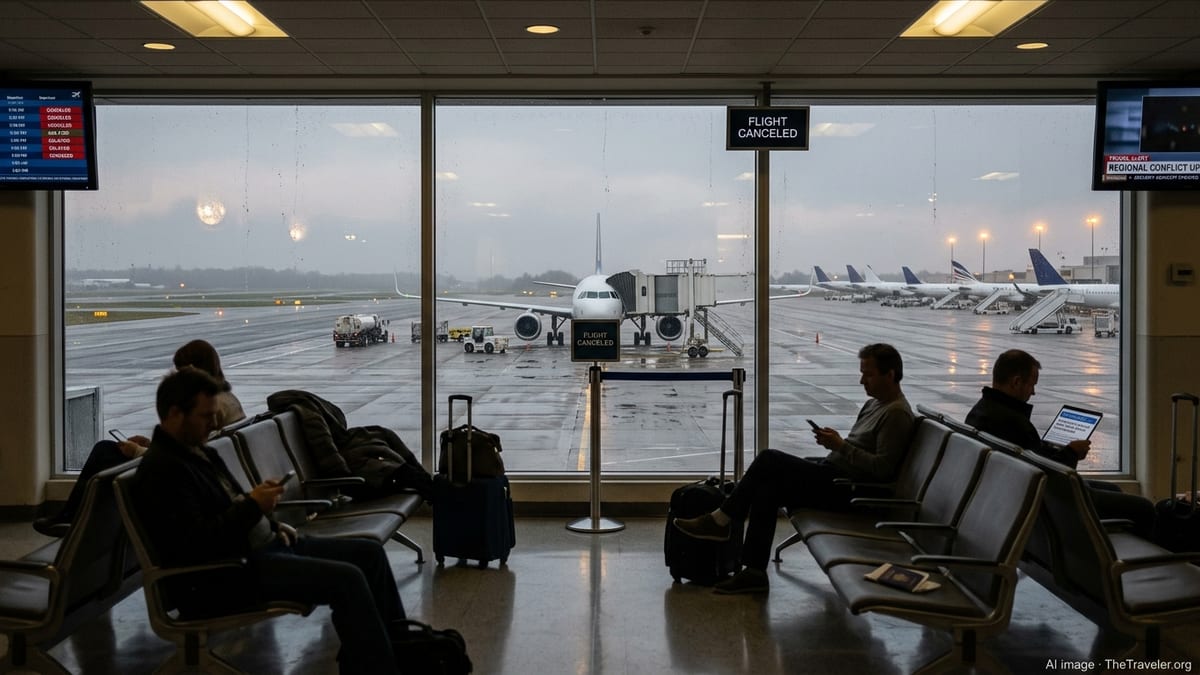
Recent State Department materials and media coverage emphasize that these warnings are not theoretical. In conflict zones and states experiencing institutional collapse, commercial flights can be limited or suspended without notice, border crossings may close and hospitals and emergency services may be overwhelmed, dramatically complicating any attempt to leave in a crisis.
The advisory system also interacts with broader U.S. policy. In some Level 4 destinations, separate presidential proclamations, sanctions or airspace restrictions further curtail travel and transport links, leaving many of the world’s highest-risk locations effectively cut off from routine American tourism.
Twenty-Two Countries and Regions at Highest Risk
As of early 2026, multiple analyses of State Department data indicate that 22 countries and territories are currently designated Level 4: Do Not Travel. While the exact list can shift as conditions evolve, the roster is heavily concentrated in areas affected by active wars, entrenched insurgencies or systemic state fragility.
Afghanistan remains one of the most prominent examples. The collapse of the previous government, the Taliban takeover and continuing militant activity have left the United States without a functioning embassy in the country, and public information stresses that the U.S. government has almost no ability to assist citizens there. Similar concerns shape the Level 4 designation for countries such as Yemen, where ongoing conflict, foreign military involvement and a major humanitarian emergency create overlapping risks.
In parts of the Sahel and wider sub-Saharan Africa, Level 4 advisories focus on a mix of terrorism, banditry, kidnapping-for-ransom and recurring coups. Mali, Burkina Faso and parts of neighboring states have experienced repeated attacks on civilians and security forces. Elsewhere, including Haiti, Venezuela and several other politically unstable states, the cautions center on spiraling criminal violence, gang control of key neighborhoods and shortages of basic services that leave both residents and visitors extremely vulnerable.
In some cases, the warnings apply to specific regions within a country rather than the entire state. Certain border areas, separatist regions and provinces held by non-state armed groups may be treated as effectively off-limits, even when other parts of the same country carry lower advisory levels. That patchwork view reflects an attempt to capture stark differences in security conditions within national borders.
Middle East Flashpoints Push Risk Higher
The Middle East remains a central focus of U.S. travel advisories in 2026. Coverage across major outlets has documented a sharp escalation in regional tensions, culminating in a broader conflict with Iran that has triggered airport closures, flight disruptions and large-scale evacuations of foreign nationals. Public-facing guidance urges Americans in several countries to depart as soon as safe options are available.
Iran itself is listed at Level 4, with overlapping political, security and legal risks. Travelers face a combination of potential military escalation, domestic unrest, restrictions on communications and the possibility of wrongful detention. Neighboring conflict theaters, including parts of Iraq, Syria and areas close to active front lines, are subject to similarly severe assessments, reflecting the danger posed by militias, extremist groups, airstrikes and unexploded ordnance.
The Gaza Strip and certain zones in the West Bank have long appeared among the highest-risk areas, and the current regional conflict has only reinforced those warnings. Reports indicate that crossing points may open and close unpredictably, local authorities are under strain and medical facilities are dealing with large numbers of casualties, all of which make it difficult for outsiders to move safely or secure assistance.
Beyond direct war zones, several Gulf and North African states carry elevated advisories for specific regions, often near borders or in remote desert areas where government control is thin. Even where major cities remain open to business travel, Americans are urged to review up-to-date alerts closely, consider exit options in advance and register their itineraries before departure.
Crime, Kidnapping and Political Breakdown
Not all Level 4 designations are driven primarily by conventional warfare. In the Western Hemisphere and parts of Africa, rampant criminality and political breakdown have pushed several states into the highest-risk category. In Haiti, heavily armed gangs control significant portions of the capital and key transport routes, disrupting port operations, closing schools and effectively replacing government authority in some districts.
Public reporting from international organizations and local media describes frequent kidnappings, roadblocks and turf wars that can trap residents in their neighborhoods and make basic movements hazardous. The State Department’s advisory highlights the high probability that foreign visitors could be targeted for ransom or caught in crossfire, with limited capacity for law enforcement or consular officials to intervene.
In Venezuela, overlapping crises of governance, economic collapse and violent crime have kept the country near the top of American risk rankings for years. Murders, carjackings, armed robberies and politically motivated detentions have all contributed to the Level 4 label. While some airlines have signaled interest in restoring direct flights following recent political developments, formal guidance continues to advise U.S. travelers to stay away.
Elsewhere, entrenched insurgencies and bandit networks blur the line between conflict and criminality. In parts of the Sahel, the Lake Chad basin and Central Africa, attacks on villages, ambushes on highways and assaults on mining or energy facilities highlight the vulnerability of anyone moving by road. These dynamics feed directly into the Level 4 advisories, which warn that basic overland travel can pose life-threatening risks.
What American Travelers Should Do Now
For American travelers, the expanding map of Level 4 destinations has both practical and financial implications. Travel insurers often exclude coverage for trips to countries with top-tier warnings, leaving policyholders to shoulder the full cost of evacuations or medical care if they decide to go anyway. Airlines may cancel routes with little notice, and rerouting around closed airspace can substantially lengthen journeys and raise ticket prices.
Experts who analyze risk trends stress that the State Department’s system is intended as a starting point rather than a substitute for individual planning. Travelers are urged to review country-specific advisories, look closely at the dates of the most recent updates and pay attention to distinctions between nationwide alerts and region-specific cautions. In fast-moving crises, advisories can change quickly as new information becomes available.
Prospective travelers are also encouraged to reassess the purpose of any trip that involves a Level 4 country or region. Humanitarian work, family emergencies or specialized professional assignments may still require presence in high-risk areas, but tourism and discretionary travel are widely discouraged. For those who must go, detailed contingency planning, security briefings and evacuation options are increasingly viewed as essential.
Finally, the latest wave of warnings serves as a reminder that risk is not confined to headline-grabbing war zones. Crime, political repression, health emergencies and fragile infrastructure can all push a destination into the most dangerous category. For Americans planning international trips in 2026, closely tracking evolving State Department advisories has become a core part of responsible travel preparation.