

More news on this day
The U.S. State Department has issued a renewed Worldwide Caution for American citizens, warning that rapidly escalating geopolitical tensions, attacks on diplomatic facilities and sudden airspace closures are creating an increasingly volatile environment for international travel and the global movement of people and goods.
Get the latest news straight to your inbox!
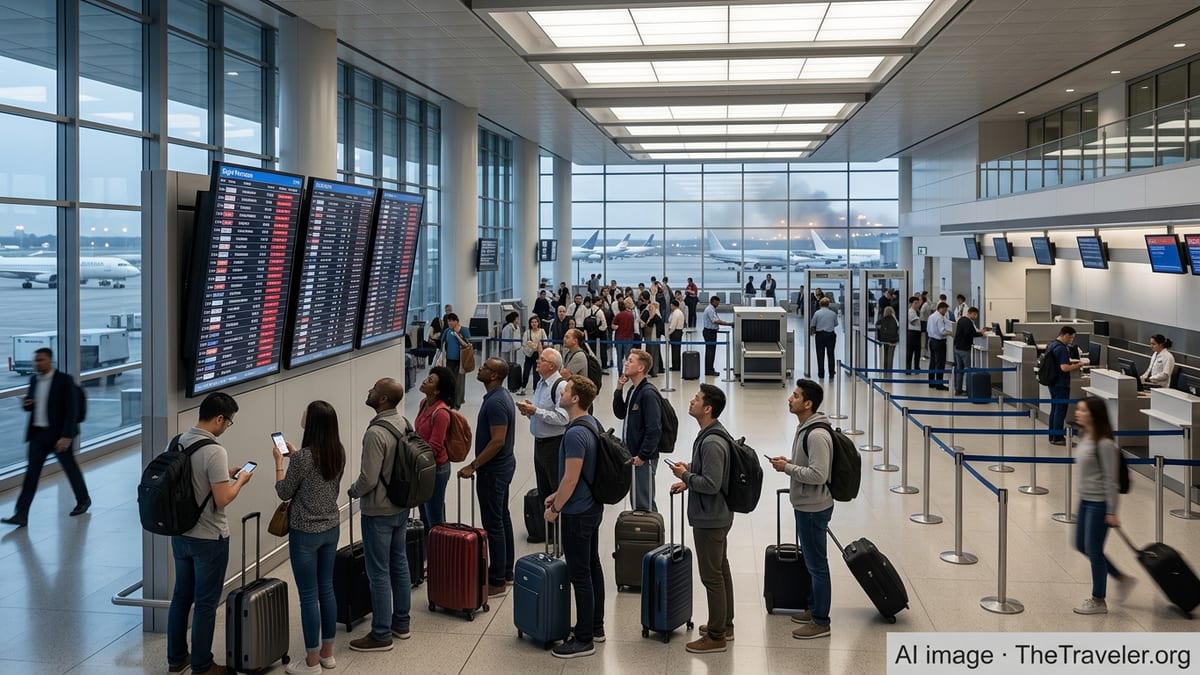
Worldwide Caution Highlights Heightened Global Risk Climate
The latest Worldwide Caution, issued at the end of February 2026, urges U.S. citizens abroad to exercise increased vigilance and be prepared for fast-changing security conditions in multiple regions. Publicly available information indicates that the message was disseminated globally through U.S. embassies and consulates, reflecting concern about the risk of terrorism, civil unrest, and reprisal attacks tied to the expanding conflict involving Iran and regional powers.
The advisory underscores that U.S. citizens and facilities may be viewed as symbolic targets in times of crisis, particularly where anti-American sentiment is already elevated. Recent years have seen a steady rise in security incidents around U.S. diplomatic posts, including violent protests, armed confrontations and attempted attacks that have prompted temporary closures or reduced operations in parts of the Middle East, Africa and the Americas.
According to published coverage, the Worldwide Caution stresses that conditions can shift with little or no warning, and that commercial options for leaving a country may narrow quickly if airspace closes or local authorities impose internal movement restrictions. American travelers are being encouraged to ensure that passports, visas and funds are in order and to maintain flexible plans in case rapid departures become necessary.
Targeted Threats to U.S. Diplomatic Facilities Drive Security Crackdowns
Concerns over targeted attacks on diplomatic facilities have intensified after a series of high-profile incidents across several regions. Reporting on clashes around U.S. and allied diplomatic compounds in conflict-affected countries, together with previous attacks on embassy complexes, has drawn renewed attention to the vulnerability of these sites when local security conditions deteriorate.
In parts of the Middle East, Iraq and the wider Gulf region, recent protests and militia activity around fortified diplomatic districts have prompted enhanced perimeter security and movement restrictions for official personnel. Available reporting shows that security advisories in Baghdad and Erbil in early March urged American citizens to shelter in place and avoid government and diplomatic areas due to the risk of indirect fire, demonstrations and roadblocks interfering with evacuation routes.
Similar patterns have emerged in the Americas and Africa, where embassy and consulate compounds have occasionally become focal points for public anger connected to local political crises or foreign policy grievances. In some cases, U.S. missions have temporarily reduced or suspended public services and limited in-person consular access while encouraging citizens to rely on remote communication channels for emergency assistance.
Airspace Closures and Route Disruptions Reshape Global Flight Networks
The Worldwide Caution comes amid severe disruption to international aviation in several hotspots. Following cross-border strikes and drone activity around the Gulf, multiple regional airspace segments have been partially or fully closed since late February 2026, complicating transit through key hubs. Industry and risk-advisory bulletins describe cascading effects on long-haul routes, fuel logistics and crew positioning as airlines re-route flights around conflict zones.
In Qatar, publicly available aviation notices and media coverage indicate that air navigation was curtailed after security incidents involving energy and infrastructure sites, with limited reopening under emergency conditions for evacuations and cargo. Standard commercial services remain constrained, affecting passenger itineraries far beyond the region as carriers adjust networks and schedules on short notice.
Travelers have also faced rolling disruption in parts of Mexico and other countries where internal security operations and civil unrest have led to temporary roadblocks and ad hoc airport access restrictions. While formal airport closures have been rare, reports show that sporadic cancellations and diversions have stranded travelers and complicated efforts to leave affected areas, even when airspace technically remains open.
Regional Flashpoints Intensify Risk for American Travelers
The most acute risks currently highlighted for U.S. citizens relate to areas directly or indirectly affected by the widening Iran-related conflict and entrenched criminal or political violence. In Iraq, security alerts in early March advised non-emergency U.S. government personnel to depart and warned private citizens of riots, militia activity and protests directed at U.S. interests in Baghdad and other cities. Demonstrations near the Green Zone and on key bridges have periodically obstructed access to the diplomatic quarter and the main international airport.
In Venezuela, a separate advisory issued in January 2026 called for U.S. citizens to depart immediately and urged others not to travel there, citing a combination of wrongful detention risk, criminal violence and reports of armed groups stopping vehicles to identify possible U.S. nationals. Publicly accessible information notes that the U.S. government has extremely limited ability to assist citizens in that country due to the absence of an on-the-ground diplomatic presence.
In Mexico, a wave of security operations and cartel-linked violence in February led U.S. missions to direct staff in several states to shelter in place, with roadblocks contributing to widespread flight cancellations at certain airports. Although restrictions have since eased and flight schedules normalized, the episode illustrated how quickly a localized security sweep can disrupt both domestic and international travel plans for American tourists and residents.
Guidance for U.S. Citizens Navigating an Unstable Travel Landscape
Public information from consular and risk-advisory channels emphasizes that government alerts are not blanket bans on travel, but tools to help citizens make informed decisions about risk. Analysts note that advisory updates can influence airline capacity, insurance coverage and tour operator decisions, especially for destinations already under economic or political strain. Travelers are being urged to assess their personal risk tolerance in light of these signals and to prepare for the possibility of sudden changes in safety conditions.
The Worldwide Caution reiterates longstanding recommendations that U.S. citizens register their itineraries with official alert systems where available, monitor local news and accepted international outlets closely, and maintain regular contact with family or trusted contacts at home. Travelers are also encouraged to identify multiple exit routes from a country, maintain access to critical documents in both physical and digital form, and carry contingency funds in case rebookings or emergency accommodation are required.
While many regions remain open and accessible to visitors, the confluence of heightened geopolitical tensions, targeted threats to diplomatic facilities and fragmented airspace has created a more fragile global travel ecosystem. For American citizens, the latest State Department warning signals a period in which flexibility, preparedness and careful destination research are becoming as essential as tickets and passports.