

I have gone back and forth between Stellenbosch and Franschhoek over several trips to the Cape Winelands, and I still get questions from friends asking which town is better. The honest answer is that they offer very different experiences.
Stellenbosch feels like a real, lived-in university town wrapped in vineyards, while Franschhoek feels like a curated gourmet village built for slow weekends and special occasions. I have had unforgettable meals and tastings in both, but I have also dealt with crowds, booking hassles, transport frustrations and a few safety concerns that are worth talking about before you choose.
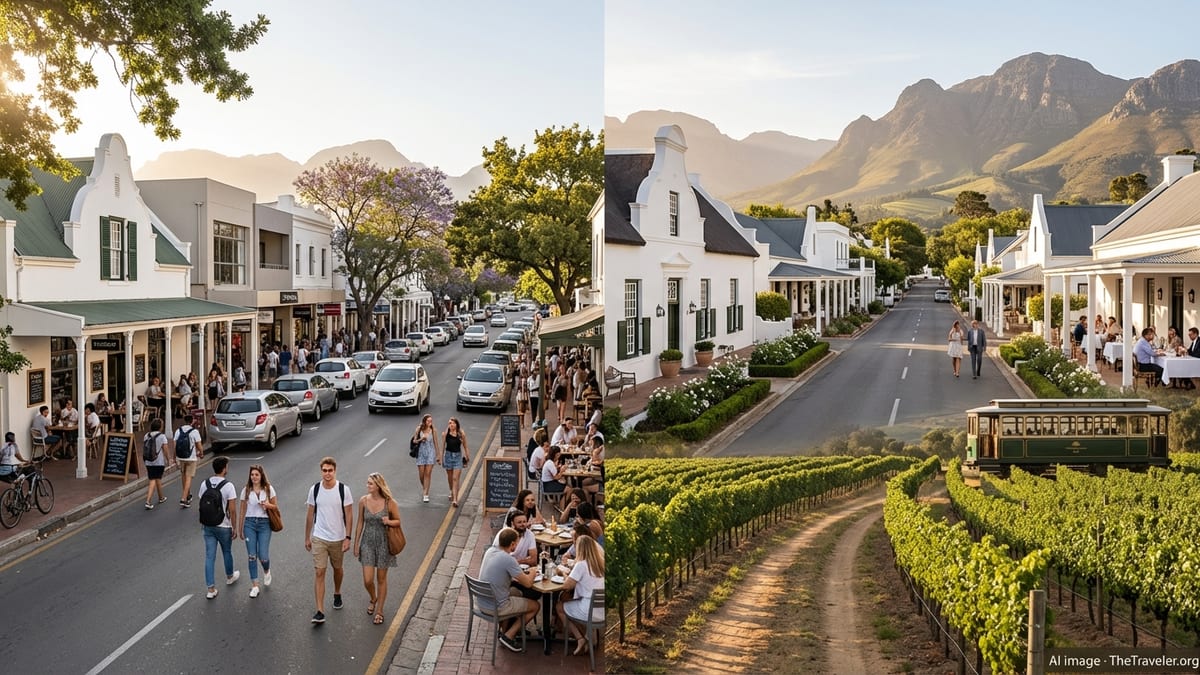
Overall Vibe: Lively University Town vs Polished Gourmet Village
The first thing that hit me when I arrived in Stellenbosch was how big and busy it felt. This is not a sleepy countryside escape. It is one of South Africa’s oldest towns, with a major university at its core, a business park on the edge and students everywhere. Cafes and bars buzz late into the evening on term days, traffic can clog the main roads, and parking takes some patience. I enjoyed the energy, but it did not match the quiet vineyard fantasy I had in my head before my first visit.
Franschhoek, about an hour from Cape Town in the same general direction, is the opposite. The town is smaller and more contained, wrapped tightly by dramatic mountain ranges. Everything orbits around Huguenot Road, where you find boutique hotels, galleries, and more restaurants than seems reasonable for such a small place. On my first afternoon there, I walked from end to end in under twenty minutes and immediately felt like I was in a purpose-built gourmet bubble. It is charming and very photogenic, but also clearly geared toward visitors with money to spend.
When I wanted nightlife and variety, Stellenbosch won easily. There are student bars, craft beer spots, wine bars and late opening cafes. I did not feel out of place having a casual burger and a glass of house wine in my jeans. In Franschhoek, evenings felt calmer and more structured around dinner reservations. By 9:30 pm, the main street was usually quiet, and one night I ended up nursing a glass of wine in my guesthouse lounge because there was nowhere casual still open nearby.
If you are picturing a countryside retreat and dislike crowds, Franschhoek is closer to that ideal. If you like the idea of a small city with layers beyond wine tourism, Stellenbosch fits better. I underestimated how different the atmosphere would feel, and on later trips I planned my stays specifically around what mood I was in.
Location, Transport and Getting Around Without Stress
Both towns sit in the Cape Winelands east of Cape Town, roughly an hour to an hour and a half’s drive depending on traffic and where in the city you are staying. In practical terms though, they feel differently connected. I found getting in and out of Stellenbosch marginally quicker, especially from the airport and southern suburbs of Cape Town. It is also a bigger hub for rideshare drivers, so hailing an Uber in the evening was usually straightforward around the town center.
Franschhoek feels more tucked away. The approach road after leaving the main highway becomes narrower and more rural, and after dark I noticed fewer cars and far fewer streetlights. I was happy to have a sober driver the first night because I would not have wanted to drive that road distracted after a full day of wine tastings. Within the town itself, I could walk almost everywhere, and for a car-free trip that compactness was a relief.
One major decision point for me was how to handle wine tastings without driving. In Franschhoek, the Wine Tram solves most of that problem. There are multiple lines visiting different clusters of estates, with first departures around mid-morning and last pickups late afternoon or early evening. I pre-booked my ticket and built my day around the timetable. It worked, but it also meant setting an alarm on what was supposed to be a lazy holiday morning and cutting a tasting short to avoid missing the next departure. Lines have changed over the years, and when I went, one of the popular routes was temporarily closed due to roadworks, so I had to switch to a different line and could not visit one estate I had my heart set on.
In Stellenbosch there is no equivalent to the Wine Tram. I relied on a mix of pre-booked transfers, rideshare and occasionally my own rental car. That gave me more flexibility in choosing wineries, but less freedom to relax into tastings. On one day I tried to squeeze in four estates using Uber and ended up wasting nearly an hour waiting for a driver on a quiet midweek afternoon. On another day, I booked a full-day private driver through my guesthouse. That worked beautifully, but it pushed the cost of the day far higher than I expected when I first started planning the trip.
Cost, Value and Where the Money Really Goes
People often say Franschhoek is more expensive, and in my experience that has held true in a few key areas. Accommodation in Franschhoek, particularly within walking distance of the main street, jumps quickly in price. Even simple guesthouses were quoting rates that matched boutique hotels in Stellenbosch. I did eventually find a decent-value self-catering cottage a short drive out of town, but that meant I lost the ability to walk to dinner or pop into town for a coffee without getting back in the car.
Stellenbosch, by contrast, had a broader range. Student demand keeps a steady supply of more affordable apartments and guesthouses, and I was able to get a central, clean place with on-site parking for significantly less than my Franschhoek stay. That said, some of the most atmospheric Cape Dutch estates with on-site vineyards and mountain views are not cheap in Stellenbosch either. If you want that full picture-postcard stay, the price gap narrows.
When it came to food and wine, I noticed more of a psychological difference than an absolute one. Franschhoek leans into fine dining and tasting menus. I had a spectacular multi-course meal there that justified its price, but I also walked past menus that felt inflated simply because the town is branded as a culinary capital. In Stellenbosch there is serious food as well, but I had more mid-range options that still felt local, like busy student-friendly bistros and casual wine bars with small plates. I felt less pressure to dress up or commit to a full tasting menu just to have a good evening.
Wine tasting fees at the estates in both areas have crept up in recent years. I generally paid somewhere in the range of the equivalent of a few dollars to a bit more per tasting flight, with some premium estates charging more. On a day with multiple stops, those fees added up. In Franschhoek, there was also the cost of the Wine Tram ticket on top. In Stellenbosch, the hidden costs were the transfers and private drivers. Once I factored in everything, neither destination came out dramatically cheaper overall. The difference was that Stellenbosch let me spend less per night on accommodation and food if I wanted, whereas Franschhoek nudged me toward a more premium style of trip by default.
Wine, Food and Experiences: Quantity vs Curation
Purely in terms of scale, Stellenbosch is on another level. The area under vine is many times larger than Franschhoek’s, and driving around you really feel that density of estates. I could spend several days just exploring different sub-valleys and still have a long wish list for a future trip. The wine styles are broad, with plenty of Cabernet Sauvignon, Pinotage, Chenin Blanc and Chardonnay, and a lot of experimentation. I enjoyed the variety, but it was also overwhelming at first, and I relied heavily on recommendations from locals and my guesthouse host to narrow down my choices.
Franschhoek is much smaller and feels more curated. Many of the estates lean into their French Huguenot heritage and present themselves as elegant, manicured destinations. I noticed a strong emphasis on method cap classique sparkling wine and polished tasting room experiences. On the Wine Tram line I chose, it was almost impossible to have a bad view: every stop delivered mountain backdrops and vineyards tumbling down slopes. The tradeoff was that everything felt slightly choreographed. I sometimes had the sense that I was being moved along a conveyor belt of scenic tastings, without the rough edges or serendipity that I sometimes enjoy in Stellenbosch.
Food-wise, Franschhoek lived up to its reputation as a gourmet hub, but with caveats. The best meals I had there were superb, on par with what you would expect from serious restaurants in major cities, and some estates paired their wines with thoughtful menus that made the experience feel special. Yet a couple of mid-level places felt like they were riding the town’s reputation without really delivering anything memorable. In Stellenbosch, my top meals were slightly less theatrical but often more relaxed. I had fantastic breakfasts at simple cafes, great coffee, and several dinners where the bill arrived and I was pleasantly surprised rather than wincing.
One of my favorite decision moments was whether to spend a long, leisurely day at just one estate or hop between several. In Franschhoek, I tried to cram the Wine Tram schedule and ended up feeling rushed toward the end of the line, barely able to sit still and enjoy a glass because I was checking the departure times. On my next trip I did the opposite in Stellenbosch: I booked a lunch table with a view and allowed myself to stay all afternoon, walking the vineyards and taking my tasting slowly. That day in Stellenbosch ended up being one of my best overall Winelands experiences, even though I technically visited fewer places.
Crowds, Safety and When to Go
Both towns can get busy, especially in the South African summer from November through March and around local school holidays. I underestimated this on my first visit to Franschhoek and arrived on a peak season weekend without pre-booked dinner reservations. The result was a scramble of phone calls and a slightly awkward 5:30 pm dinner slot because everything later was already full. The Wine Tram was also heavily booked, and some lines were sold out days in advance. If you have specific estates or restaurants in mind there, I would book at least a week or two ahead in high season.
Stellenbosch’s crowds are a bit different. There are tourists, but there are also thousands of students and locals going about their lives. On a Saturday in harvest season the town felt almost like a festival, with packed sidewalks and queues for ice cream. During university holidays it quietened noticeably. At estates, morning tasting slots were often calmer than mid-afternoon, and midweek felt more flexible overall. I now try to visit Stellenbosch-based wineries Tuesday to Thursday whenever I can, and save weekends for slow breakfasts and walks instead of trying to taste at the busiest times.
On safety, I never felt directly threatened in either town, but I did adjust my behavior. South Africa has a reputation for crime and the general guidance is to exercise caution. In Stellenbosch, I was told to stick to the central, well-lit areas at night, avoid walking alone on quieter streets and use rideshare rather than walking long distances after dark. Phone snatching and car break-ins are not unheard of. In Franschhoek, the compact center felt safer to walk, but I still avoided wandering far off the main drag late at night, and I was cautious at ATMs and in parking areas.
Weather plays a bigger role than I expected. Wine tasting in the peak of summer heat can be draining, especially in the middle of the day at estates with outdoor seating. I have had some of my best visits in late summer and autumn, roughly February to April, when the vines are still lush, the days are warm but not brutal, and the crowds taper off slightly after the holidays. Winter brings fireplaces and lower prices but also more rain and shorter days, which limited how much I could see comfortably without driving in the dark.
Where to Stay, How Long and What I Would Do Differently
Choosing where to base myself was one of the biggest decision points, and I got it wrong on my first trip. I booked four nights in Franschhoek assuming I would want as much time as possible in the gourmet capital. After two full days of tastings and one big dinner, I found myself slightly restless. The town is small, and unless you have the budget and energy to eat out at top-level restaurants night after night, it can feel repetitive. I ended up taking a day trip out toward nearby valleys just to change the scenery.
On the next visit, I flipped the ratio: I spent three nights in Stellenbosch and one in Franschhoek. That felt much more balanced. In Stellenbosch, I could explore different corners of the region, visit the university’s leafy streets, browse small galleries and still feel like I was in a functioning town, not only a resort. My single night in Franschhoek became a focused treat. I arrived mid-morning, checked in, rode the Wine Tram during the day, and booked one special dinner. The next morning I had a relaxed breakfast and moved on before the sameness set in.
Another choice I had to make was whether to stay on a wine estate or in town. In both regions, on-site vineyard stays can be beautiful, but they are often more isolated and require you to drive or arrange transfers for everything. In Stellenbosch, I enjoyed staying walking distance from the center and using day trips to visit estates. In Franschhoek, staying in town meant I could walk to dinner and back, which felt safer and more relaxed after drinking wine. Next time, if I had a bigger budget, I might do one splurge night on an estate in either region just for the sunrise and sunset views, but I still prefer town bases overall for flexibility.
In terms of trip length, if you are combining the Winelands with Cape Town, I think three nights total in the Winelands is enough for most people, split as two nights Stellenbosch and one Franschhoek, or vice versa if food and quiet are your top priorities. Anything longer than four nights in just one of the two, unless you are deeply into wine or working remotely from there, can start to feel repetitive.
The Takeaway
After multiple trips, if I had to generalize, I would say Stellenbosch is better for travelers who want variety, energy and a sense of being in a real town that happens to be surrounded by vineyards. It works especially well if you have a car, enjoy a mix of wine, casual dining and student-town buzz, and do not mind dealing with some traffic, occasional parking frustrations and a bit of urban edge. The value for money on accommodation and mid-range dining can be better, and the sheer range of wineries is hard to beat.
Franschhoek, on the other hand, shines for short, focused, slightly indulgent stays. The Wine Tram makes car-free tasting easy, the setting is superb, and the best meals there are truly memorable. You pay for that, both in higher accommodation rates and a general bias toward more expensive dining, and the town can feel touristy and a little staged. For a special occasion night or a quiet gourmet weekend, though, it is hard to beat, provided you book key restaurants and tram tickets in advance, especially in summer.
If you only have one full day in the Winelands and no car, I would actually lean toward Franschhoek, specifically because of the Wine Tram and walkable center. If you have three or more days, are comfortable driving or hiring drivers, and want to dive deeper into South African wine, I would base in Stellenbosch and treat Franschhoek as a side trip. Next time I go, that is exactly what I will do again: a few days in Stellenbosch to explore broadly, with a single, carefully planned Franschhoek day built around one tram line and one special dinner.
Neither town is perfect. Both have crowding at peak times, rising prices and the usual safety caveats that apply across South Africa. But both also deliver the essential Cape Winelands promise: mountain-backed vineyards, characterful estates and the chance to slow down over a glass of something made a few hundred meters from where you are sitting. The “better” choice is less about which town wins overall and more about matching each place’s strengths to the kind of trip you actually want.
FAQ
Q1: If I only have one day, should I choose Stellenbosch or Franschhoek?
For a single day without a car, I would choose Franschhoek because the Wine Tram makes it easy to visit multiple estates safely and the compact town lets you walk to dinner afterward. If you have a car and really want breadth of wineries, a well-planned tasting route around Stellenbosch can be more varied, but it requires more logistics and a designated driver.
Q2: Which town is cheaper overall for a few nights?
In my experience, Stellenbosch usually works out cheaper, mainly because there are more mid-range and budget-friendly accommodation and dining options. Franschhoek leaned more toward upscale guesthouses and fine dining, which made even a short stay feel pricier. Once you add up wine tastings, meals and transport, neither is dirt cheap, but Stellenbosch gave me more flexibility to keep daily costs under control.
Q3: Is it safe to walk around at night in Stellenbosch and Franschhoek?
I felt comfortable walking short distances in the central, well-lit areas of both towns, but I avoided quiet back streets and did not carry valuables openly. In Stellenbosch I used rideshare after dark for anything beyond a few blocks, and in Franschhoek I chose accommodation within easy walking distance of dinner. I treated both as places where normal big-city precautions still apply, rather than carefree village bubbles.
Q4: Do I need to book the Franschhoek Wine Tram in advance?
When I traveled in peak season, some tram lines were fully booked in advance and one route was temporarily suspended, so I was glad I pre-booked. Outside the busiest months you may find more flexibility, but I still recommend buying tickets ahead of time if you care about a specific line or are traveling on a weekend. It is one of the main activities in town, and it does sell out.
Q5: How many wineries can I realistically visit in a day?
On the Wine Tram in Franschhoek, I found three to four stops to be the upper limit before it stopped being fun and started feeling rushed. In Stellenbosch, using a driver or rideshare, three tastings plus a proper lunch was my sweet spot. Anything more and my palate was tired, I was clock-watching for closing times, and the day blurred together.
Q6: Which town is better if I am not a serious wine drinker?
If wine is not your main focus, I would lean toward Stellenbosch. It has more going on beyond wine: student life, cafes, shops, history and nearby outdoor activities. Franschhoek is wonderful, but its whole identity revolves around wine and food. If you are lukewarm about both, you may find yourself running out of things you are genuinely excited to do there.
Q7: When is the best time of year to visit the Cape Winelands?
My favorite time has been late summer into early autumn, roughly February to April, when the weather is warm but not brutal and the main holiday crowds have thinned slightly. Harvest is in progress at some estates, the vines still look lush, and it is easier to get reservations. High summer can be very hot and busy, while winter brings lower prices and cozy fireplaces but also more rain and shorter days.
Q8: Can I base in Cape Town and just do day trips instead of staying overnight?
Yes, and I have done that as well. Day trips from Cape Town to either Stellenbosch or Franschhoek are very common, and if your time is limited it can make sense. The downside is a lot of driving in one day and less flexibility to linger over dinner or sunset. After trying both, I prefer at least one overnight in the Winelands so I am not rushing back to the city in the dark after a full day of wine.
Q9: Which town is better for a special occasion or honeymoon?
For a special occasion, I think Franschhoek edges ahead. The combination of vineyard views, polished estates, the Wine Tram and high-end restaurants makes it feel like a ready-made romantic backdrop. The tradeoff is cost and a slightly more curated, less spontaneous feel. If you want something a little more grounded and lively, a luxury estate near Stellenbosch paired with dinners in town can also work very well.
Q10: If I can visit both, how should I split my time?
What worked best for me was spending more nights in Stellenbosch and using Franschhoek as a focused side trip. A two-to-one split feels about right: for example, two nights in Stellenbosch and one in Franschhoek, or three and one if you have longer. That way you get the breadth and energy of Stellenbosch plus a concentrated Franschhoek day built around the Wine Tram and a special dinner, without overcommitting to either place.