

More news on this day
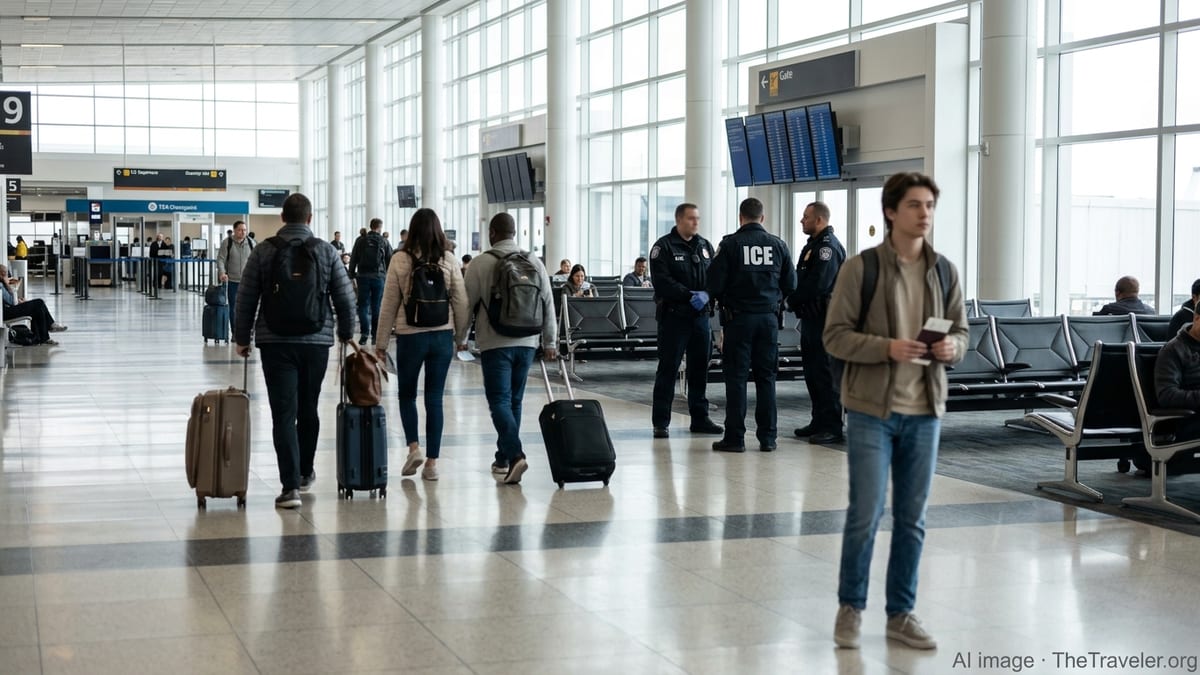
Reports of heightened Immigration and Customs Enforcement activity in and around US airports in early 2026 are prompting renewed concern among travelers who fear unexpected questioning, document checks or even detention at the terminal. Publicly available guidance from civil liberties groups and recent news coverage emphasize that both citizens and noncitizens retain important rights in these settings, but experts also warn that missteps in an encounter can have immediate travel consequences and long term immigration impacts.
Get the latest news straight to your inbox!
Understanding Who Is Stopping You and Where You Are in the Airport
One of the first challenges for travelers is recognizing who is asking questions and what authority they actually have. Customs and Border Protection generally handles inspections at ports of entry such as passport control and customs, while Immigration and Customs Enforcement focuses on interior enforcement, detention and removal, although ICE can operate in and around airports as part of broader immigration operations. Legal analyses note that CBP’s powers are broad at the border itself, while ICE’s role is more limited away from formal inspection points, even if uniforms and badges can look similar to the untrained eye.
Equally important is understanding where you are located in the airport when contact occurs. Travelers arriving from abroad and going through primary or secondary inspection are typically dealing with CBP, which has greater authority to ask questions about citizenship, travel history and what is being brought into the country. Encounters in domestic terminals, at baggage claim or in public ticketing halls are more likely to involve ICE or joint teams, where the legal standards more closely resemble street encounters in the interior of the country rather than border checks.
Recent rights guides from civil liberties organizations explain that in the secure area beyond Transportation Security Administration checkpoints, security screening rules still apply, but general law enforcement agencies like ICE must generally rely on consent, reasonable suspicion or a warrant for more intrusive actions such as detaining someone for an extended period or searching personal belongings. This mix of overlapping authorities makes it critical for travelers to calmly ask who they are speaking with and whether they are free to leave.
First Steps if an ICE Agent Approaches You
Publicly available “know your rights” materials consistently stress that remaining calm is the most important first step in any encounter. Travelers are urged not to run, argue or physically resist, actions that can escalate a brief conversation into a more serious detention. Instead, guidance suggests taking a steady breath, keeping hands visible and asking simple clarifying questions such as whether you are being detained or are free to go.
For US citizens, several legal advocacy groups note that there is generally no obligation to answer questions about how citizenship was obtained or where a person was born outside of formal border inspection. Citizens may choose to provide basic identifying information, such as a passport or driver’s license if they have it, but they are often advised that they may otherwise decline to engage in detailed questioning and may state that they wish to end the conversation if they are not under arrest.
Noncitizens, particularly those without stable status, face a more complex calculus. Guidance from immigrant rights organizations indicates that they still have a right to remain silent beyond providing name and basic identity, but declining to answer questions about immigration status can carry risk if they are already the subject of an enforcement action. Many groups encourage noncitizen travelers to rehearse a short statement indicating that they wish to speak with a lawyer and do not consent to questioning or searches, and to carry contact details for legal assistance in a secure location such as a wallet card.
What to Say, What Not to Sign and How to Assert Your Rights
Across multiple rights guides, one message is repeated: words matter in an encounter with immigration officers. Travelers are frequently advised to avoid lying, presenting false documents or inventing a citizenship claim, all of which can trigger criminal charges separate from any immigration case. Instead, if a question feels invasive or confusing, travelers can state that they choose to remain silent or want to consult an attorney before answering.
Another consistent warning concerns paperwork placed in front of travelers during questioning. Publicly available guidance from state and local governments and advocacy groups explains that ICE sometimes uses forms that ask individuals to waive their right to appear before an immigration judge or to agree to “voluntary” departure. People are urged not to sign anything they do not fully understand, especially documents in a language they do not read fluently, and to request time to speak with an attorney before signing.
Several materials emphasize that all people in the United States, regardless of immigration status, have the right to speak with a lawyer in immigration proceedings, even if the government is not required to pay for one. Travelers who are taken into custody are often told to continue calmly repeating that they want to speak with an attorney and to contact family or legal hotlines as soon as they are allowed to make a phone call, documenting badge numbers, locations and times when possible.
Searches of Bags, Phones and Laptops at Airports
Searches of belongings are a major source of confusion, particularly as ICE activity has been reported at gates, jet bridges and baggage claims in several airports. Civil liberties organizations draw a distinction between routine security screening of baggage by TSA and law enforcement searches by immigration officers. At the border itself, courts have allowed broad inspection of luggage and electronic devices without a warrant, but away from formal entry points the standards are higher.
Know your rights guides explain that travelers may be asked for consent to search phones or laptops during an ICE encounter. People can state that they do not consent to the search, although officers may still proceed in some situations if they believe the law allows it. Refusing consent may lead to additional questioning or temporary seizure of a device, but it preserves a traveler’s ability to later challenge the search in court.
Printed guidance from several organizations advises travelers to reduce the sensitive data they carry across borders by backing up devices before travel, using strong passwords and minimizing stored messages or documents that could be misinterpreted. They also recommend keeping paper copies of crucial phone numbers, including attorneys and family members, in case a device is taken during or after an encounter.
If You Are Detained or Miss a Flight Because of ICE Activity
Recent reports describe cases where ICE activity in US airports has contributed to delays, missed connections and, in some instances, on-the-job detentions of airport workers. Travelers who are pulled aside for questioning that causes them to miss a flight should request written confirmation from the airline or obtain documentation of the delay where possible, which may support rebooking or later complaints.
Rights information published by several states notes that people who believe they were stopped or detained without adequate legal basis can file complaints with oversight bodies or civil liberties organizations once they are safe and have had a chance to consult legal counsel. Keeping a contemporaneous record of what happened, including names or badge numbers if visible, can strengthen any later review.
For those taken into ICE custody, public guides recommend having a family safety plan in place before travel. This can include sharing itineraries with trusted contacts, designating someone who can quickly gather documents such as passports, visas and proof of residence, and ensuring children know who will pick them up if a caregiver does not return as expected. Travelers are reminded that immigration detention can move quickly, including transfers between facilities and onto removal flights, so advance planning may make a significant difference.
As 2026 unfolds, the patchwork of reported airport encounters underscores that immigration enforcement at US airports is not uniform and can change rapidly with policy shifts and local operations. While no single checklist can eliminate all risk, publicly available resources consistently underline the value of knowing key rights, preparing documents and contacts in advance, and staying composed if approached by ICE agents during a journey.