

More news on this day
As immigration enforcement becomes more visible in US airports during the 2026 budget standoff, travelers are increasingly unsure how to respond if approached by Immigration and Customs Enforcement officers while still trying to make flights and connections.
Get the latest news straight to your inbox!
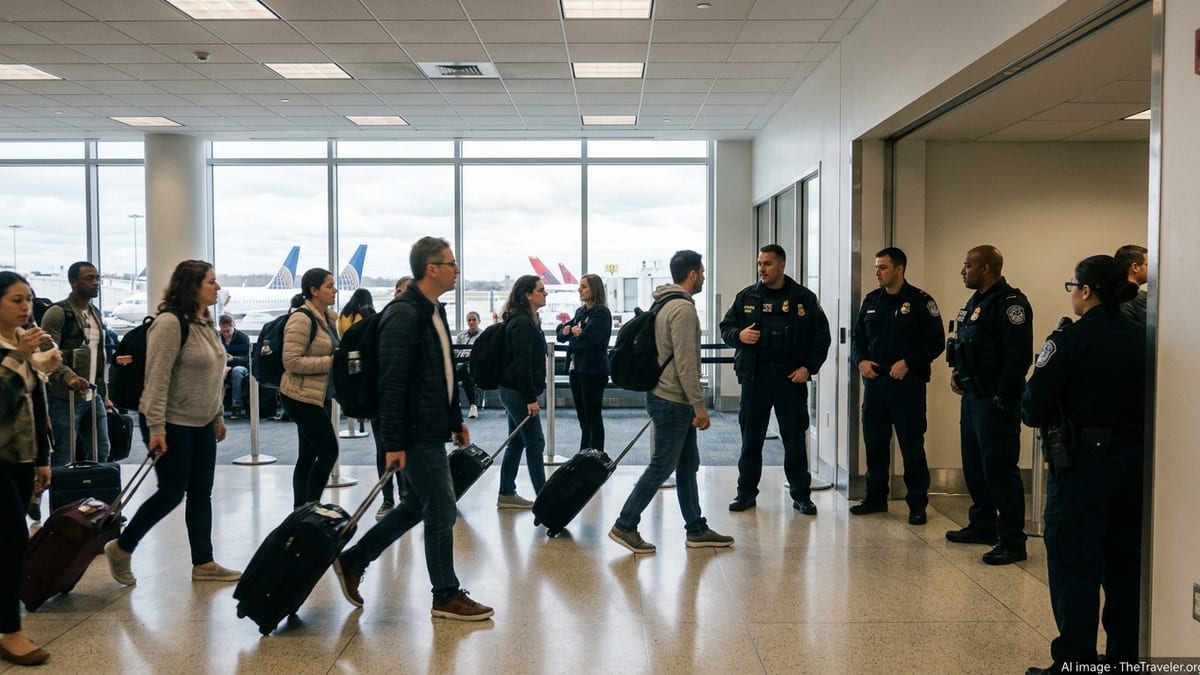
Why ICE Is More Visible in Airports Right Now
Immigration and Customs Enforcement, commonly known as ICE, is primarily tasked with interior immigration enforcement and detention, while Customs and Border Protection leads inspections at ports of entry such as international terminals. In recent weeks, news coverage has documented ICE officers being reassigned to airport corridors and security zones to support strained staffing during the ongoing federal funding disputes, adding another layer of uniformed presence for passengers to navigate.
Reports indicate that travelers are encountering ICE in areas beyond traditional passport control, including near security checkpoints, at departure gates, and in baggage halls. For many passengers, particularly noncitizens and dual nationals, this blurring of roles between border inspectors and immigration enforcement raises questions about when they must engage, what they are required to answer, and how their digital devices and personal information may be handled.
Publicly available guidance from civil liberties and immigrant-advocacy organizations emphasizes that US airports function legally as part of the national border for arriving international passengers, which gives government officers broad authority to ask questions and inspect luggage at entry. At the same time, court decisions and constitutional protections still impose limits on how far questioning and searches can go, especially when they move beyond verifying identity, citizenship, and eligibility to enter the country.
Because practices can differ between agencies and even between airports, travelers are being urged to prepare in advance: understand which questions are routine, which rights remain in place, and how to respond calmly if an encounter escalates from a brief inquiry to a secondary inspection or formal detention.
What To Expect If ICE or Other Officers Approach You
Travelers can encounter several types of officers in US airports, including Transportation Security Administration screeners, airport police, Customs and Border Protection agents at passport control, and ICE officers circulating in terminals or holding areas. Public education materials note that any of these officers may initiate brief, consensual conversations in public areas, such as asking where a traveler is coming from or requesting to see an identification document.
If you are in the process of entering the United States from abroad, border officers generally have authority to ask about your citizenship, immigration status, travel itinerary, and the purpose of your trip. For noncitizens, these questions can be central to deciding whether to admit you, refer you to secondary inspection, or in rare cases place you into expedited removal proceedings. Published guidance points out that visa holders who refuse to answer basic questions about their eligibility to enter risk being turned away or delayed for additional checks.
For US citizens, publicly available information indicates that you must be allowed to enter the country, although you can still be delayed for more detailed questioning or searches. Rights education materials explain that citizens typically must confirm their identity and citizenship, but they may choose not to answer more probing questions about political views, religious practices, or associates, even if doing so can prolong the encounter.
In domestic airport zones away from international arrival halls, ICE encounters may resemble other law-enforcement interactions. Officers might ask to see identification, make casual inquiries about immigration status, or request consent to search bags. Civil liberties groups stress that how you respond can affect what happens next, and that remaining calm, keeping your hands visible, and not physically interfering with officers are critical to staying safe while preserving your options.
Step-by-Step Responses: From First Question to Secondary Inspection
When an ICE officer or other federal officer first approaches you, the initial step recommended by many rights guides is to clarify the nature of the interaction. Travelers are often advised to politely ask whether they are free to leave. If the officer says yes, you may choose to walk away. If the officer says no, the encounter has shifted toward a detention, and the legal standards governing questioning and search become more important.
Most rights materials emphasize that you generally must provide your true name when asked by a federal officer. Beyond that, you have a right in many situations to remain silent and to decline to answer questions about where you were born, how you entered the country, or your current immigration category, although noncitizens seeking admission at the border are subject to more limited rights and may face serious immigration consequences for refusing to answer inspection questions.
If you are directed to secondary inspection after an international flight, the process typically involves additional questioning, database checks, and sometimes searches of luggage and electronic devices. Publicly available guidance explains that officers at the border can search bags without a warrant and, in many jurisdictions, can also examine phones and laptops under what is known as the border search exception. Some travelers respond by minimizing sensitive data they carry, using strong device passwords, and logging out of cloud accounts before travel.
Should officers indicate that you are under arrest or that you are not free to go, many legal education resources recommend that you clearly state that you wish to remain silent and that you want to speak to a lawyer. Saying this out loud, in a calm and firm manner, helps signal that you are invoking recognized rights. You can ask for a phone to contact an attorney, consulate, or trusted person, although access in the immediate border context may vary depending on status and circumstances.
Key Differences for Citizens, Residents, and Visitors
Because US law treats people differently depending on citizenship and immigration status, the same encounter with ICE at an airport can have very different outcomes. Know-your-rights materials note that US citizens have an absolute right to enter the country and cannot be deported for refusing to sign forms or answer nonroutine questions, but they may still face delays and searches if they decline to cooperate beyond confirming identity and citizenship.
Lawful permanent residents, often known as green card holders, generally have a strong right to return if they have maintained their status. Publicly available information from legal organizations states that their status cannot be revoked casually at the airport and usually requires a hearing before an immigration judge. However, residents with certain criminal histories or lengthy trips abroad can face more intensive questioning and may be asked to sign forms that could affect their status, which is why rights groups advise them not to sign documents they do not understand.
Short-term visitors on visas or visa waiver programs are in a more precarious position, because border officers have broad discretion to admit or refuse entry. Guidance for international travelers explains that officers can decline to admit someone they deem inadmissible and may place them into expedited removal or allow them to withdraw their application for admission and return on the next available flight. For these travelers, answering basic admissibility questions accurately and calmly is crucial, but they still retain the option to ask for clarification, request an interpreter, and seek legal advice when feasible.
Noncitizens without current legal status who encounter ICE in domestic terminals, away from ports of entry, face a different legal landscape. Public education materials stress that they have the right to remain silent, to refuse consent to a search that is not supported by a warrant, and to ask to speak to a lawyer. At the same time, they may be at heightened risk of arrest and immigration detention, which makes advance planning with family members and legal service providers particularly important.
Practical Preparation Before You Fly
Against the backdrop of more visible enforcement at airports, rights advocates are encouraging travelers to prepare before heading to the terminal. Many guides suggest saving the phone number of an immigration attorney or legal aid organization, as well as a trusted contact who can speak on your behalf, and keeping that information accessible in case your phone is taken for inspection. Some travelers carry a small card asserting their wish to remain silent and to speak with a lawyer, which can be handed to officers if nerves make it difficult to speak.
Data privacy has become a particular concern. Publicly available information from civil liberties groups highlights that border officers may request device passwords or attempt to scroll through photos, messages, and social media. While refusing to unlock a device can lead to delays or even seizure of the device, some travelers choose to limit what is stored locally, use encrypted messaging, and log out of sensitive accounts before travel as a way to reduce exposure.
After any difficult encounter with ICE or other airport officers, travelers are urged by legal education groups to record as many details as possible once it is safe to do so: names or badge numbers if visible, the time and place, and what was said or requested. This information can be important if they decide to seek legal advice, challenge a decision, or file a complaint later with oversight bodies or civil rights organizations.
Although the current political and budget climate has intensified concerns, many experts continue to stress that knowing your rights and planning calmly can make airport encounters with immigration enforcement more predictable. Understanding the limits of government authority, the specific obligations that come with your status, and the practical steps you can take before, during, and after questioning can help keep an unexpected interaction from derailing your journey.