

More news on this day
Steuben County has issued a non-essential travel advisory as heavy rain and flooding affect roadways and drainage systems across the region, prompting calls for drivers to stay off the roads unless travel is absolutely necessary.
Get the latest news straight to your inbox!
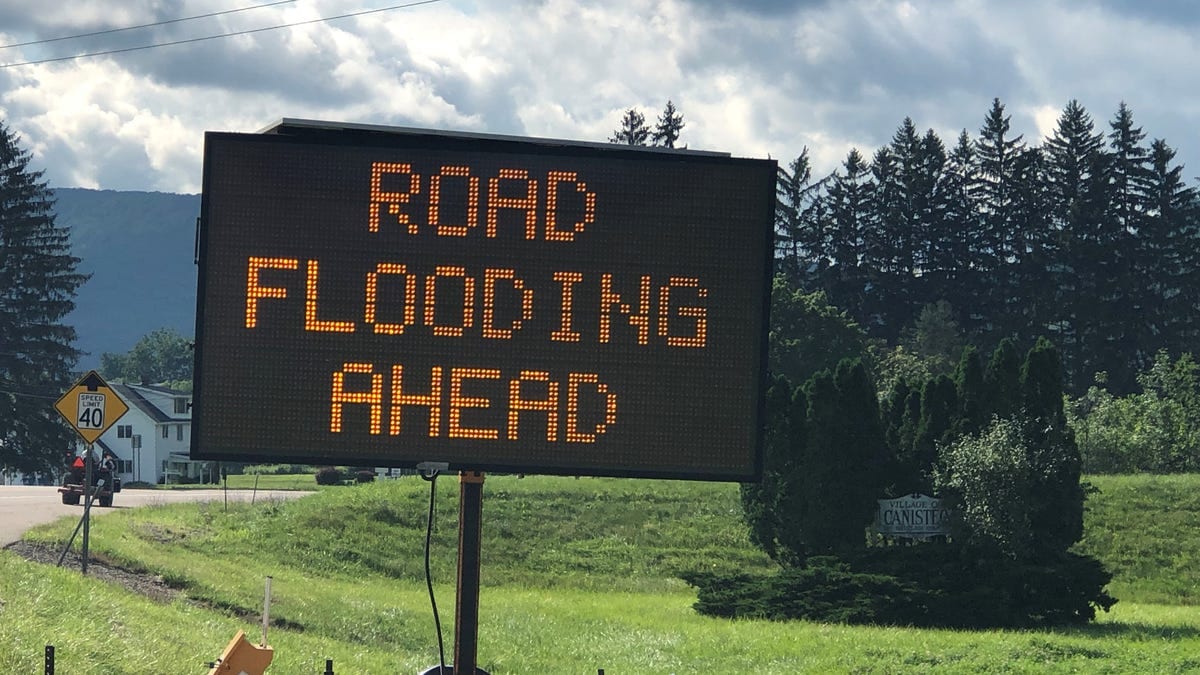
Image by Star-Gazette
Advisory Issued as Heavy Rains Swell Streams and Low-Lying Areas
Reports indicate that the advisory was prompted by a slow-moving storm system bringing repeated rounds of moderate to heavy rain across portions of western and central New York. Publicly available information shows that the broader Finger Lakes region, which includes Steuben County, entered Tuesday under a flood watch as saturated ground and overflowing drainage channels increased the risk of rapid runoff and standing water.
According to regional weather summaries, rainfall totals have been building over several hours, with downpours periodically reducing visibility and creating hazardous driving conditions. The risk is considered highest in typical flood-prone locations such as low-lying stretches of roadway, underpasses, and areas near creeks and small rivers, where water can rise quickly and obscure pavement markings or wash out shoulders.
Local coverage from upstate New York indicates that emergency managers are treating this system as a multi-day event, with additional rain possible into Wednesday. That outlook has raised concern that isolated ponding could evolve into more widespread flooding if drainage infrastructure becomes overwhelmed, especially in smaller communities and rural corridors.
Non-Essential Travel Discouraged as Road Hazards Increase
Under the non-essential travel advisory, residents are being urged to avoid driving unless they need to reach work, access medical appointments, or respond to other critical needs. The advisory is intended to limit the number of vehicles on the road while water levels fluctuate, which can help reduce traffic incidents and keep routes clearer for maintenance and emergency response activity.
Public information on similar advisories in New York and neighboring states indicates that non-essential travel recommendations are typically issued when conditions are dangerous but not yet severe enough to justify a full travel ban. In Steuben County, that means many businesses may remain open, but residents are being asked to carefully evaluate whether trips can be postponed until water recedes and visibility improves.
Standing water has been reported on various secondary and rural routes, where drainage ditches and culverts can easily become clogged with debris during heavy downpours. Even shallow water can hide potholes, eroded shoulders, or downed limbs, creating unexpected hazards for motorists who attempt to proceed at normal speeds.
Infrastructure, Commuters and Emergency Access Affected
The advisory comes as Steuben County continues seasonal maintenance and construction projects on key transportation links, including bridges and county roads. Recent notices about long-term closures for infrastructure upgrades underline how sensitive regional mobility can be when additional weather-related disruptions occur.
Commuters who rely on county and state routes for travel to larger employment hubs in the Finger Lakes and Southern Tier are facing slower journeys and detours where water encroaches on lanes or shoulders. Publicly available travel guidance for similar flood events in New York emphasizes that even when roads remain technically passable, hydroplaning risk and sudden lane obstructions can contribute to an increase in crashes, fender-benders, and disabled vehicles.
Flooding can also impede access for ambulances, fire services, and utility crews. Travel-advisory frameworks used across New York and other states are designed in part to keep non-essential traffic to a minimum so that emergency vehicles can move quickly through affected areas. In the current situation, limiting discretionary driving in Steuben County is expected to support that goal as rainfall continues.
Drivers Urged to Avoid Flooded Roads and Monitor Local Updates
Travel safety messaging circulating in connection with the current storm system stresses several key precautions for residents who must be on the road. Drivers are being urged to reduce speed, allow extra stopping distance, and be prepared for sudden changes in visibility as heavier rain bands move through. Low-lying areas that are known to flood during strong storms should be approached with particular caution, or avoided altogether when possible.
National guidance on flood-related travel hazards notes that as little as a few inches of moving water can cause vehicles to lose traction, while deeper water can disable engines or sweep cars off the roadway. Information from recent flood advisories in other New York counties reinforces the longstanding recommendation that motorists should never attempt to drive through water covering the road, especially at night when depth and current strength are difficult to judge.
Residents are being encouraged by publicly available advisories and regional coverage to monitor local radio, television, and official county communication channels for updates on road conditions, changing alert levels, and any potential escalation from a travel advisory to more restrictive measures. As the storm evolves, timeframes for the non-essential travel advisory may be adjusted to reflect improving or deteriorating conditions.
Regional Context: A Stormy Spring for New York Travel
The situation in Steuben County is part of a broader pattern of unsettled spring weather affecting New York and neighboring states. Over recent weeks, multiple rounds of heavy rain, late-season snow, and severe thunderstorms have triggered flood watches, winter weather advisories, and travel warnings in various parts of the Northeast and Great Lakes regions.
Coverage from state-level and regional outlets has highlighted how quickly these systems can disrupt both local travel and longer-distance journeys. Airports have faced delays, rail lines have encountered washouts and signal issues, and intercity highways have experienced periodic lane closures where water pooled or drainage systems backed up.
For Steuben County, the current non-essential travel advisory underscores the importance of flexible plans for both residents and visitors. Travelers heading through the Finger Lakes or Southern Tier are being advised, through publicly available information, to build extra time into itineraries, consider alternate routes that avoid flood-prone valleys, and remain ready to adjust or postpone trips as conditions warrant.