

More news on this day
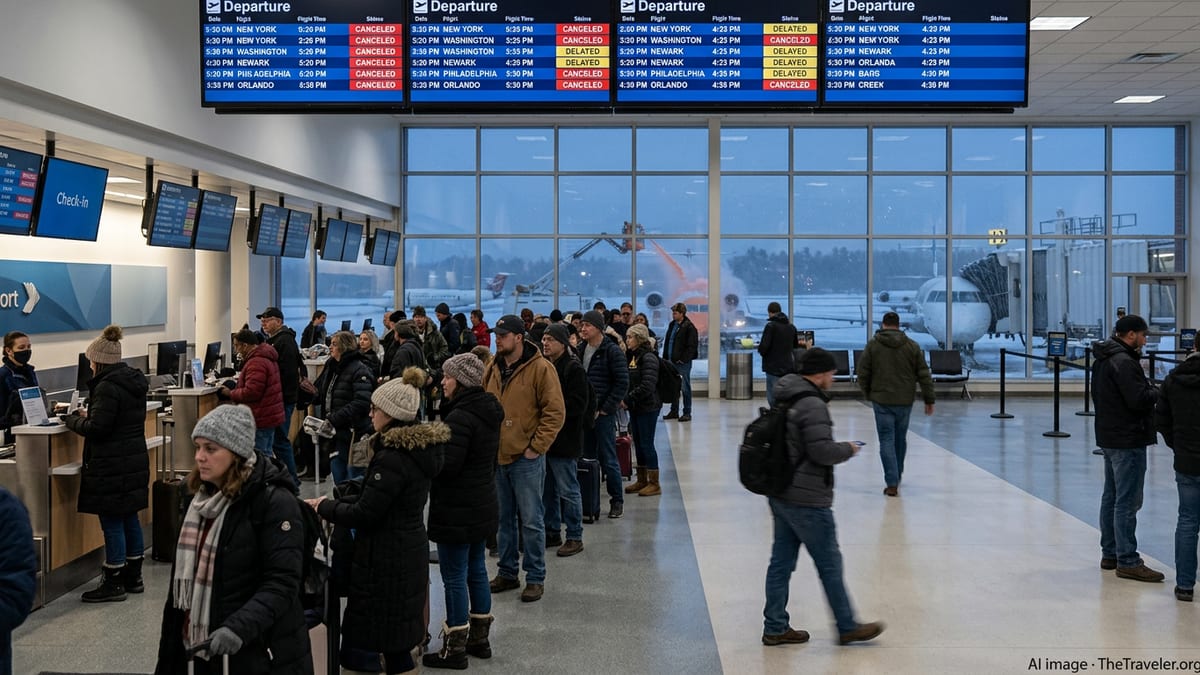
Travelers moving through Bangor International Airport on Thursday faced cascading disruptions after regional carriers Piedmont Airlines, GoJet Airlines, Endeavor Air and PSA Airlines grounded nine flights and triggered dozens of delays to major East Coast cities, including New York, Washington, Newark, Philadelphia and Orlando.
Get the latest news straight to your inbox!
Grounded Regional Jets Ripple Across East Coast Network
The wave of cancellations at Bangor International Airport involved a mix of American Airlines and Delta Air Lines regional partners, which collectively serve several of the Northeast’s busiest hubs. While the grounded flights at Bangor numbered nine, the knock-on effect was far larger, as aircraft and crews scheduled to operate onward connections into New York, Washington and other major cities were left out of position.
Piedmont Airlines and PSA Airlines, both American Eagle operators, were among the hardest hit. Their Bangor flights feed into larger American Airlines hubs such as Philadelphia and Charlotte, from which travelers connect to New York area airports and Florida destinations like Orlando. The grounded aircraft meant that some Bangor-originating passengers missed same-day connections, while others were forced into overnight stays.
Delta Connection operator Endeavor Air also pulled aircraft from service, disrupting links to New York and the Washington region. GoJet Airlines, which operates regional jets on behalf of United and Delta, added to the strain by cancelling Bangor services that typically connect through Newark and other key hubs. The result was a patchwork of gaps in the regional network that radiated outward through the day.
Airport officials said they were working closely with the affected carriers to rebook passengers where possible but acknowledged that limited spare capacity on regional routes into the Northeast constrained options. Many travelers were offered itineraries that involved lengthy detours and multiple layovers as airlines attempted to stitch together remaining seats.
Severe Weather and Safety Checks Compound Disruption
The disruption came as a powerful winter storm system pushed across the northeastern United States, bringing snow, low visibility and gusty winds to much of New England and the Mid-Atlantic. Those conditions triggered ground delay programs and deicing backlogs at major hubs such as Newark Liberty, New York’s LaGuardia and John F. Kennedy airports, as well as Philadelphia and Washington’s Reagan National and Dulles airports.
For Bangor, which sits on the northern edge of many storm tracks, that meant arriving aircraft were slowed or held, while departures often waited for new takeoff slots from air traffic control. Even flights that were technically able to operate sometimes became impractical, as crews neared duty-time limits and connection banks at hub airports broke down.
Complicating matters further, industry sources indicated that some of the grounded aircraft were undergoing additional safety inspections in the wake of recent incidents involving regional jets elsewhere in the country. While there was no immediate indication of a safety issue unique to Bangor, the timing of inspections during a major winter storm created a perfect storm of operational constraints.
Transportation officials have repeatedly emphasized that carriers are expected to prioritize safety decisions, even when they exacerbate disruption for passengers. For airlines already working with tight staffing levels and high demand, pulling a small number of regional jets for maintenance can quickly translate into dozens of cancellations and delays across a network.
Passengers Confront Long Lines, Missed Events and Limited Options
Inside Bangor International Airport’s compact terminal, the effect was visible in the form of long lines at ticket counters and rebooking desks, as well as crowded seating areas around departure gates. With many passengers connecting onward to New York, Washington, Newark and Philadelphia for business meetings, medical appointments and family events, the timing of the disruption proved particularly painful.
Some travelers reported being offered itineraries that would not arrive at their final destinations until late Friday or Saturday, reflecting how severely weather and groundings have limited same-day recovery options. Others chose to abandon trips altogether, seeking refunds or travel credits from their airlines when alternative flights no longer aligned with their plans.
Airport staff urged passengers to stay in close contact with their airlines via mobile apps and text alerts, noting that in many cases rebookings and hotel vouchers would be processed digitally before an agent could be reached in person. Travelers were also advised to build extra time into their journeys, as security checkpoints and boarding processes moved more slowly than usual amid the operational strain.
Local tourism and hospitality businesses in Bangor and surrounding communities braced for both short-term cancellations and unexpected overnight stays. Hotels near the airport reported a sudden spike in last-minute bookings from stranded travelers, even as some inbound visitors to northern Maine postponed or cut short trips because of uncertain return flights.
Major Hubs From New York to Orlando Feel the Strain
While Bangor’s disruption originated with a relatively small number of grounded regional flights, the impact reached far beyond Maine. New York area airports, already contending with storm-related slowdowns, saw additional schedule pressure as inbound regional jets from smaller cities like Bangor failed to arrive. That led to gaps in departure banks, missed crew connections and tighter competition for available gates.
In Washington, both Reagan National and Dulles International experienced elevated delay levels as regional partners attempted to shoehorn late arriving Bangor aircraft into already congested schedules. Newark Liberty and Philadelphia, key connecting points for flights up and down the East Coast, reported extended taxi times and holding patterns as air traffic control metered arrivals in poor weather.
Orlando, one of Bangor’s most popular leisure destinations, was also affected. Families headed south from Maine for school vacations and winter getaways saw nonstops and one-stop itineraries disrupted as Bangor’s outbound feed faltered. In some cases, passengers bound for Florida were rerouted through distant hubs such as Chicago or Atlanta, adding hours and additional connections to what is typically a straightforward journey.
Industry analysts noted that regional airlines like Piedmont, GoJet, Endeavor and PSA operate many of the thinner routes that allow smaller cities to maintain daily connectivity to major hubs. When even a handful of those flights are grounded on a stormy day, the effect can cascade quickly through an already strained national air traffic system.
Officials Urge Preparation as Winter Travel Challenges Persist
With winter weather expected to remain a threat across the Northeast in the coming weeks, transportation officials and airline representatives are urging travelers to prepare for continued volatility in flight schedules. Bangor International Airport has warned that additional delays and cancellations are possible whenever storm systems intersect with the ongoing operational constraints faced by regional carriers.
Passengers are being encouraged to monitor forecasts not just for their departure city, but also for their connecting hubs and final destinations, particularly when traveling through heavily trafficked airports around New York, Washington, Newark and Philadelphia. Flexible itineraries, early departures and travel insurance are among the tools experts recommend for those who must travel during peak storm periods.
For Bangor and other small and mid-sized airports, the latest disruption underscores how dependent local connectivity has become on a relatively small group of regional operators flying tightly scheduled fleets. As Piedmont, GoJet, Endeavor and PSA work to restore normal operations, their ability to keep aircraft flying reliably into key hubs will play a central role in how quickly the broader network stabilizes.
In the meantime, airport authorities across the East Coast are focusing on real-time communication, snow and ice control, and close coordination with airlines and federal agencies to manage each new wave of weather and operational challenges as it arrives.