

More news on this day
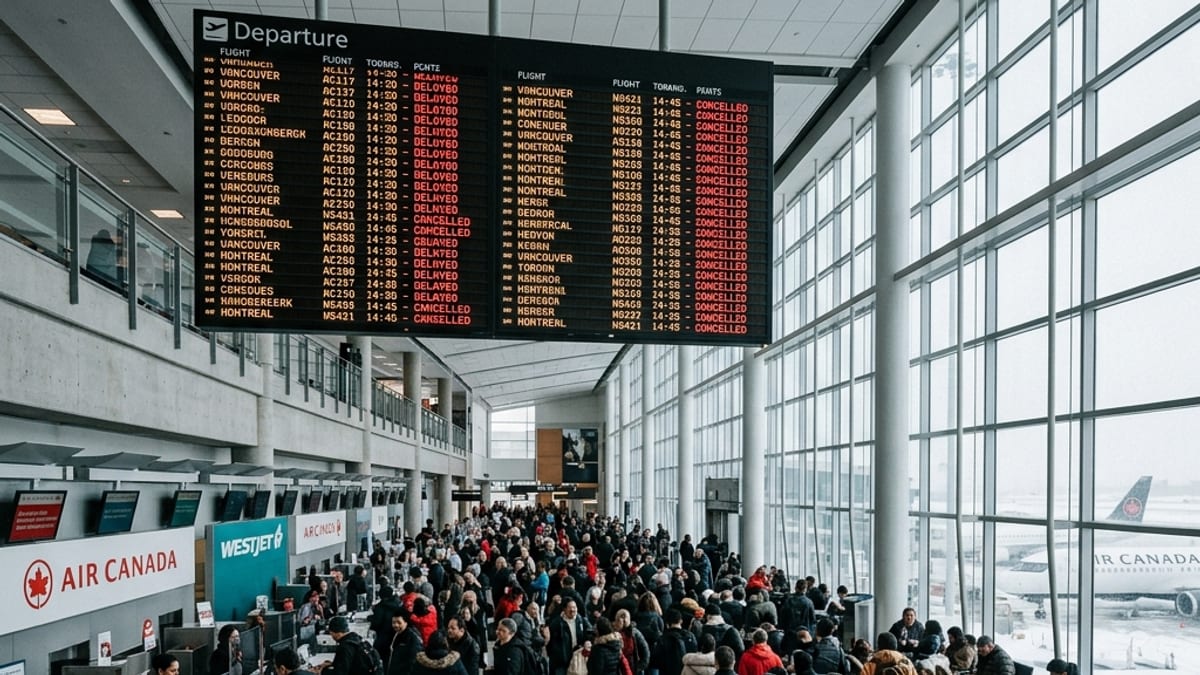
Travelers at Québec City Jean Lesage International Airport are facing mounting frustration after a fresh round of delays and cancellations on Thursday left dozens of flights off schedule and hundreds of passengers scrambling to rebook.
Get the latest news straight to your inbox!
Late-Season Weather and Network Strain Converge in Québec City
Operational data for April 8 and 9 indicate that Québec City Jean Lesage International Airport has emerged as one of several Canadian airports grappling with widespread disruption linked to a late-season winter system sweeping across central and eastern Canada. Flight-tracking tallies show at least 27 departures and arrivals delayed at the airport, along with six cancellations affecting domestic and transborder routes.
The pattern aligns with a broader national picture in which freezing rain, snow, and gusty winds have contributed to hundreds of delayed and cancelled flights at major hubs including Toronto Pearson, Montréal Trudeau, Vancouver and Calgary. Publicly available weather reports for the Québec City region point to mixed precipitation and low clouds that can complicate de-icing operations, slow turnarounds on the ground and reduce the rate at which air traffic control can space aircraft for takeoff and landing.
While individual delay times vary, many affected flights in Québec City have been pushed back by more than an hour, with some departures repeatedly retimed as aircraft and crews struggle to arrive from other storm-affected cities. In several cases, evening cancellations appear to stem from aircraft and crew being out of position after earlier disruptions elsewhere in the network, a pattern that has become familiar over recent Canadian winters.
The current storm cycle follows several months of volatile conditions that have already tested the resilience of airline schedules. Industry observers note that late-season weather events, like the one now affecting Québec and neighboring provinces, often strike just as carriers are attempting to pivot from winter to spring schedules, leaving little slack in operations to absorb cascading delays.
Air Canada and WestJet Schedules Hit Hard
Within this broader disruption, Air Canada and WestJet have emerged as two of the most visibly affected carriers at Québec City Jean Lesage Airport. Timetable data and airline status pages reviewed on Thursday show both airlines posting multiple late arrivals and departures, alongside a cluster of cancellations concentrated in their domestic networks.
For Air Canada, delays have been particularly evident on flights linking Québec City with Montréal, Toronto and other eastern Canadian cities that sit directly in the path of the current weather system. Publicly available information suggests that aircraft and crew rotations are being slowed by de-icing requirements, runway conditions and congestion at larger hubs, which then ripple into smaller stations such as Québec City.
WestJet, which operates a more limited schedule at Québec City compared with its presence in western Canada, is also showing a disproportionate number of late flights relative to its daily departures. Reports from other Canadian airports this week indicate that WestJet has been contending with both weather and operational challenges, prompting the carrier to issue travel advisories and flexible rebooking options on certain routes.
Both airlines have continued to encourage customers to monitor their flight status before heading to the airport, and to make use of online or app-based tools to request rebookings where seats are available. However, with aircraft tightly scheduled and many flights across the country already heavily booked for spring travel, finding same-day alternatives has proved difficult for many stranded passengers.
Hundreds of Passengers Stranded or Facing Lengthy Waits
By midday Thursday, the cumulative effect of 27 delayed and six cancelled flights at Québec City Jean Lesage Airport translated into hundreds of travelers facing hours-long waits in departure lounges and check-in areas. Each narrow-body aircraft operating on the impacted routes typically carries between 70 and 180 passengers, meaning even a small cluster of cancellations can quickly strand large numbers of people.
Travelers affected by the disruptions are contending with a range of knock-on complications, from missed connections at larger hubs to lost hotel nights and rescheduled meetings. In some cases, passengers booked on evening departures from Québec City have been reprotected on flights departing the following day, while others have been offered reroutes through alternative hubs or nearby airports where capacity exists.
Publicly available travel guidance from consumer-rights groups notes that passengers experiencing significant delays or same-day cancellations may be entitled to assistance such as meal vouchers, hotel accommodation or partial refunds, depending on the cause of the disruption and the rules governing each fare. However, the eligibility criteria can be complex, especially when weather and operational factors intersect, leaving many travelers uncertain about what they can claim.
Long lines at customer service counters have been a recurring feature of recent storm-related disruptions across Canada, and similar scenes are now playing out in Québec City as travelers seek clarity about their options. Many passengers are instead turning to airline apps, social media channels and third-party travel platforms in an effort to make changes without waiting in person.
Rights, Remedies and What Passengers Can Do
The latest disruption at Québec City Jean Lesage Airport highlights the importance of understanding Canada’s air passenger protection rules. Publicly available information from regulators and advocacy organizations explains that airlines operating within, into or out of Canada must follow specific standards for communication, rebooking and compensation when flights are delayed or cancelled.
In cases where weather is the primary driver of disruption, airlines are generally required to provide timely information and rebooking on the next available flight, but they may not be obligated to offer financial compensation. When delays or cancellations are linked to factors within the airline’s control, such as crew scheduling or technical issues, additional obligations can apply, including potential reimbursement of out-of-pocket expenses or set compensation amounts.
Travel experts routinely advise passengers to document everything during a disruption, including boarding passes, receipts and screenshots of flight-status changes, in case a claim is filed later. They also suggest checking both airline policies and federal regulations, as the more generous standard may determine what travelers ultimately receive.
For those currently stranded in Québec City or facing imminent travel, practical steps include confirming flight status frequently, exploring alternative routings via Montréal or Toronto where capacity may open up, and considering same-day or next-day train and bus options for shorter regional trips. With systems still recovering from earlier weather events, flexibility around travel dates and times remains one of the most effective ways to secure a seat.
Ongoing Recovery Efforts and Outlook for the Coming Days
Looking ahead, recovery at Québec City Jean Lesage Airport will depend heavily on how quickly weather conditions stabilize across eastern Canada and how efficiently airlines can reposition aircraft and crews. Historical patterns from previous winter seasons suggest that once a storm system passes, it can still take one to two days for schedules to fully normalize, particularly when delays have stacked up across multiple hubs.
Operational data from recent days shows that Canadian carriers have been attempting to add capacity where possible, including deploying larger aircraft on select routes and consolidating lightly booked services to free up resources. However, with many planes already committed to upcoming spring and summer schedules, there is limited flexibility to add extra sections purely for recovery.
Travel-industry analysts note that the current situation underscores the broader challenge of running tightly optimized airline networks in an era of increasingly volatile weather. As Québec City and other airports work through the latest wave of delays and cancellations, passengers and carriers alike are being reminded that even modest storms can have outsize impacts when systems are already operating near capacity.
For now, travelers planning to pass through Québec City Jean Lesage Airport in the coming days are being urged, via publicly available advisories and industry coverage, to build extra time into their journeys, keep a close eye on changing conditions and remain prepared for last-minute adjustments. While the worst of the current disruption may ease as the weather improves, a complete return to normal operations will likely take time.