

More news on this day
Hundreds of passengers were left stranded at Dallas-Fort Worth International Airport this week as a mix of severe winter weather and lingering staffing constraints triggered 355 flight delays and 12 cancellations, disrupting operations for PSA Airlines, Qatar Airways, Spirit Airlines and American Airlines on routes linking Dallas with London, New York and other major US cities.
Get the latest news straight to your inbox!
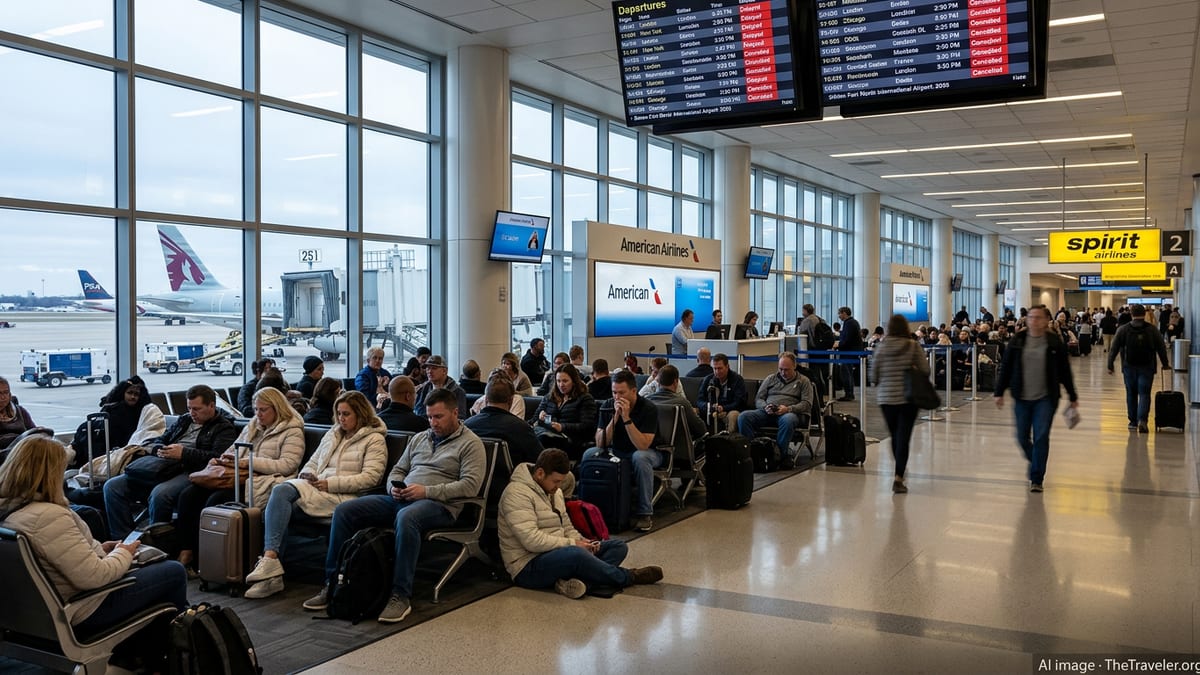
DFW Hub Gridlocked as Weather Disruptions Ripple Nationwide
Dallas-Fort Worth International Airport, the primary hub for American Airlines and an important gateway for Qatar Airways and several regional partners, once again found itself at the center of a major operational breakdown. Following weeks of volatile winter weather across the central United States, a new round of freezing conditions and low visibility pushed airport capacity to its limits, forcing airlines to slow arrivals, deice aircraft repeatedly and reshuffle crews already operating near duty-time limits.
Real-time tracking data showed a combined 355 delays and 12 cancellations across the four carriers, with American and its regional affiliate PSA Airlines bearing the brunt of the schedule disruption. Flights arriving from and departing to New York, Chicago, Houston and other domestic hubs were held at gates or on taxiways, while transatlantic services to London and onward connections for Qatar Airways were subject to rolling schedule changes.
Because Dallas-Fort Worth functions as a central connection point, even a modest number of cancellations had an outsized impact. Missed connections quickly cascaded into additional delays as aircraft and crews ended up in the wrong cities at the wrong times, complicating efforts to return to a normal operating rhythm.
Inside the terminals, departure boards cycled through new times every few minutes, with some passengers reporting multiple rebookings across the day. Airport officials urged travelers to arrive early, stay in close contact with their airlines and anticipate extended wait times at check-in, security and customer service counters.
Passengers Face Long Nights, Thin Information and Crowded Gates
For many travelers, the operational challenges translated into long hours on terminal benches and crowded gate areas. Families returning from school holidays, business travelers aiming for end-of-quarter meetings, and international passengers connecting through Dallas to London, New York and West Coast cities all reported significant disruption to their plans.
Some passengers described overnight stays on the concourses after late-evening flights were first delayed and then ultimately canceled as crews exceeded regulatory duty limits. With nearby hotels quickly selling out, those who were unable to secure rooms settled in around power outlets and food courts, trying to sleep as loudspeaker announcements continued into the early morning.
Communication emerged as a major point of frustration. While airlines sent rolling text and app notifications, many travelers said flight statuses remained listed as “on time” or “delayed” on terminal displays even as gate agents quietly acknowledged a high likelihood of cancellation. That disconnect led some passengers to remain in queues for hours, only to be told the last available seats on alternative flights had already been taken.
The ripple effects extended beyond Dallas-Fort Worth. Delays and cancellations at the Texas hub translated into late departures and missed connections at New York area airports, Los Angeles and other major US gateways, impacting travelers who had never planned to set foot in North Texas.
American, PSA, Qatar Airways and Spirit Struggle to Restore Schedules
American Airlines, which operates the majority of flights at Dallas-Fort Worth, moved to trim schedules and consolidate lightly booked services in an effort to reduce last-minute cancellations. PSA Airlines, one of its key regional partners feeding smaller US cities into the hub, also cut and combined flights, leaving some communities with significantly reduced service windows for the day.
Qatar Airways, which links Dallas-Fort Worth with its global network through Doha and coordinates many of its US connections with American, faced knock-on challenges as inbound passengers missed the carrier’s evening departure bank. Some travelers bound for London and onward destinations in Europe reported being rerouted through alternative gateways or rebooked for travel later in the week.
Spirit Airlines, which maintains a growing presence at Dallas-Fort Worth and other major US cities, also reported delays as aircraft and crews were held out of position by earlier disruptions. To manage the situation, the carrier encouraged customers to use its digital tools for self-service rebooking, while cautioning that limited spare seat capacity meant some travelers would need to wait until subsequent days to depart.
Across the carriers, operational teams worked through the night to reposition aircraft and crews. However, with winter fronts continuing to sweep across the central United States and passenger volumes remaining strong, a full recovery was expected to take at least another operating day, keeping pressure on already stretched schedules.
Knock-on Impacts in London, New York and Other Key Markets
The disruption at Dallas-Fort Worth was felt acutely in transatlantic and transcontinental markets. Flights from Dallas to London faced both direct weather-related delays and indirect scheduling issues, as late-arriving inbound aircraft postponed departures and tightened turnaround times. Passengers connecting in London for onward travel into Europe and beyond encountered missed connections and rebookings into already busy services.
In New York, where American and other major US carriers operate dense schedules to and from Dallas-Fort Worth, delays compounded congestion at John F. Kennedy International Airport and LaGuardia Airport. Travelers reported extended ground holds as air traffic controllers managed inbound flows from multiple weather-affected regions, while terminal gate areas became crowded with connecting passengers waiting for cleared aircraft and crews.
Other US cities including Chicago, Los Angeles and Houston saw similar knock-on effects. Aircraft that were scheduled to overnight at outstation airports arrived late or were reassigned, leading to a cascade of early-morning delays that caught travelers off guard. Airlines warned that even cities with clear skies could experience disruption as their networks absorbed the shock of Dallas-Fort Worth’s constrained operations.
For international travelers, the most significant challenge was uncertainty around rebooked arrival times and missed long-haul connections. Many were forced to adjust hotel reservations, ground transportation plans and even business meetings as their itineraries shifted by a day or more.
What Stranded Travelers Can Expect and How to Prepare
While airlines stopped short of declaring formal waivers across all affected routes, customer service teams at Dallas-Fort Worth and other impacted airports offered a mix of rebooking options, meal vouchers and, in some cases, hotel accommodations for eligible passengers. However, those benefits were limited by hotel availability and the scale of the disruption, leaving some travelers with little more than meal credits and standby listings.
Travel experts advise that, during periods of concentrated disruption at a major hub, passengers should prioritize securing confirmed seats on alternative flights, even if that means accepting reroutes through less convenient cities. With seat inventory tight across networks, a confirmed, albeit indirect, itinerary often proves more reliable than remaining on a repeatedly delayed nonstop service.
Passengers are also urged to monitor their flight status directly through airline apps and to act quickly when free rebooking windows open. Given how rapidly conditions can change at Dallas-Fort Worth, particularly during winter weather events, the most up-to-date information often appears first in carrier digital channels rather than on airport displays.
As airlines including PSA Airlines, Qatar Airways, Spirit Airlines and American Airlines continue working to stabilize their schedules, travelers with upcoming trips through Dallas-Fort Worth, London, New York and other major US cities are being encouraged to build in extra time, prepare backup plans and remain flexible in the face of an increasingly volatile operating environment.