

More news on this day
Travelers across London, Paris and Zurich faced widespread disruption over the weekend as severe weather and air traffic control issues combined to trigger thousands of delays and scores of cancellations, leaving passengers on Virgin Atlantic, British Airways, SAS and Air France struggling to reach their destinations.
Get the latest news straight to your inbox!
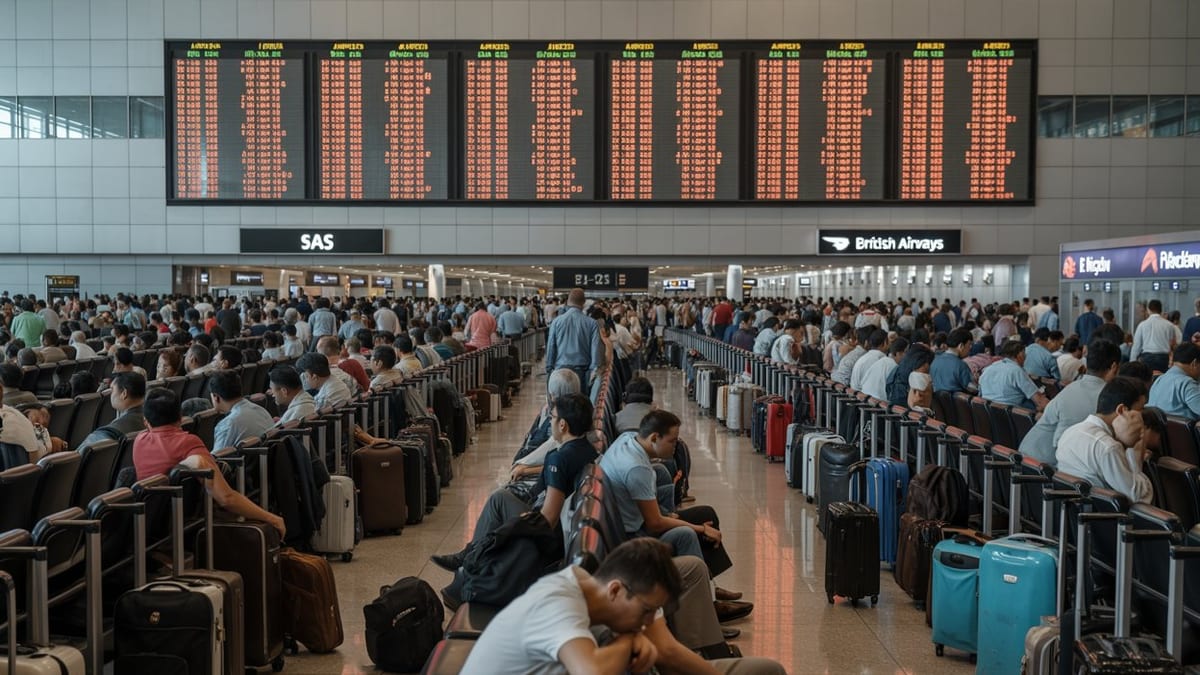
Image by Travel And Tour World
Severe Weather Pounds Western Europe’s Air Corridors
Published coverage from European meteorological agencies and news outlets indicates that a powerful late season storm system swept across parts of the United Kingdom, France and Switzerland, bringing high winds, heavy rain and localized snow that disrupted key air corridors. The system followed a winter marked by several intense Atlantic storms, which have repeatedly tested airport resilience and airline contingency planning in the region.
Major hubs including London Heathrow, Paris Charles de Gaulle and Zurich Airport reported extended periods of reduced capacity as gusting winds and poor visibility forced controllers to increase spacing between aircraft. Runway configuration changes and de-icing requirements added further delays, particularly for early morning and late evening departures.
Operational data and tracking platforms show that knock on effects quickly spread across airline networks. Aircraft and crews that were due to position into London, Paris and Zurich for subsequent rotations arrived hours behind schedule or did not operate at all, leaving gaps in timetables that carriers struggled to fill.
Aviation analysts note that while European airports are accustomed to winter weather, the combination of strong crosswinds at peak hours and already congested schedules makes it difficult to recover once delays begin to accumulate. As a result, scattered disruption early in the day translated into widespread evening cancellations.
Airlines Cut Flights As Delays Pass 2,000 Mark
According to flight tracking dashboards and aggregated schedule data, more than 2,000 flights across European airspace experienced significant delays during the latest disruption, with at least sixteen flights operated by Virgin Atlantic, British Airways, SAS and Air France cancelled outright on the day. These cancellations were concentrated on short haul routes linking London, Paris and Zurich to other European cities, along with some long haul services reliant on tight aircraft rotations.
Publicly available information shows that Virgin Atlantic and British Airways, both heavily dependent on London Heathrow, were among the carriers most exposed to the storm related congestion. Aircraft arriving late from North America and Asia forced schedule shuffles, including the withdrawal of some transatlantic and European sectors where spare capacity was limited.
Scandinavian carrier SAS and France based Air France also reported substantial knock on delays on services touching Paris Charles de Gaulle and other French airports. Strains were compounded where flights were required to traverse French or Swiss airspace that was already operating under flow restrictions.
Industry observers point out that even a relatively small number of cancellations can cascade when aircraft are operating near maximum daily utilization. Once key rotations are lost, crews may time out under duty regulations, forcing airlines to ground additional sectors beyond those initially targeted for cancellation.
Passengers Stranded In London, Paris And Zurich
As the disruption unfolded, passengers across London, Paris and Zurich reported lengthy queues at check in counters and customer service desks, along with crowded terminal seating areas and fully booked airport hotels. Social media posts and forum discussions described travelers sleeping on terminal floors or in public waiting areas after missing last departures of the night.
At London Heathrow and London Gatwick, reports indicate that evening waves of flights bore the brunt of the disruption, with some travelers rebooked for departures one or two days later due to limited seat availability. Similar scenes were noted at Paris Charles de Gaulle and Paris Orly, where connecting passengers missed onward services and were forced to reroute via alternative hubs.
In Zurich, local coverage highlighted frustration among travelers on regional and long haul services, particularly those connecting between European and intercontinental flights. Once snow and wind conditions eased, airports were able to resume more regular movements, but congested stands and displaced aircraft slowed the return to normal operations.
Consumer advocates in several countries warned that vulnerable travelers, including families with small children and those without flexible accommodation options, were disproportionately affected by the lack of immediate rebooking options. With peak season demand already high, spare seats on alternative flights were limited across multiple carriers and alliances.
Air Traffic Control Strain Adds To Storm Disruption
Beyond the weather itself, air traffic control capacity constraints across parts of western Europe deepened the disruption. Information issued by aviation advisory bodies and travel industry bulletins indicates that staffing issues and flow restrictions in French airspace, in particular, required airlines to reduce frequencies or reroute aircraft around congested sectors.
Because many flights between the United Kingdom and destinations in southern or central Europe routinely cross French airspace, even services not landing in France were affected by extended routings and airborne holding. This added flight time and fuel costs for carriers while simultaneously reducing the number of daily rotations aircraft could complete.
Operational briefings shared with travel agents and corporate clients noted that some airlines proactively cancelled selected flights to create slack in their schedules, hoping to protect the reliability of remaining services. However, the scale of the storm and the airspace limitations meant that these measures only partially absorbed the impact.
Regulators have previously warned that chronic staffing and modernization challenges within European air navigation systems can leave the network vulnerable when adverse weather hits multiple regions at once. The latest wave of delays appears to underscore those concerns, particularly for high density corridors linking the United Kingdom, France and Switzerland.
What Stranded Travelers Can Do Next
Public guidance from consumer organizations and official passenger rights resources emphasizes that travelers caught in large scale disruption across the United Kingdom and European Union benefit from a robust framework of protections, including the UK261 and EU261 regulations on delays and cancellations. These rules generally provide for care and assistance, such as meals and accommodation, when flights are significantly disrupted, and may in some circumstances offer financial compensation.
Passengers are advised in publicly available guidance to retain boarding passes, booking confirmations and any receipts for out of pocket expenses incurred during the disruption. These documents can be important when submitting claims to airlines once operations have stabilized. Many carriers also encourage affected customers to use digital tools to rebook or request refunds, reducing the need to queue at airport service desks during peak disruption.
Travel experts recommend that those with imminent flights to or through London, Paris or Zurich closely monitor airline apps and airport departure boards for schedule changes, as recovery operations can involve last minute retimings and aircraft swaps. Allowing additional connection time, particularly for self booked itineraries on separate tickets, can reduce the risk of missed onward flights while backlogs are cleared.
With European storm patterns and operational pressures showing little sign of easing, analysts suggest that travelers build more flexibility into itineraries over the coming weeks. Early morning departures, longer layovers and comprehensive travel insurance are among the measures frequently highlighted as ways to mitigate the impact of future episodes of travel chaos across the region.