

More news on this day
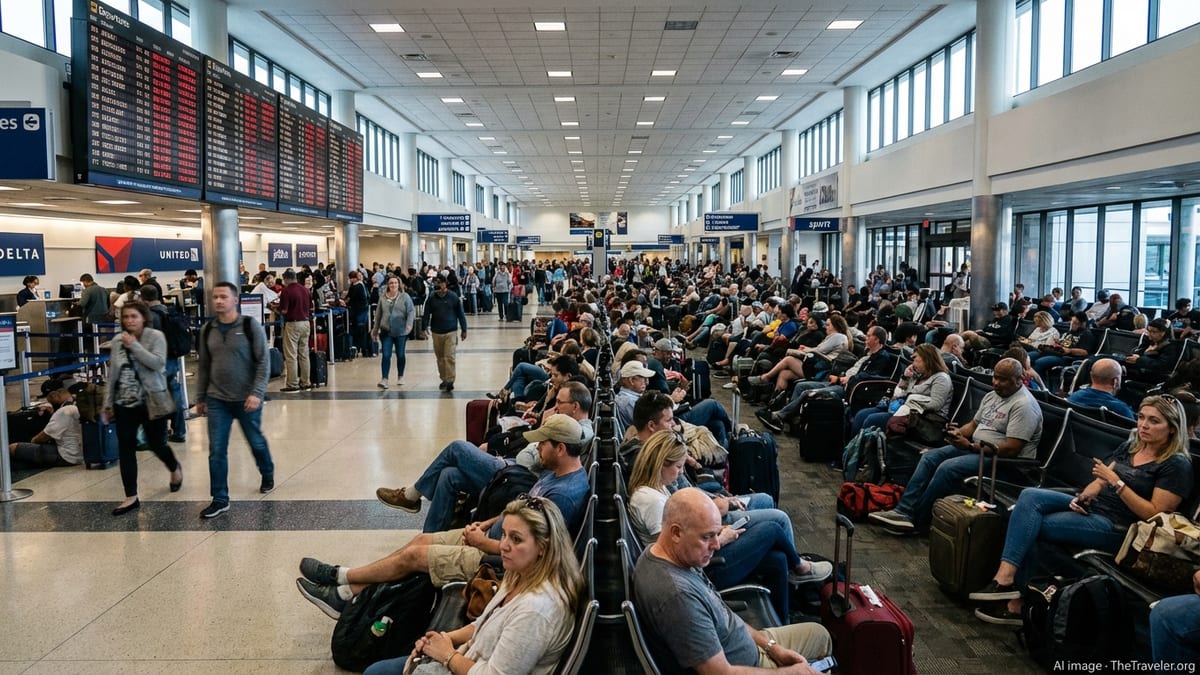
Hundreds of passengers faced long lines, missed connections, and overnight disruptions on Tuesday as 153 flight delays and 69 cancellations hit Hartsfield-Jackson Atlanta International Airport, with knock-on chaos for Delta, United, JetBlue, Southwest, and Spirit routes connecting Atlanta to New York, Miami, Chicago, and other major U.S. cities.
Storm in the Northeast Sends Shockwaves Through Atlanta
The latest wave of disruption at the world’s busiest airport is being blamed primarily on a powerful winter storm sweeping across the Northeast, which has forced widespread ground stops and schedule reductions at key hubs including New York, Boston, and Philadelphia. As those airports slowed or temporarily shut departures, tightly timed aircraft and crew rotations began to unravel, feeding delays into Atlanta-bound and Atlanta-originating flights.
Operational data from airline and tracking services on Tuesday shows that while the heaviest snow and wind are concentrated hundreds of miles away, the storm’s impact has been felt acutely in Georgia. Flights linking Atlanta to New York’s major airports, as well as Boston and other East Coast cities, account for a substantial share of the cancellations. Many of the delayed services are operating with revised departure slots or extended ground holds as carriers wait for clearance into constrained Northeast airspace.
The timing has compounded the strain on airlines already working through busy late-February travel, leaving many planes out of position. Once a key aircraft fails to arrive from a storm-hit airport, later rotations from Atlanta to other destinations in the Southeast and Midwest are forced into rolling delays, pulling more travelers into the disruption.
Delta and Other Major Carriers Grapple With Network Strain
Atlanta-based Delta Air Lines, which operates its largest hub at Hartsfield-Jackson, is bearing a significant share of Tuesday’s schedule problems. The carrier has already been managing a recovery from a recent technical glitch that slowed its check-in and boarding systems, and the latest weather-driven chaos has added fresh pressure to its complex network.
United, JetBlue, Southwest, and Spirit are also reporting disrupted operations into and out of Atlanta, according to real-time tracking figures. Many of their affected flights are tied to routes connecting Atlanta with Northeastern cities, where airport operations have been curtailed by the winter storm. For travelers, that has meant a mix of last-minute rebookings, extended layovers, and in many cases unexpected overnight stays.
Airline representatives say they are waiving certain change fees and offering flexible rebooking options on many impacted routes, though policies vary by carrier and ticket type. Agents at crowded customer service desks in Atlanta have spent much of the day attempting to rethread complex itineraries involving multiple connections through New York, Chicago, and Florida, where limited remaining seat capacity is quickly filling.
Ripple Effects Felt From New York to Miami and Chicago
While the epicenter of Tuesday’s disruption is Atlanta, the broader U.S. network is feeling the shock. New York area airports, including John F. Kennedy and LaGuardia, have seen waves of cancellations and arrival caps related to the storm, a key factor in the 69 scrubbed flights linked back to Hartsfield-Jackson. Travelers scheduled to connect through Atlanta from New York have found themselves stuck at origin airports or rerouted through alternative hubs where possible.
Further south, Miami and other Florida gateways are also seeing the knock-on effect. Several flights between Atlanta and Miami are running behind schedule as aircraft and crews arrive late from weather-affected northern cities. Florida-bound passengers in Atlanta describe waiting through multiple rolling delay announcements as ground crews turn incoming planes as quickly as possible for outbound segments.
In Chicago, where O’Hare and Midway form another critical crossroads in the national system, airlines are juggling their own weather and congestion challenges while dealing with inbound disruptions from the East Coast. For many travelers, that has translated into missed onward connections and a scramble to secure the few remaining seats on later flights, or, in some cases, onto Amtrak and long-distance bus services when air options disappear.
Travelers Confront Long Lines, Uncertainty, and Limited Options
Inside Atlanta’s terminals, the human impact of 153 delays and 69 cancellations has been visible since early morning. Security checkpoints and gate areas have filled with passengers camped on the floor or clustered near charging outlets, tracking updates on departure boards that change by the minute. Families returning from school breaks, business travelers on tight schedules, and international passengers attempting to connect to long-haul departures have all been caught in the turbulence.
Airport staff have urged travelers to arrive early, build in extra connection time, and remain in close touch with airline apps or text alerts for real-time updates. Public address announcements have emphasized that many of the disruptions are outside the control of Atlanta-based operations and depend on improving conditions in the Northeast and on the ability of airlines to reposition aircraft and crews.
With hotel rooms near the airport filling quickly, some stranded travelers have opted to remain overnight inside the terminal rather than risk missing early morning rebooked departures. Others are choosing to abandon same-day travel altogether, pushing trips back by 24 to 48 hours in the hope that schedules will stabilize once the worst of the storm passes.
Outlook: Gradual Recovery but Lingering Backlogs
Forecasters and aviation analysts expect a gradual improvement in flight operations over the next one to two days as snow bands shift offshore and winds ease across the Northeast. Once conditions permit, airlines will begin the complex process of resetting their networks: ferrying aircraft back to regular routes, reassigning crews that have timed out under duty regulations, and working through the backlog of displaced passengers from Atlanta and other hubs.
However, industry experts caution that even as raw cancellation numbers decline, the aftershocks of Tuesday’s disruption are likely to linger. Popular business routes linking Atlanta with New York, Boston, Chicago, and Miami may remain heavily booked as carriers accommodate travelers from earlier canceled flights, making it harder for new customers to find seats at short notice.
For those yet to travel, the message from airlines and airport authorities is consistent: check flight status frequently, consider rebooking away from peak times if flexibility allows, and be prepared for lines and occasional schedule changes even after skies clear. At Hartsfield-Jackson, the immediate priority is to move the hundreds of travelers already stranded by today’s 153 delays and 69 cancellations, and to prevent the storm-driven chaos from cascading deeper into the week.